Most people are unaware that despite their similar overall chemistry, LiFePO₄ and Li-ion batteries differ markedly in safety, longevity, and environmental impact. These distinctions influence their suitability for various applications, yet the trade-offs are often overlooked. Understanding these differences is essential for making informed decisions about battery selection, especially as technology advances. Exploring the nuances can reveal which chemistry aligns best with specific needs—and that might challenge your assumptions.
Key Takeaways
- LiFePO₄ offers superior thermal stability and safety, reducing risks of overheating and thermal runaway compared to Li-ion batteries.
- Li-ion batteries have higher energy density, providing longer runtimes and more compact designs.
- LiFePO₄ has a longer cycle life (2,000–3,000 cycles) with less capacity fade than Li-ion, which typically lasts 500–1,500 cycles.
- Recycling LiFePO₄ is safer and less toxic, while Li-ion recycling involves toxic metals like cobalt and nickel.
- LiFePO₄ is ideal for safety-critical and long-lasting applications, whereas Li-ion suits high-energy needs like longer-range electric vehicles.
What Are the Main Differences Between LiFePO4 and Li-Ion Batteries?
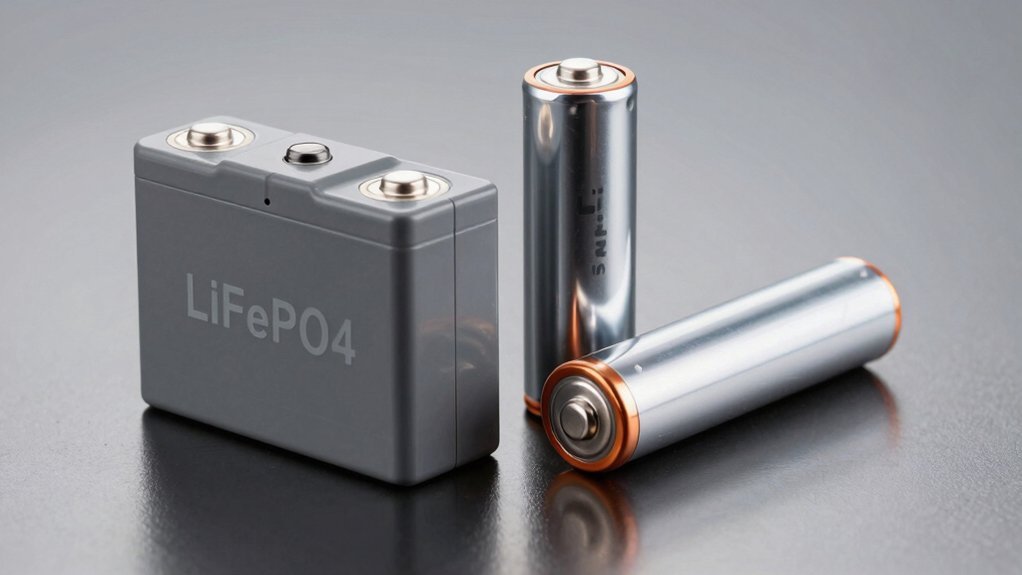
Although both LiFePO4 and Li-ion batteries are popular energy storage options, they differ markedly in chemistry, performance, and safety profiles. LiFePO4 batteries utilize lithium iron phosphate cathodes, offering enhanced thermal stability and safety, but pose manufacturing challenges due to material purity requirements. Their chemistry results in a longer cycle life and less capacity fade over time. In contrast, Li-ion batteries typically use cobalt or nickel-based cathodes, enabling higher energy density but increasing safety risks and thermal runaway potential. Recycling processes also differ; LiFePO4 batteries are easier to recycle due to less toxic materials, though large-scale battery recycling remains a logistical challenge across both chemistries. These distinctions impact not just performance but also environmental and manufacturing considerations.
How Do Safety and Thermal Stability Compare?
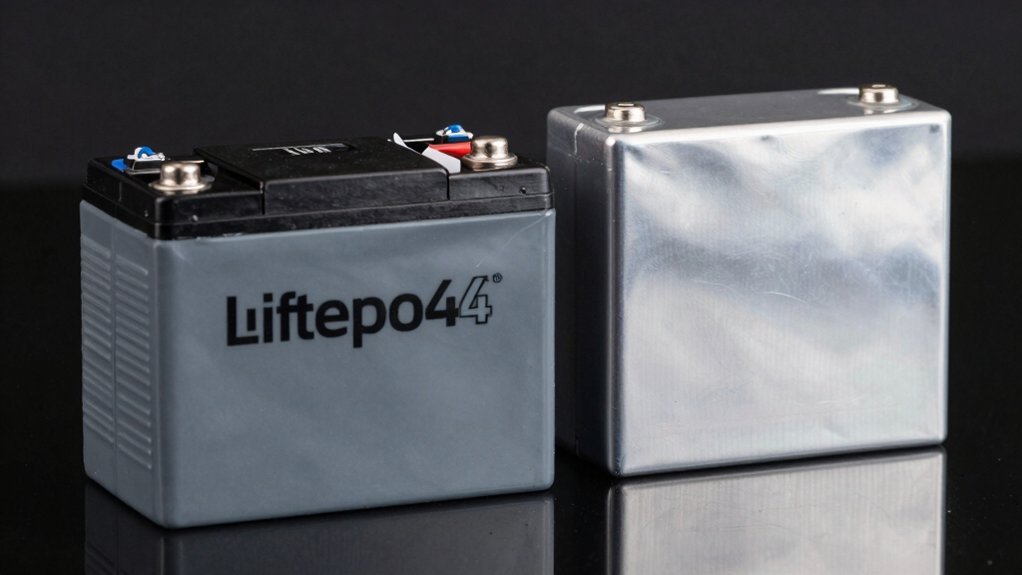
Safety and thermal stability are critical factors in evaluating lithium-based batteries, especially for high-demand applications. LiFePO₄ batteries exhibit superior thermal stability due to their chemical structure, reducing risk of thermal runaway. In contrast, Li-Ion batteries with cobalt or nickel cathodes are more prone to overheating. Manufacturing processes influence safety; controlled manufacturing reduces defects, while better battery recycling methods mitigate environmental hazards. The table below compares these aspects:
| Feature | LiFePO₄ | Li-Ion | Implications |
|---|---|---|---|
| Thermal Stability | High | Moderate to low | Safer under high loads |
| Risk of Thermal Runaway | Low | Higher | Less prone to fires |
| Manufacturing Impact | Stringent controls improve safety | Variability affects safety | Better processes enhance stability |
| Battery Recycling | Safer handling, less toxic | More hazardous, complex | Recycling influences safety and sustainability |
| Overall Safety | Superior | Moderate | Critical for high-demand applications |
Which Battery Lasts Longer: LiFePO4 or Li-Ion?
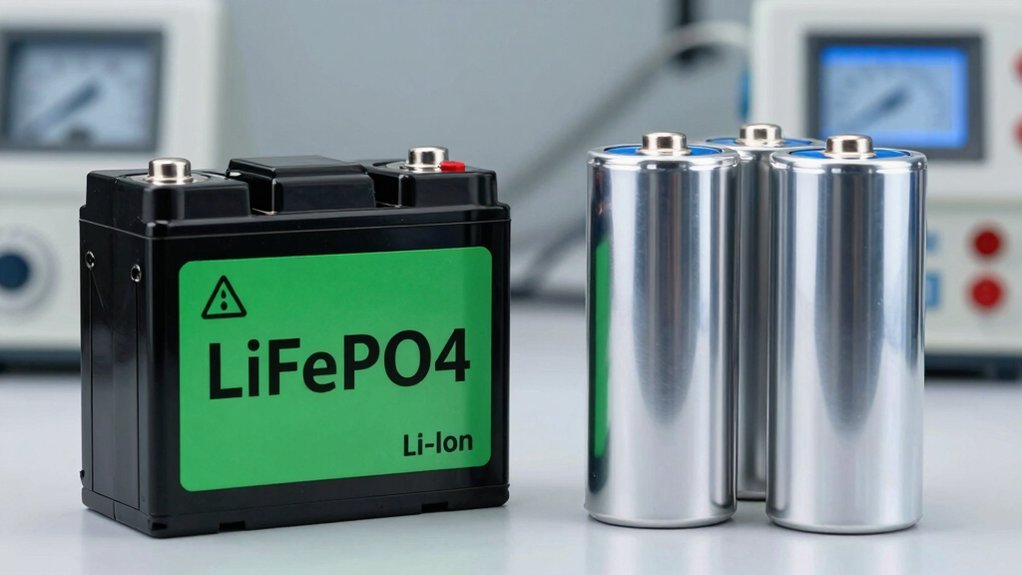
When comparing longevity, cycle life durability and charge retention efficiency are critical factors. LiFePO4 batteries typically offer more charge cycles before significant capacity loss, whereas Li-Ion batteries may degrade faster over time. Analyzing these metrics helps determine which battery type maintains performance longer in practical applications.
Cycle Life Durability
LiFePO4 batteries generally outperform Li-ion batteries in cycle life durability due to their more stable chemical composition and stronger structural integrity. This stability results in more charge-discharge cycles before capacity declines markedly. The manufacturing processes of LiFePO4 enable better thermal stability and reduced degradation over time, which extends battery longevity. Additionally, their resilience facilitates more sustainable battery recycling, reducing environmental impact. The following table compares key durability metrics:
| Parameter | LiFePO4 | Li-ion |
|---|---|---|
| Typical Cycle Life | 2,000–3,000 cycles | 500–1,500 cycles |
| Degradation Rate | Lower, due to stable chemistry | Higher, more susceptible to degradation |
| Thermal Stability | Superior, reduces wear | Moderate, risk of thermal runaway |
| Manufacturing Impact | More consistent, eco-friendly | Less consistent, more resource-intensive |
| Overall Durability | considerably higher | Lower |
Charge Retention Efficiency
Charge retention efficiency is a vital factor in determining which battery type lasts longer in practical applications. LiFePO4 batteries typically excel here, maintaining higher voltage levels over extended periods without significant self-discharge. This results in more reliable energy retention when idle, reducing the need for frequent recharging. Conversely, Li-ion batteries tend to have higher self-discharge rates, leading to quicker capacity loss over time. Additionally, the improved charge retention of LiFePO4 positively impacts battery recycling, as longer-lasting batteries generate less waste. Manufacturing costs also influence overall efficiency; LiFePO4’s simpler chemistry and lower degradation rates often translate into lower long-term costs, despite higher initial production expenses. Ultimately, better charge retention efficiency enhances durability and sustainability, making LiFePO4 a compelling choice for applications where longevity and minimal energy loss are critical.
How Do Energy Density and Power Output Differ?
We observe that energy density varies considerably between Lifepo4 and Li-ion batteries, affecting their capacity and application scope. Power output capacity also differs, influencing how well each battery can handle high-drain devices. These variations directly impact overall device efficiency and performance in practical use.
Energy Density Variations
Energy density is a critical factor distinguishing lithium-ion battery chemistries, directly impacting their suitability for specific applications. Li-ion batteries typically offer higher energy densities compared to Lifepo4, enabling longer runtimes in compact devices. However, this advantage influences battery manufacturing processes, as higher energy density cells demand stricter quality controls and advanced materials. Lifepo4’s comparatively lower energy density results in larger or heavier packs for the same capacity, affecting design considerations. Additionally, recycling challenges vary: Li-ion batteries with higher energy densities contain more complex chemistries, complicating safe and efficient recycling. Understanding these variations helps manufacturers optimize performance and sustainability, balancing energy needs with manufacturing complexity and environmental impact. This nuanced understanding guides better material selection and engineering strategies for diverse applications.
Power Output Capacity
While energy density determines how much energy a battery can store relative to its size or weight, power output capacity focuses on how quickly that energy can be delivered. Li-ion batteries generally provide higher power output, enabling rapid charge and discharge cycles suitable for high-demand applications. In contrast, LiFePO₄ batteries offer lower peak power but excel in stability and longevity. Manufacturing challenges, such as ensuring consistent electrode quality, directly influence power performance and safety. Additionally, battery recycling processes are more complex for Li-ion chemistries due to their diverse material composition, impacting sustainability and production costs. Optimizing power output involves balancing these factors, with LiFePO₄’s stable chemistry favoring applications requiring sustained, reliable performance, while Li-ion’s higher power capacity caters to high-performance needs.
Impact on Device Efficiency
The impact of energy density and power output on device efficiency hinges on their distinct roles in performance optimization. Higher energy density allows longer operation between charges, enhancing user experience, while greater power output supports rapid performance demands. These factors influence manufacturing processes and battery recycling; batteries with higher energy density often require complex manufacturing, impacting sustainability efforts. Conversely, batteries optimized for high power output may degrade faster, affecting lifecycle and recycling viability.
| Aspect | Effect on Device Efficiency |
|---|---|
| Energy Density | Extends runtime, reduces recharge frequency |
| Power Output | Ensures responsiveness, supports high demand |
| Manufacturing | Affects complexity, sustainability considerations |
| Battery Recycling | Influences material recovery and lifecycle |
What Are the Cost Implications of Choosing LiFePO4 or Li-Ion?
Choosing between LiFePO4 and Li-Ion batteries involves examining their respective cost implications, which can substantially influence the overall financial viability of a project. LiFePO4 batteries generally have a higher initial cost due to raw material expenses but benefit from longer cycle life and enhanced safety, reducing replacement and maintenance costs over time. Market availability also impacts pricing, with LiFePO4 batteries becoming more accessible as demand increases. Conversely, Li-Ion batteries are often more affordable upfront, driven by established manufacturing processes and broader brand reputation, but their shorter lifespan can lead to higher lifecycle costs. Decision-makers must weigh these factors, considering both initial expenditure and long-term savings, to determine the most cost-effective solution aligned with project scope and budget constraints.
Which Battery Type Is Better for Electric Vehicles?
Determining which battery type is better for electric vehicles hinges on evaluating key performance metrics such as energy density, safety, lifespan, and cost. Li-ion batteries typically offer higher energy density, enabling longer driving ranges, but they come with higher manufacturing costs. Conversely, LiFePO4 batteries provide enhanced safety and longer cycle life, reducing replacement frequency. From a sustainability perspective, battery recycling efficiency is vital; LiFePO4 batteries are generally easier and safer to recycle, lowering environmental impact. While initial costs for LiFePO4 are often lower, their slightly lower energy density may limit range. Thus, the ideal choice depends on prioritizing safety, long-term durability, and recyclability versus energy density and upfront expenses. Each option presents trade-offs aligned with specific electric vehicle applications.
How Do Charging and Maintenance Requirements Vary?
While both LiFePO4 and Li-ion batteries require regular maintenance for peak performance, their charging protocols and maintenance routines differ markedly. LiFePO4 batteries benefit from a more forgiving charging protocol, with a recommended voltage cutoff around 3.65V per cell and minimal balancing needs. They tolerate deeper discharge cycles and require less frequent calibration. Conversely, Li-ion batteries demand precise charging routines, typically involving a two-stage process—bulk and absorption phases—and regular balancing to prevent capacity loss. Maintenance routines for Li-ion include monitoring for voltage imbalances and avoiding high-temperature environments. Overall, LiFePO4 batteries offer simpler, more robust maintenance routines, whereas Li-ion batteries necessitate strict adherence to specific charging protocols to preserve longevity and safety.
When Should You Choose LiFePO4 Over Li-Ion?
LiFePO4 batteries are an ideal choice when safety, durability, and low maintenance are top priorities, especially in applications requiring frequent deep discharges or extended cycle life. Their stable chemistry enhances safety during battery manufacturing and operation, reducing risks of thermal runaway. When considering long-term performance, LiFePO4’s superior cycle life makes it suitable for demanding environments. Additionally, their chemistry simplifies recycling processes, making end-of-life management more sustainable. If your project demands consistent performance over many cycles with minimal degradation, LiFePO4 offers a reliable solution. Conversely, in scenarios where initial cost or energy density is critical, Li-ion batteries may be preferable. Ultimately, choosing LiFePO4 depends on priorities like safety, longevity, and environmental considerations within manufacturing and recycling contexts.
What Are the Environmental Impacts of Each Battery Chemistry?
Both LiFePO4 and traditional Li-ion batteries have distinct environmental impacts rooted in their chemical compositions and manufacturing processes. LiFePO4 batteries generally produce fewer toxic emissions during production and contain less hazardous materials, aligning better with strict environmental regulations. However, their recycling challenges stem from the stability of iron phosphate compounds, making material recovery more complex. Conversely, Li-ion batteries with cobalt or nickel cathodes pose greater environmental risks due to toxic metal extraction and disposal issues. The refining processes for these metals often violate environmental regulations, leading to pollution. While both types face recycling hurdles, LiFePO4’s safer chemistry offers a more sustainable lifecycle. Ultimately, environmental impacts depend on manufacturing practices, resource extraction, and recycling infrastructure.
Frequently Asked Questions
Are Lifepo4 Batteries Suitable for Portable Electronics?
We believe Lifepo4 batteries aren’t ideal for portable electronics due to their lower battery capacity and slower charging speed compared to Li-ion batteries, which are optimized for such devices’ power demands and quick recharge needs.
How Does Temperature Affect the Performance of Each Battery Type?
We observe that Lifepo4 batteries offer better thermal stability and are less temperature-sensitive, maintaining performance in broader temperature ranges. Conversely, Li-ion batteries exhibit higher temperature sensitivity, which can impair performance and safety in extreme conditions.
Can Lifepo4 Batteries Be Recycled Easily?
We find Lifepo4 batteries are easier to recycle due to their stable chemistry, reducing environmental impact; the recycling process is more straightforward, enabling safer, more efficient recovery of valuable materials compared to other lithium-ion chemistries.
What Is the Typical Lifespan of Each Battery in Real-World Use?
Ironically, despite their advanced tech, Lifepo4 batteries often outlast Li-Ion in real-world usage, boasting greater longevity and usage durability, typically lasting 2,000-3,000 cycles, whereas Li-Ion batteries usually reach 500-1,000 cycles before diminishing.
Are There Any Industry-Specific Applications Favoring One Battery Type?
We find Lifepo4 batteries favored in industry safety-critical applications due to their thermal stability, despite higher manufacturing costs, whereas Li-ion batteries are preferred where cost-efficiency is prioritized, especially in consumer electronics.
Conclusion
Ultimately, choosing between LiFePO₄ and Li-ion batteries is like selecting the right compass for a journey—LiFePO₄ offers a steady, safe guiding star with longevity and environmental clarity, while Li-ion provides a brighter, more energy-rich beacon for short-term performance. Each serves a purpose, depending on our destination’s demands. By understanding these core differences, we navigate smarter, aligning our energy solutions with safety, sustainability, and technological needs.