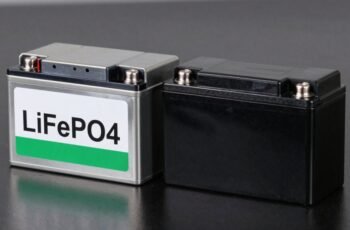
Imagine a solar installation that initially saved costs with lithium-ion batteries but faced frequent replacements and safety concerns over overheating. This scenario highlights a key consideration in choosing energy storage. As we analyze the trade-offs between LiFePO4 and lithium-ion batteries, it becomes essential to understand their safety, durability, and long-term value—factors that can profoundly influence system reliability and environmental impact. Let’s explore how these technologies compare in real-world applications and what might guide your decision.
Key Takeaways
- LiFePO4 offers superior safety and thermal stability, reducing fire risks in solar energy storage systems.
- Although more expensive initially, LiFePO4 provides a longer lifespan and better long-term cost savings.
- LiFePO4 maintains stable performance under high temperatures, ideal for outdoor solar installations.
- Lithium-ion batteries achieve higher charging efficiency but degrade faster and require more thermal management.
- LiFePO4 is more environmentally friendly, with easier recycling and lower maintenance needs over time.
How Do Lifepo4 and Lithium-Ion Batteries Differ in Safety and Durability?
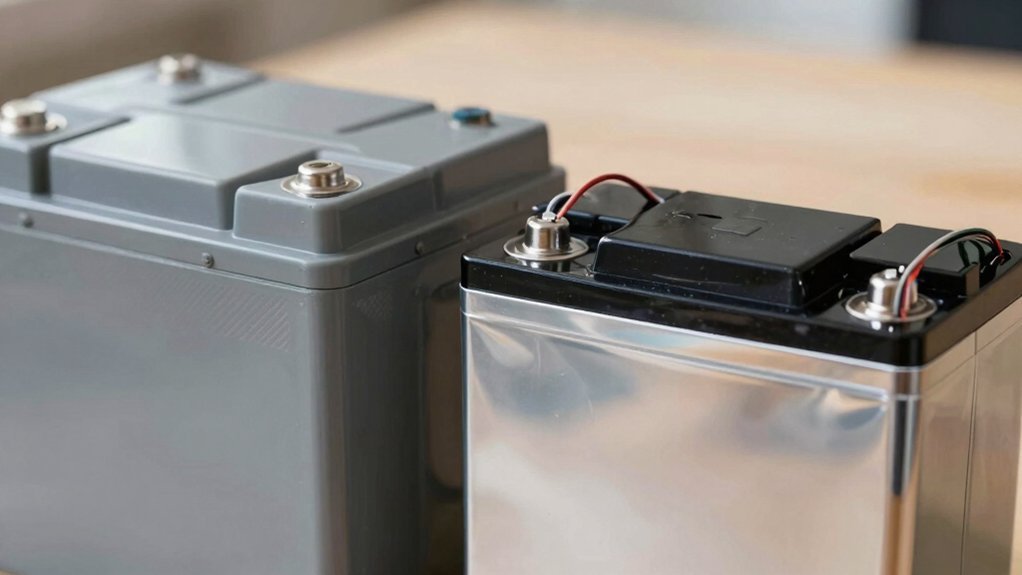
While both LiFePO4 and lithium-ion batteries are popular choices for solar energy storage, their safety and durability profiles differ markedly. LiFePO4 batteries demonstrate superior thermal management, reducing risks of thermal runaway and fire. This stability extends their lifespan and enhances safety during operation. Additionally, LiFePO4 batteries are more environmentally friendly, facilitating safer battery recycling processes that minimize hazardous waste. Lithium-ion batteries, on the other hand, are more susceptible to overheating, which can compromise safety and accelerate degradation. Their less stable chemistry requires rigorous thermal management systems to prevent failure. Overall, LiFePO4’s inherent stability and recyclability contribute to greater durability and safer long-term use, whereas lithium-ion batteries demand stringent thermal controls to mitigate safety risks.
Which Battery Type Offers Better Cost-Effectiveness for Solar Storage?
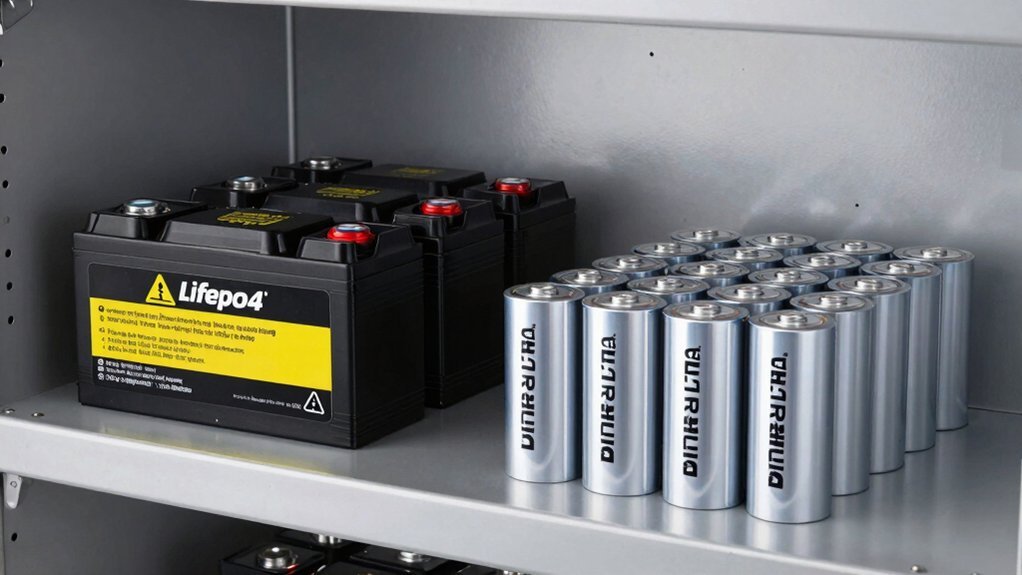
When evaluating cost-effectiveness for solar storage, LiFePO4 batteries often present a more favorable long-term investment despite higher initial costs. Their extended battery lifespan reduces replacement frequency, lowering overall lifecycle expenses. Additionally, LiFePO4 batteries generally exhibit higher charging efficiency, which minimizes energy loss during charge and discharge cycles, translating into better energy utilization over time. Although lithium-ion batteries may have lower upfront costs, shorter lifespans and slightly lower charging efficiencies can increase total costs through more frequent replacements and energy waste. For long-term solar storage, LiFePO4’s durability and efficiency make it a more economical choice, providing better value despite the initial investment. Ultimately, considering lifespan and charging efficiency is vital in evaluating true cost-effectiveness.
How Do Lifepo4 and Lithium-Ion Batteries Perform in Real-World Solar Systems?
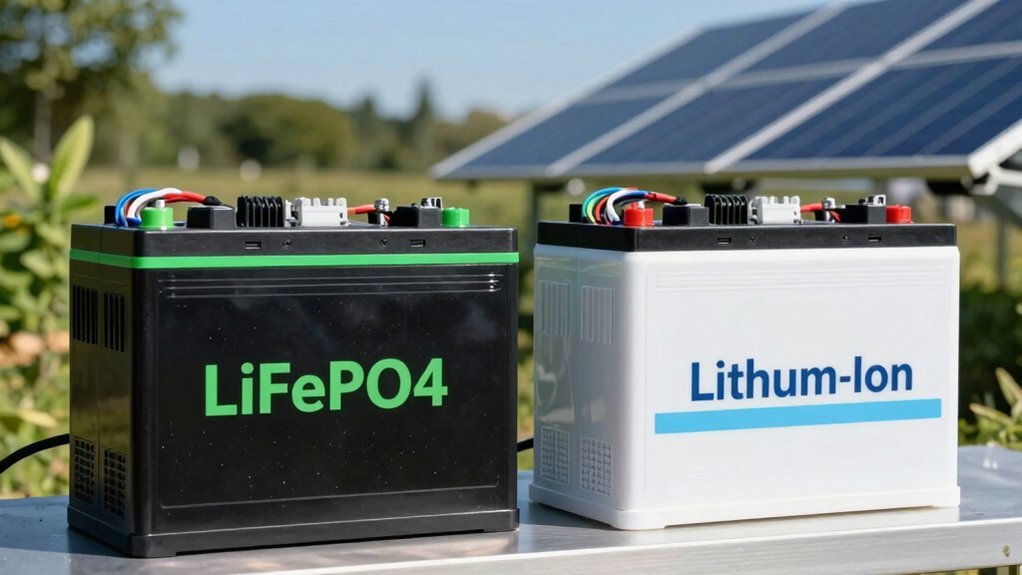
In real-world solar systems, the performance of LiFePO4 and lithium-ion batteries hinges on factors such as efficiency, durability, and temperature resilience. LiFePO4 batteries generally offer longer battery lifespan and stable charging efficiency, especially under high-temperature conditions. Lithium-ion batteries tend to have higher initial efficiency but may degrade faster over time, reducing overall lifespan. The table below compares key attributes:
| Attribute | LiFePO4 | Lithium-Ion |
|---|---|---|
| Battery Lifespan | Longer (up to 10 years) | Shorter (around 5-8 years) |
| Charging Efficiency | Consistently high | Slightly variable |
| Temperature Resilience | Excellent | Moderate |
| Performance Stability | High | Moderate |
This analysis highlights how real-world conditions influence long-term system reliability and efficiency.
What Factors Should You Consider When Choosing Between Lifepo4 and Lithium-Ion?
Choosing between LiFePO4 and lithium-ion batteries requires careful consideration of multiple technical and operational factors. Battery lifespan is vital; LiFePO4 cells generally offer a longer cycle life, reducing replacement frequency and total cost of ownership. Charge efficiency is another key factor—lithium-ion batteries often achieve higher charge efficiency, enabling quicker energy storage and retrieval. We must also evaluate temperature tolerance, as LiFePO4 performs more consistently in extreme conditions. Additionally, safety considerations, such as thermal stability, play a significant role. Cost implications, both upfront and over the system’s lifetime, influence the decision. Ultimately, understanding these factors helps guarantee performance, longevity, and safety tailored to your specific solar application.
Are There Any Environmental or Maintenance Benefits to Lifepo4 Over Lithium-Ion?
Lifepo4 batteries offer notable environmental and maintenance advantages compared to lithium-ion counterparts, making them a compelling choice for sustainable energy systems. Their lower manufacturing impact reduces resource depletion, while improved stability minimizes safety concerns. Additionally, Lifepo4 batteries face fewer recycling challenges due to their stable chemistry, simplifying end-of-life management. This contributes to a more sustainable lifecycle. The table below highlights key differences:
| Aspect | Lifepo4 | Lithium-Ion |
|---|---|---|
| Recycling challenges | Fewer due to stable chemistry | More complex due to toxic materials |
| Manufacturing impact | Lower resource consumption | Higher resource demands |
| Maintenance | Lower due to greater stability | Higher, with increased degradation |
| Safety | Enhanced stability reduces risks | Greater risk of thermal runaway |
This analysis underscores Lifepo4’s environmental and maintenance benefits.
Frequently Asked Questions
How Do Lifepo4 and Lithium-Ion Batteries Impact Overall Solar System Efficiency?
We find Lifepo4 batteries enhance solar system efficiency through longer battery lifespan and lower environmental impact, making them more reliable and eco-friendly than lithium-ion options. Their stability and durability optimize energy storage and system performance.
What Are the Warranty Differences Between Lifepo4 and Lithium-Ion Batteries?
We find that Lifepo4 batteries often come with longer warranties, reflecting their extended battery lifespan, while lithium-ion options typically offer shorter warranties; the cost comparison also influences warranty coverage, making Lifepo4 a more durable, cost-effective choice.
Can Lifepo4 Batteries Be Integrated With Existing Solar Setups Easily?
We find Lifepo4 batteries integrate smoothly with existing solar setups due to their stable voltage and compatibility, offering a longer battery lifespan. While the initial cost comparison is higher, their durability often results in better long-term value.
How Does Temperature Affect Lifepo4 Versus Lithium-Ion Battery Performance?
Temperature impacts battery lifespan and thermal stability profoundly; Lifepo4 batteries maintain stability and longevity better in high temperatures, whereas lithium-ion batteries degrade faster, reducing lifespan and performance under thermal stress.
Are There Specific Brands or Models Recommended for Each Battery Type?
We recommend analyzing brand reputations and comparing models like Battle Born and Renogy for lifepo4, and LG or Samsung for lithium-ion batteries, focusing on technical specifications, cycle life, and thermal stability to guarantee ideal solar energy storage performance.
Conclusion
Based on our analysis, LiFePO4 batteries clearly outperform lithium-ion in safety, longevity, and environmental impact, making them a smarter choice for sustainable solar storage. While initial costs may be higher, their durability and stability offer better long-term value. We believe that investing in LiFePO4 isn’t just a practical decision—it’s a responsible one, aligning technological efficiency with ecological consciousness. Ultimately, choosing LiFePO4 could prove to be the most forward-thinking move for reliable, eco-friendly energy storage.