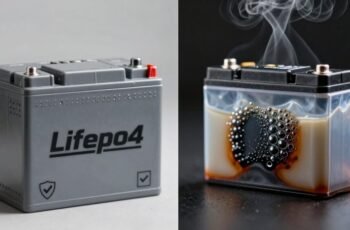
When comparing LiFePO4 and lithium-ion batteries, understanding their fundamental differences is vital for selecting the right solution. Each offers distinct advantages and challenges that impact safety, longevity, and application suitability. As we analyze their performance characteristics, costs, and environmental considerations, it becomes clear that choosing between them depends on specific energy storage goals. This ongoing evaluation reveals important trade-offs that could influence your decision—let’s explore what sets these technologies apart.
Key Takeaways
- LiFePO4 offers superior thermal stability and safety, minimizing risks of overheating and thermal runaway compared to lithium-ion batteries.
- Lithium-ion batteries have higher energy density, making them more suitable for portable devices and space-constrained applications.
- LiFePO4 has a longer cycle life (over 2000 cycles) and lower long-term costs, despite lower energy density.
- Recycling LiFePO4 is simpler and more environmentally friendly due to its stable phosphate chemistry.
- Lithium-ion batteries are more complex and costly to recycle because of valuable metal extraction processes.
What Are the Main Differences Between LiFePO4 and Lithium-Ion Batteries?
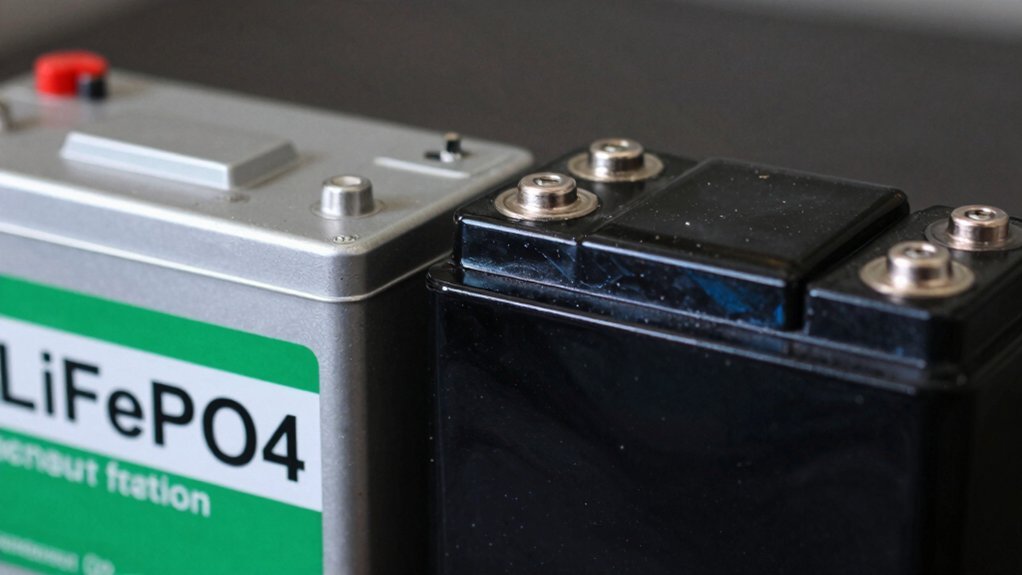
While both LiFePO4 and lithium-ion batteries are popular energy storage solutions, they differ markedly in chemistry, performance, and safety profiles. The key distinction lies in their battery chemistry: LiFePO4 uses lithium iron phosphate, offering a more stable structure, while lithium-ion batteries typically employ cobalt or nickel-based cathodes. These chemical differences influence manufacturing processes, with LiFePO4 requiring precise control during synthesis to guarantee consistent crystal structure and performance. Manufacturing of LiFePO4 cells involves high-temperature calcination and advanced coating techniques, which enhance thermal stability. Conversely, lithium-ion batteries’ manufacturing often involves complex electrode fabrication with varying cathode materials. These fundamental chemistry and process differences underpin the distinct operational characteristics and safety profiles observed between the two battery types.
How Do Safety and Longevity Compare in Both Battery Types?
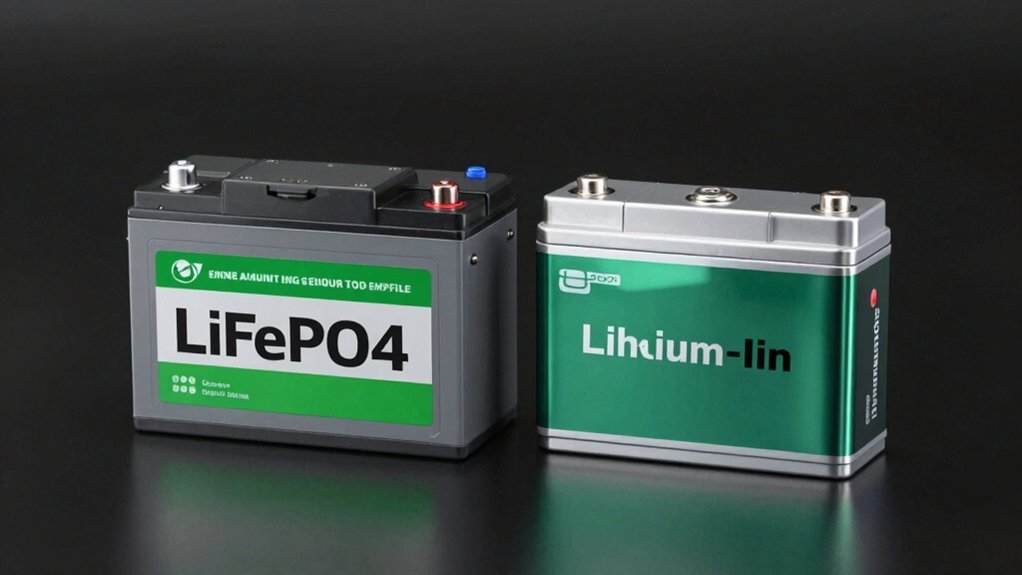
The chemical and structural differences between LiFePO4 and traditional lithium-ion batteries considerably impact their safety and longevity profiles. LiFePO4 batteries exhibit superior battery thermal stability, reducing risks of thermal runaway and fires. Their inherent chemical stability translates into longer cycle life and consistent performance over time. Conversely, lithium-ion batteries with cobalt-based cathodes are more susceptible to overheating and degradation. Regarding manufacturing safety standards, LiFePO4 cells are generally safer to produce, with fewer hazardous materials involved. Specifically:
LiFePO4 batteries offer enhanced safety, thermal stability, and longer cycle life compared to cobalt-based lithium-ion batteries.
- LiFePO4’s thermal stability minimizes safety concerns during operation.
- Its chemical robustness extends cycle life, often exceeding 2000 cycles.
- Lithium-ion batteries demand strict manufacturing controls to prevent safety hazards.
- Long-term, LiFePO4’s stability contributes to enhanced longevity and reduced replacement costs.
Which Applications Are Best Suited for LiFePO4 Versus Lithium-Ion Batteries?
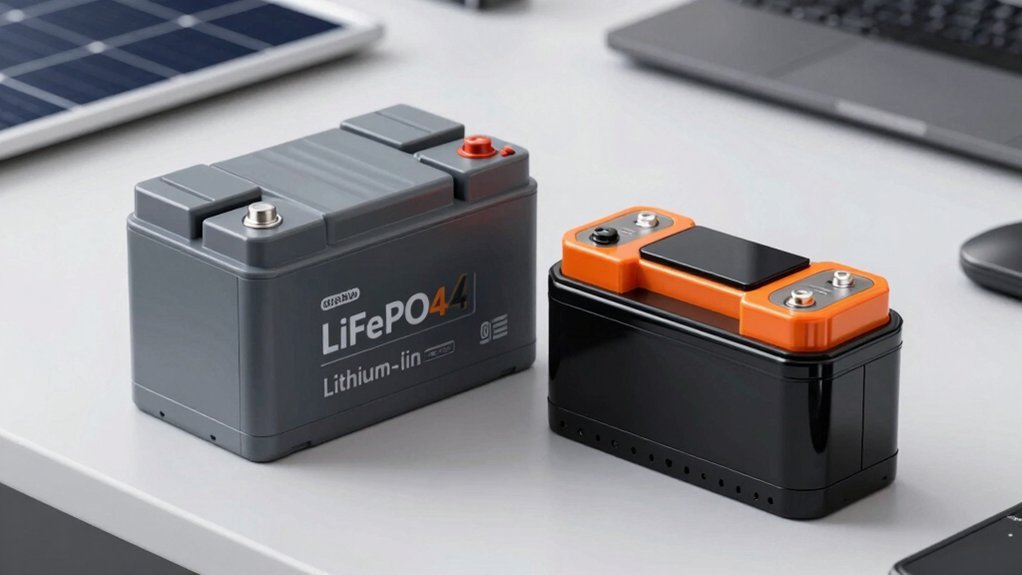
LiFePO4 batteries are ideally suited for applications requiring high safety, long cycle life, and thermal stability, such as stationary energy storage systems, electric buses, and solar power installations. Their inherent thermal stability reduces the need for extensive battery cooling, making them more reliable in diverse environments. As market adoption increases, their safety profile and longevity become significant advantages, especially in large-scale installations where safety and durability are critical. While lithium-ion batteries excel in high energy density applications, LiFePO4’s stable chemistry favors steady performance over time, particularly where temperature fluctuations are common. These attributes make LiFePO4 a preferred choice for applications prioritizing safety, cost-effectiveness, and longevity, whereas lithium-ion batteries are more suited for portable, high-energy-demand devices.
What Are the Cost and Performance Trade-Offs for Each Battery Technology?
When evaluating LiFePO4 and lithium-ion batteries, we must consider differences in manufacturing costs, energy density, and lifespan, as these factors directly impact overall performance and value. LiFePO4 batteries typically have lower manufacturing costs and longer cycle lives but offer lower energy density, affecting range and size. Conversely, lithium-ion batteries provide higher energy density but often come with higher costs and shorter lifespans, influencing long-term performance and maintenance requirements.
Manufacturing Costs Differences
While manufacturing costs for lithium-ion batteries generally surpass those for LiFePO4 batteries, the trade-offs extend beyond initial expenses to performance and durability. The cost differences primarily hinge on:
- Material costs: LiFePO4 cathodes utilize more abundant, lower-cost raw materials, reducing manufacturing expenses.
- Production scale: Lithium-ion batteries benefit from larger-scale production, driving down costs through economies of scale.
- Complexity of manufacturing: Lithium-ion cell assembly involves more intricate processes, increasing production costs.
- Long-term durability: LiFePO4 batteries tend to have longer cycle lives, impacting total cost of ownership despite higher initial manufacturing costs for lithium-ion options.
These factors highlight how manufacturing costs are influenced not only by raw material prices but also by production scale and process complexity.
Energy Density and Range
Have you ever considered how energy density influences the practical range of electric vehicles? Battery chemistry markedly impacts energy storage capabilities, affecting how far a vehicle can travel on a single charge. Lithium-ion batteries generally offer higher energy density, enabling longer range due to their optimized energy storage capacity. In contrast, LiFePO4 batteries have lower energy density, which limits their range but provides enhanced safety and thermal stability. These performance trade-offs stem from fundamental differences in material chemistry—LiFePO4’s stable phosphate structure versus lithium-ion’s layered cathodes. While lithium-ion batteries deliver more power per weight, their increased energy density often comes at higher costs and potential safety concerns. Understanding these distinctions clarifies how each technology balances performance with cost in real-world applications.
Lifespan and Maintenance
LiFePO4 batteries generally demonstrate a longer lifespan and require less maintenance compared to traditional lithium-ion batteries, primarily due to their stable chemistry and thermal stability. This stability reduces degradation over time, lowering replacement frequency. When considering costs, manufacturing expenses for LiFePO4 are higher initially but offset by their durability. Key trade-offs include:
- Longevity: LiFePO4 can often last 2,000-3,000 cycles, surpassing lithium-ion’s typical 1,000-2,000, reducing lifecycle costs.
- Maintenance: Fewer replacements and lower thermal management needs decrease ongoing upkeep.
- Battery recycling: LiFePO4’s chemical stability simplifies recycling, potentially lowering environmental costs.
- Initial costs: Higher manufacturing costs for LiFePO4 may be offset over time through reduced replacement and recycling expenses, impacting overall performance economics.
How Do Charging, Maintenance, and Recycling Differ Between the Two?
Charging efficiency and safety are key differences, with LiFePO4 cells offering more stable voltage profiles and lower thermal runaway risks compared to traditional lithium-ion batteries. Maintenance requirements also vary, as LiFePO4 batteries typically demand less frequent monitoring and are more tolerant of deep discharge cycles. When it comes to recycling, LiFePO4’s environmentally friendlier chemistry simplifies processes, reducing hazardous waste and minimizing ecological impact.
Charging Efficiency and Safety
How do the charging efficiency, maintenance routines, and recycling processes of LiFePO4 and lithium-ion batteries compare? Battery chemistry influences both efficiency and safety, particularly thermal stability. LiFePO4 batteries exhibit higher thermal stability, reducing risks during charging and limiting capacity loss, which enhances overall safety.
- LiFePO4 achieves near 95% charging efficiency due to stable chemistry, whereas lithium-ion often ranges around 90%.
- Maintenance routines are simpler for LiFePO4, with less need for balancing or temperature management.
- The thermal stability of LiFePO4 minimizes overheating risks, making it safer during fast charging.
- Recycling processes differ in complexity; LiFePO4’s stable chemistry reduces degradation concerns, but recycling infrastructure varies. This impacts safety and efficiency throughout the battery lifecycle.
Recycling Processes and Environmental Impact
Despite their differences in chemistry, the recycling processes for LiFePO4 and lithium-ion batteries vary considerably, impacting their environmental footprints. LiFePO4 batteries benefit from more straightforward recycling techniques due to their stable phosphate chemistry, which reduces hazardous waste and simplifies material recovery. In contrast, standard lithium-ion batteries often require complex processes to extract valuable metals like cobalt and nickel, increasing environmental risks if improperly managed. Recycling techniques for lithium-ion batteries can involve pyrometallurgical or hydrometallurgical methods, each with distinct environmental benefits and limitations. Overall, LiFePO4 batteries present environmental advantages by producing fewer toxic byproducts and enabling safer, more efficient recycling. These differences markedly influence the batteries’ overall sustainability and long-term environmental impact.
Which Battery Is the Better Choice for Your Specific Energy Storage Needs?
Determining the most suitable battery type for your energy storage needs requires a careful assessment of several critical factors, including energy density, lifespan, safety, and cost. When choosing between LiFePO4 and lithium-ion batteries, consider these aspects:
- Battery form factors: LiFePO4 batteries typically come in larger, robust modules, while lithium-ion batteries offer more compact, versatile shapes suitable for space-constrained applications.
- Brand reliability: Established brands with proven track records ensure consistent quality and support, critical for long-term projects.
- Application-specific demands: High energy density benefits portable devices, whereas lifespan and safety are essential for stationary storage.
- Cost considerations: Initial costs vary, but total lifecycle expenses, influenced by durability and maintenance, should guide your choice.
Ultimately, matching these factors to your specific needs determines the most appropriate battery type.
Frequently Asked Questions
How Do Environmental Conditions Affect Lifepo4 and Lithium-Ion Battery Performance?
Environmental conditions impact both batteries’ performance; LiFePO4 offers superior thermal stability, resisting high temperatures, while lithium-ion batteries are more susceptible to humidity effects, which can degrade their lifespan and safety, requiring careful environmental management for ideal operation.
Are There Any Notable Differences in Weight and Size Between These Batteries?
Battery weight and size variations are significant; LiFePO4 batteries are often lighter and more compact, making them ideal for space-constrained applications, while lithium-ion batteries tend to be heavier and bulkier, impacting portability and design flexibility.
What Are the Environmental Impacts of Manufacturing and Disposing of Each Battery Type?
We find that LiFePO4 batteries pose fewer recycling challenges and contain fewer toxic materials compared to lithium-ion batteries, making them environmentally friendlier during manufacturing and disposal, though both require careful handling to mitigate ecological impacts.
Can Lifepo4 Batteries Be Used With Existing Lithium-Ion Battery Systems?
While LiFePO4 batteries can technically integrate with existing lithium-ion systems, differences in voltage and chemistry may affect battery longevity and performance, often making the cost comparison less favorable and necessitating compatible management systems for ideal operation.
How Do Warranties and Customer Support Compare Between Manufacturers?
We find that warranty durations vary among manufacturers, often ranging from 2 to 10 years, with customer service quality influenced by technical support responsiveness and expertise, impacting overall reliability and user confidence in both LiFePO4 and lithium-ion systems.
Conclusion
Ultimately, choosing between LiFePO4 and lithium-ion batteries hinges on aligning their strengths with your specific needs. While LiFePO4 offers unmatched safety and longevity—like a steadfast protector—lithium-ion provides compact energy density suitable for portable applications. As we weigh cost, performance, and environmental impact, remember: the right battery isn’t just a choice; it’s a strategic decision that shapes your energy future. Which path best suits your goals? The decision is yours.