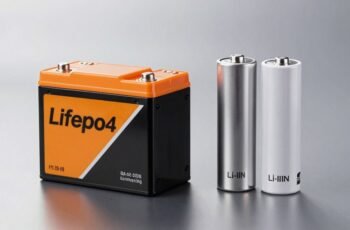
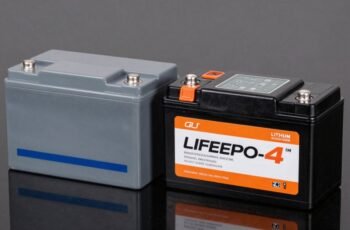
The difference between LiFePO4 and lithium-ion batteries is critical enough to redefine how we approach energy storage, yet many overlook their fundamental distinctions. These technologies differ considerably in chemistry, safety profile, lifespan, and ideal use cases, which can dramatically affect performance and reliability. Understanding these nuances is essential for making informed choices, but the complexities involved might surprise you—so let’s explore why these differences matter and how they impact your specific needs.
Key Takeaways
- LiFePO4 uses lithium iron phosphate cathodes, offering greater safety and stability than cobalt or nickel-based lithium-ion batteries.
- LiFePO4 batteries have a longer lifespan, exceeding 2,000 charge cycles, compared to 500-1,500 cycles for typical lithium-ion batteries.
- LiFePO4 is more environmentally friendly, non-toxic, and easier to recycle than traditional lithium-ion chemistries.
- LiFePO4 provides better thermal stability and reduces risk of overheating or thermal runaway.
- Lithium-ion batteries generally have higher energy density, making them more suitable for portable electronics and high-drain devices.
What Are LiFePO4 and Lithium-Ion Batteries and How Do They Work?
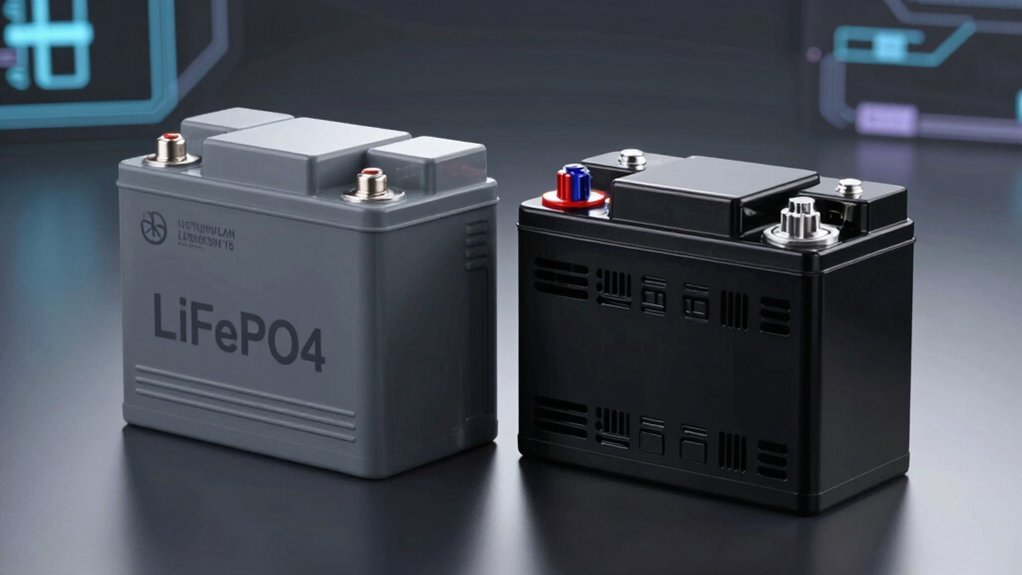
LiFePO4 and lithium-ion batteries are both rechargeable energy storage devices that rely on the movement of lithium ions between electrodes to store and deliver electrical energy. Their core difference lies in battery chemistry: LiFePO4 uses lithium iron phosphate as the cathode, offering high thermal stability and a longer lifespan, while lithium-ion batteries typically employ cobalt or nickel-based cathodes. This chemistry influences not only performance but also environmental impact; LiFePO4’s non-toxic, abundant materials reduce ecological concerns during production and disposal. Lithium-ion batteries, with more complex chemistries, often involve environmentally sensitive materials that can pose disposal challenges. Understanding these chemical compositions helps evaluate their sustainability, durability, and suitability for various applications, emphasizing the importance of environmentally conscious design in energy storage technology.
How Do Safety and Stability Compare Between LiFePO4 and Lithium-Ion?
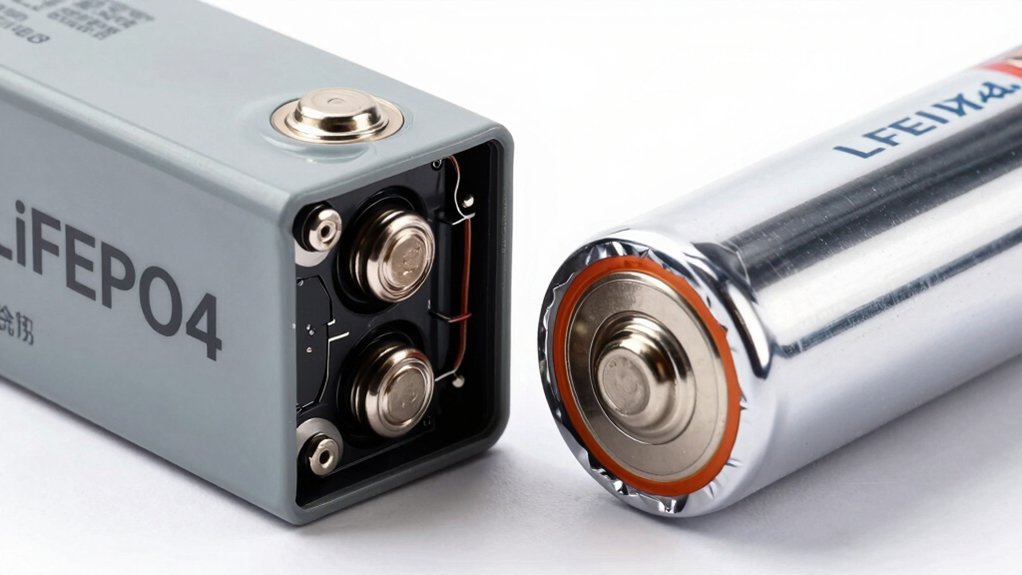
Although both LiFePO4 and lithium-ion batteries are widely used in energy storage applications, their safety and stability profiles differ considerably due to their chemical compositions. LiFePO4’s stable crystal structure reduces the risk of thermal runaway, making it inherently safer under stress or damage. Conversely, traditional lithium-ion batteries, with their cobalt-based cathodes, are more prone to overheating and combustion, requiring sophisticated management systems. This enhanced safety profile of LiFePO4 also benefits battery recycling, as fewer hazardous materials pose environmental risks. Lithium-ion batteries, however, often contain toxic components, increasing environmental impact if improperly disposed of. Overall, LiFePO4 offers superior safety and stability, minimizing risks associated with battery failure, but both chemistries demand careful handling to guarantee sustainable environmental impact.
What Are the Performance Differences in Terms of Lifespan and Charging?
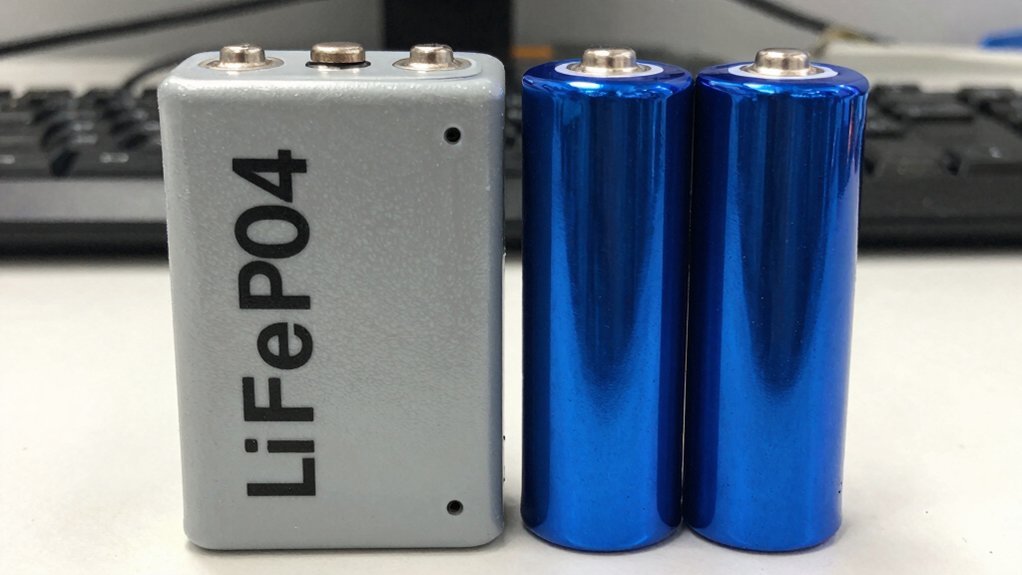
When evaluating battery performance, lifespan and charging characteristics are critical factors that influence overall utility and cost-efficiency. LiFePO4 batteries typically offer a longer cycle life, often exceeding 2,000 cycles, due to their stable chemistry, which preserves energy density over time. In contrast, lithium-ion batteries generally have a shorter lifespan—around 500 to 1,500 cycles—leading to more frequent replacements. Charging rates also vary; LiFePO4 supports faster charging without compromising longevity, thanks to its stable cathode material. Additionally, both types influence recycling processes, but LiFePO4’s safer chemistry simplifies recycling, reducing environmental impact. Ultimately, these differences impact long-term performance, maintenance costs, and sustainability considerations for each battery type.
Which Battery Type Is Better Suited for Different Applications?
Choosing the right battery type depends heavily on the specific application’s performance requirements, safety considerations, and operational environment. Lifepo4 batteries excel in high safety standards, longer cycle life, and lower environmental impact, making them ideal for stationary storage, electric vehicles, and renewable energy systems. Lithium-ion batteries, with higher energy density, suit portable electronics and fast-charging applications but pose greater safety and environmental concerns. For applications prioritizing sustainability, Lifepo4’s recyclability and reduced toxic materials are advantageous. Conversely, lithium-ion’s efficiency in weight-sensitive, high-drain scenarios favors consumer electronics.
| Application Type | Recommended Battery |
|---|---|
| Renewable Energy Storage | Lifepo4 |
| Portable Electronics | Lithium-ion |
| Electric Vehicles | Lifepo4 |
| High-Performance Devices | Lithium-ion |
How Do Cost and Maintenance Factors Influence Your Choice?
Cost and maintenance considerations are critical factors that directly influence the selection between Lifepo4 and lithium-ion batteries, as each technology presents distinct economic and operational profiles. When evaluating cost comparison, Lifepo4 batteries typically have a higher upfront cost but lower long-term expenses due to reduced maintenance requirements. Conversely, lithium-ion batteries often have lower initial prices but demand more frequent servicing and replacement.
Lifepo4 batteries cost more initially but save money long-term with lower maintenance needs.
Key factors include:
- Lifepo4 batteries generally require minimal maintenance, with no need for active cooling or complex balancing systems.
- Lithium-ion systems often need regular monitoring, cooling, and cell balancing to ensure longevity.
- Overall, Lifepo4’s durability can lead to lower lifecycle costs, affecting long-term financial planning and operational reliability.
Frequently Asked Questions
Are Lifepo4 Batteries Environmentally Friendly Compared to Traditional Lithium-Ion?
We believe LiFePO4 batteries are more environmentally friendly than traditional lithium-ion, thanks to their longer battery lifespan and safer, non-toxic materials. Their higher initial cost balances with lower replacement frequency, making them a sustainable choice overall.
How Do Temperature Ranges Affect Lifepo4 and Lithium-Ion Battery Performance?
Like a fortress resisting storms, LiFePO4 batteries boast superior temperature resilience and thermal stability, functioning most effectively across wider temperature ranges. Lithium-ion batteries, however, are more sensitive, risking performance drops or safety issues outside ideal thermal conditions.
Can Lifepo4 Batteries Be Recycled More Easily Than Lithium-Ion Batteries?
We find that LiFePO4 batteries are generally easier to recycle due to simpler chemical composition, facilitating more efficient recycling processes, which can extend overall battery lifespan by enabling more sustainable material recovery compared to traditional lithium-ion batteries.
What Are the Charging Speed Differences Between These Two Battery Types?
We find LiFePO4 batteries generally have slower charging efficiency but better power delivery stability, exemplified in electric vehicles, where rapid charging can compromise lifespan. Lithium-ion batteries often charge faster but with slightly less power consistency.
How Do These Batteries Perform in Extreme Weather Conditions?
We find LiFePO4 batteries handle extreme temperatures better, maintaining battery longevity and safety considerations, especially in cold environments, while Lithium-ion batteries tend to degrade faster and pose higher safety risks under severe weather conditions.
Conclusion
In brief, choosing between LiFePO4 and lithium-ion batteries is like selecting the right tool for a precise job; each has strengths suited to specific needs. LiFePO4’s stability and longevity make it ideal for stationary and EV applications, while lithium-ion’s higher energy density benefits portable devices. Carefully considering safety, lifespan, and cost will help us make informed decisions, ensuring the best performance for our energy storage solutions.