Studies show that LiFePO4 batteries can last up to 10 times longer than traditional lead-acid options, offering significant durability. While their safety and environmental benefits are notable, they also come with limitations that may impact their suitability for certain applications. To fully assess whether they fit your needs, it’s essential to understand both their advantages and constraints. Let’s explore the key factors that make LiFePO4 a compelling, yet complex, choice.
Key Takeaways
- LiFePO4 batteries offer long cycle life and stable performance, making them ideal for durable energy storage solutions.
- They provide enhanced safety and thermal stability compared to other lithium-ion chemistries.
- Lower energy density can limit their use in lightweight, compact applications.
- Manufacturing complexity and resource extraction impact environmental sustainability and cost.
- Their eco-friendly chemistry simplifies recycling and reduces environmental risks.
What Are LiFePO4 Batteries and How Do They Work?
LiFePO4 batteries, also known as lithium iron phosphate batteries, are a type of rechargeable lithium-ion battery distinguished by their cathode composition. Their battery chemistry involves a phosphate-based cathode, which provides enhanced thermal stability and safety compared to other lithium chemistries. This stability contributes to a longer cycle life and consistent performance. While their energy density is generally lower than that of lithium cobalt oxide batteries, LiFePO4 batteries excel in safety and longevity. They operate efficiently within a specific voltage range, facilitating stable power delivery. Understanding their chemistry helps clarify why these batteries are favored for applications requiring reliable, long-term energy storage. Despite slightly lower energy density, their thermal stability and cycle life make them a critical choice in many demanding energy systems.
What Are the Main Advantages of Using LiFePO4 Batteries?
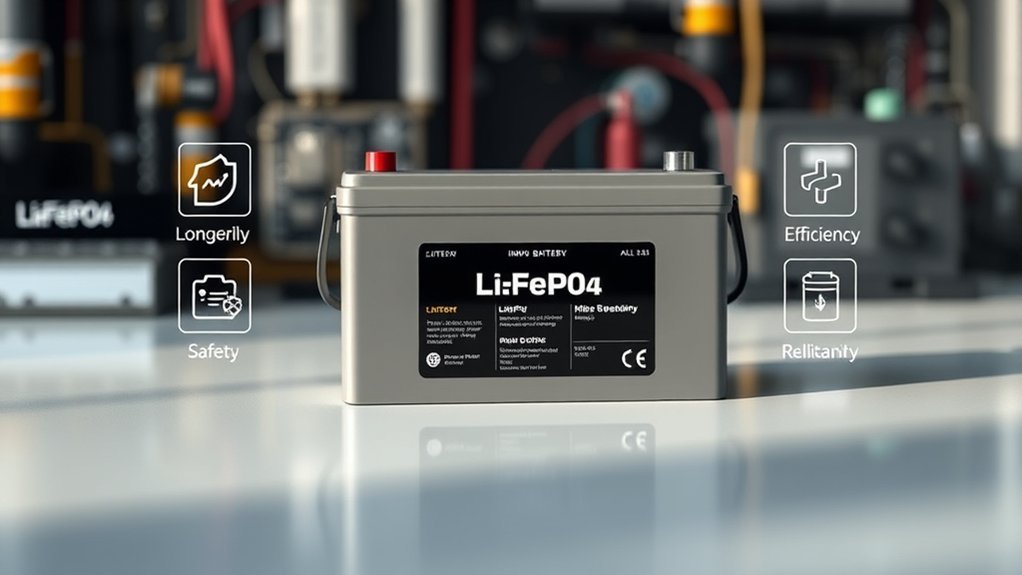
The unique chemistry of LiFePO4 batteries confers several significant advantages that make them a preferred choice for many energy storage applications. Especially, their battery lifespan exceeds that of traditional lithium-ion types, often reaching 2000-5000 charge cycles with minimal capacity loss. This durability reduces replacement frequency, lowering long-term costs. Additionally, LiFePO4 batteries have a lower environmental impact due to their non-toxic, stable chemistry, which minimizes risks during manufacturing, use, and disposal. Their thermal stability enhances safety, decreasing the likelihood of thermal runaway. These attributes collectively support sustainable energy solutions, making LiFePO4 batteries ideal for applications demanding longevity and ecological responsibility. Their inherent advantages position them as a reliable, environmentally conscious choice in energy storage technology.
What Are the Common Drawbacks and Limitations of LiFePO4 Batteries?

Despite their many advantages, LiFePO4 batteries have certain limitations that can impact their suitability for specific applications. One notable drawback is their environmental impact; while generally safer, the manufacturing process involves mining and processing materials that pose ecological risks, such as resource depletion and waste management issues. Additionally, manufacturing challenges include maintaining quality control due to the complexity of producing high-purity cathode materials, which can increase costs and variability. These factors can hinder large-scale adoption and raise concerns about sustainability. Furthermore, LiFePO4 batteries typically have lower energy density compared to other chemistries, limiting their use in applications requiring compact, lightweight solutions. Understanding these limitations helps us evaluate their overall performance and appropriateness for different energy storage needs.
How Do LiFePO4 Batteries Compare to Other Rechargeable Battery Types?
When comparing LiFePO4 batteries to other rechargeable chemistries, it’s essential to take into account their distinct performance characteristics, safety profiles, and application suitability. LiFePO4 batteries offer higher thermal stability and improved safety, reducing risks of thermal runaway compared to lithium-ion variants like NMC or lithium cobalt oxide. They deliver long cycle life and stable capacity, making them suitable for stationary storage and EV applications. However, their energy density is generally lower, which can limit portability. From an environmental perspective, LiFePO4 batteries are advantageous due to their safer chemical composition, leading to easier battery recycling and a reduced environmental impact. This contrasts with other chemistries requiring more complex recycling processes and posing higher ecological risks at end-of-life.
Is a LiFePO4 Battery the Right Choice for Your Needs?
Determining if a LiFePO4 battery is suitable for your needs requires careful consideration of your specific application requirements. Its extended battery lifespan, often exceeding 2000 charge cycles, makes it ideal for long-term use, reducing replacement costs. Additionally, the environmental impact of LiFePO4 batteries is relatively low compared to other chemistries, thanks to their non-toxic materials and stable chemical structure. However, their performance is most advantageous in applications demanding high stability, safety, and longevity, such as renewable energy storage or electric vehicles. If your priority is minimizing environmental harm and maximizing durability, a LiFePO4 battery could be the right choice. Conversely, if weight or initial cost are primary concerns, evaluating alternative options might be necessary.
Frequently Asked Questions
How Long Do Lifepo4 Batteries Typically Last?
Lifepo4 batteries typically last 8-10 years, with a lifespan of 2,000-3,000 charge cycles, depending on durability factors like temperature, depth of discharge, and usage patterns, ensuring reliable long-term performance we analyze carefully.
Are Lifepo4 Batteries Safe in All Conditions?
Lifepo4 batteries, based on advanced battery chemistry, are generally safe but require strict adherence to safety protocols, especially in extreme conditions. Proper design, handling, and monitoring are essential to mitigate risks like thermal runaway or damage.
Can Lifepo4 Batteries Be Recycled Easily?
Sure, Lifepo4 batteries are like the eco-friendly friends we all want—easily recyclable. Battery recycling reduces environmental impact, making Lifepo4 batteries a smart, sustainable choice. We analyze their design for straightforward, eco-conscious disposal.
What Maintenance Is Required for Lifepo4 Batteries?
We follow specific charging protocols and storage considerations to maintain Lifepo4 batteries’ longevity, ensuring proper voltage levels during charging and avoiding extreme temperatures during storage; regular monitoring helps prevent capacity loss and optimize performance.
How Do Temperature Extremes Affect Lifepo4 Performance?
Like a ship steering through turbulent waters, extreme temperatures threaten LiFePO4’s temperature stability, demanding robust thermal management. High heat accelerates degradation, while cold reduces efficiency; maintaining ideal conditions guarantees performance and longevity in demanding environments.
Conclusion
In conclusion, while LiFePO4 batteries offer notable safety, longevity, and environmental benefits—making them ideal for renewable energy storage—their lower energy density and manufacturing complexities pose challenges. For example, a solar farm deploying LiFePO4 cells can ensure safer, longer-lasting energy storage but may face higher initial costs and size constraints. Ultimately, assessing your specific needs and weighing these factors will determine if LiFePO4 technology aligns with your sustainability and performance goals.