Selecting the appropriate LiFePO4 battery size for your trolling motor is vital for reliable performance and longevity. An undersized battery can lead to insufficient power and reduced run time, while an oversized one may be unnecessarily costly and heavy. To make an informed choice, you need to understand your motor’s power demands and how they align with your boating needs. Let’s examine the essential factors that influence proper battery sizing and how to guarantee maximum efficiency.
Key Takeaways
- Determine the trolling motor’s wattage and thrust requirements to estimate the necessary battery capacity.
- Match battery voltage to the motor’s voltage specifications (e.g., 12V, 24V, or 36V systems).
- Calculate the desired runtime to select a battery capacity that supports your typical fishing trips.
- Consider the boat’s size, weight, and typical usage to ensure sufficient power without over-sizing.
- Use LiFePO4 batteries with a capacity of at least 100Ah for moderate use, increasing for extended or high-power applications.
Why Choosing the Right Battery Size Matters for Trolling Motors
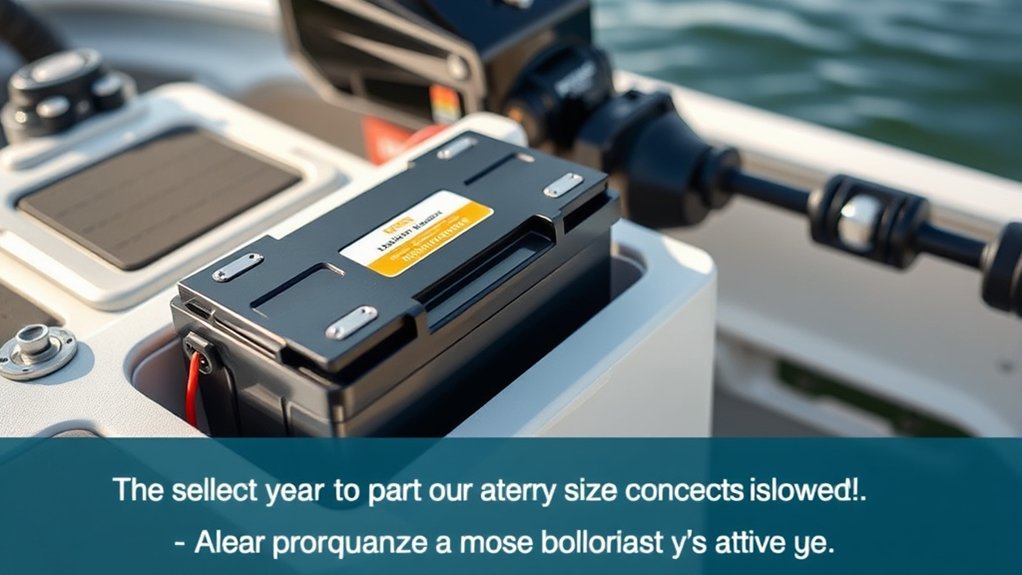
Choosing the correct battery size for your trolling motor is vital because it directly impacts performance, runtime, and overall battery longevity. Proper sizing guarantees ideal power delivery, preventing excessive strain on the battery, which enhances safety by reducing the risk of thermal runaway or leaks. Accurate sizing also minimizes environmental impact; over- or under-sized batteries can lead to increased waste or inefficient energy use. Using a correctly matched battery promotes safer operation, as Lifepo4 batteries are known for their stability and reduced hazard potential. Additionally, appropriate sizing extends the battery’s lifespan, decreasing the frequency of replacements and environmental waste. To sum up, selecting the right size balances safety considerations with environmental responsibility while ensuring your trolling motor performs reliably.
How to Calculate Your Trolling Motor’s Power Needs
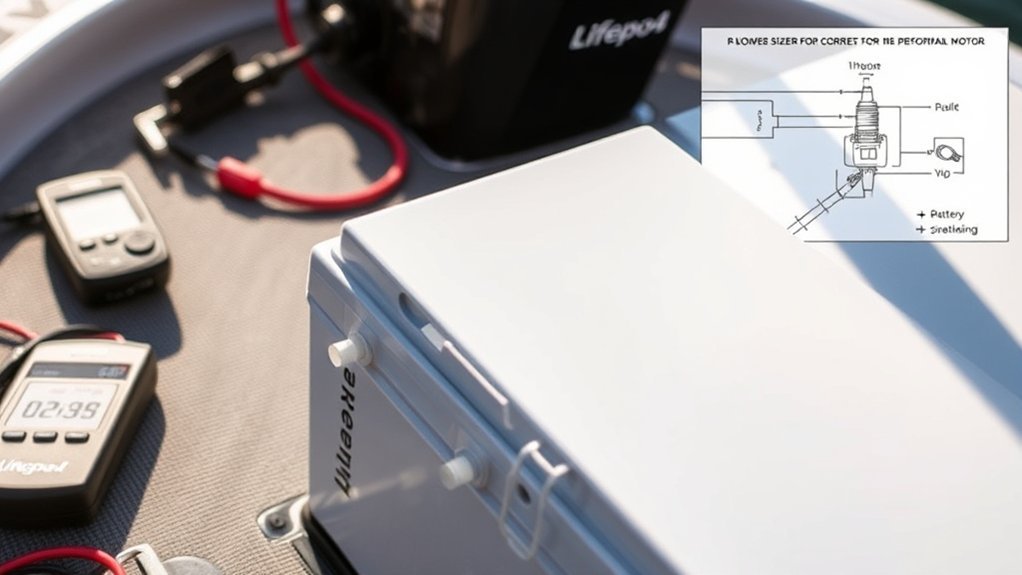
Understanding your trolling motor’s power requirements is essential for selecting the appropriate battery size. To accurately calculate this, consider three key factors:
- Motor Thrust and Voltage: Determine your motor’s thrust (measured in pounds) and voltage rating, which directly influence power consumption.
- Runtime Expectations: Estimate how long you need the motor to run at a specific thrust level, translating to watt-hours (Wh) required.
- Battery Chemistry and Charging Methods: Recognize that battery chemistry (e.g., LiFePO4) affects efficiency and lifespan, while compatible charging methods ensure peak performance and longevity.
Key Factors to Consider When Selecting a LiFePO4 Battery Capacity
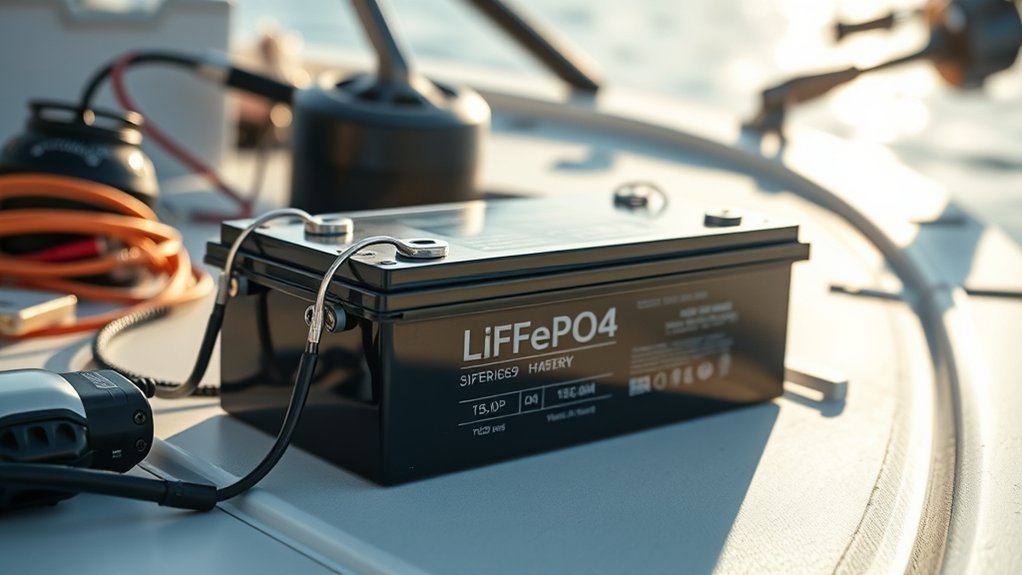
When selecting a LiFePO4 battery, we must first accurately assess the power requirements of the trolling motor to guarantee sufficient capacity. We also consider the expected lifespan of the battery to balance longevity with performance, while keeping budget constraints in mind. Making informed decisions on these factors ensures peak performance and cost-efficiency.
Power Needs Assessment
How do we accurately determine the appropriate capacity for a LiFePO4 battery to power a trolling motor? First, assess your total power requirements by calculating the motor’s wattage and expected run time. Second, consider the battery chemistry’s efficiency and discharge characteristics, confirming the capacity can sustain prolonged use without voltage drops. Third, verify charger compatibility to guarantee the charging system matches the battery’s specifications, optimizing lifespan and safety. These steps ensure the selected capacity meets your needs precisely, avoiding over- or under-sizing. By focusing on these key factors, we can guarantee reliable performance, maximize battery longevity, and maintain compatibility with your existing charging infrastructure. This methodical approach provides a solid foundation for selecting the right LiFePO4 battery size.
Battery Longevity Expectations
Selecting the appropriate battery capacity isn’t just about meeting immediate power needs; it also profoundly influences the lifespan of your LiFePO4 battery. Battery chemistry plays a critical role in longevity, with LiFePO4 offering superior cycle life compared to other chemistries. Proper capacity selection guarantees fewer deep discharges, reducing stress on the cells and extending battery life. Additionally, over- or under-sizing impacts environmental impact by affecting the frequency of replacements and waste. A well-chosen capacity minimizes degradation over time, maintaining ideal performance and reducing the ecological footprint associated with manufacturing and disposal. Ultimately, understanding these factors helps us make informed choices that maximize both battery longevity and environmental responsibility, ensuring reliable power for years to come.
Budget and Cost Considerations
Budget constraints profoundly influence the choice of LiFePO4 battery capacity for a trolling motor, requiring careful evaluation of initial costs versus long-term savings. First, consider the battery weight, as larger capacities increase weight, impacting boat performance and handling. Second, assess the environmental impact, since higher-capacity batteries may involve more resource extraction and end-of-life disposal concerns. Third, analyze the cost-effectiveness, balancing upfront investment against durability, maintenance, and lifespan. While larger batteries cost more initially, they often deliver better long-term value through reduced replacement frequency and efficiency gains. Ultimately, selecting the right capacity involves weighing these factors to optimize performance, sustainability, and budget, ensuring the chosen LiFePO4 battery aligns with both operational needs and financial constraints.
Matching Battery Size to Your Boating and Fishing Habits
Choosing the right battery size depends heavily on your boating style and fishing frequency, as these factors directly influence power demands. We must assess how often and how long you operate your trolling motor to determine ideal capacity. Precise matching ensures reliable performance without unnecessary weight or cost.
Boating Style Considerations
Since your boating and fishing habits directly influence the power demands placed on your trolling motor, matching the battery size to your specific style is essential for peak performance. Consider how your boating approach impacts battery requirements:
- Extended trips or offshore excursions demand larger capacity batteries to ensure consistent power, especially in adverse weather conditions.
- Frequent fishing sessions require batteries that support sustained use without frequent recharges, reducing downtime.
- Boat maintenance routines, such as regular inspections, help identify battery wear and optimize performance, particularly in challenging weather.
Fishing Frequency Impact
Frequent fishing trips considerably influence the ideal size of your LiFePO4 battery, as they demand consistent, reliable power over extended periods. High fishing frequency necessitates a larger capacity to support your fishing gear and sustain trolling techniques without interruption. Continuous trolling requires sufficient battery reserve to maintain peak motor performance, especially when using advanced trolling motors with higher power demands. If your trips involve extensive use of electronics or multiple trolling motor sessions, a larger battery ensures reliability and minimizes downtime. Adequate capacity also accounts for the energy consumption of fishing gear, such as fish finders and lights. Matching battery size to your fishing habits guarantees consistent performance, enhances safety, and reduces the risk of battery depletion during critical moments.
Common Mistakes to Avoid When Picking a Battery Size
One common mistake to avoid is underestimating the battery capacity needed for your trolling motor, which can lead to insufficient runtime and potential damage to the battery. Selecting an inadequate battery size disregards critical factors like battery chemistry and charging techniques.
- Ignoring power demands: Failing to calculate the motor’s continuous draw results in selecting a battery that cannot sustain operation.
- Overlooking efficiency: Not considering the charging methods or proper maintenance shortens battery lifespan.
- Neglecting capacity margins: Underestimating required reserve capacity risks deep discharges, damaging the battery’s chemistry and reducing longevity.
Tips for Optimizing Battery Performance and Longevity
To maximize both the performance and lifespan of your Lifepo4 battery, implementing proper maintenance and operational practices is essential. Understanding the battery chemistry of Lifepo4 cells helps enhance charge cycles and temperature management, reducing degradation. Consistently following correct charging techniques—such as avoiding overcharging or deep discharges—preserves cell integrity and prolongs service life. Using a compatible charger with a multi-stage charging profile ensures balanced voltage levels across cells, minimizing capacity loss over time. Additionally, maintaining ideal operating temperatures and avoiding exposure to extreme heat or cold are critical. Regularly inspecting terminals and connections prevents corrosion and guarantees efficient power transfer. By adhering to these practices, you can considerably improve your battery’s performance and extend its usable lifespan, maximizing your investment.
Frequently Asked Questions
How Does Temperature Affect Lifepo4 Battery Performance?
Temperature affects LiFePO4 battery performance considerably; extreme temperatures diminish capacity and efficiency. Proper temperature regulation guarantees ideal battery chemistry conditions, maintaining longevity and safe operation, especially in cold or hot environments, essential for reliable trolling motor use.
Can I Upgrade My Battery Size Later if Needed?
Upgrading your battery size is like changing sails on a ship; it’s possible, but requires careful planning. Follow proper battery maintenance and charging best practices to guarantee compatibility and performance, safeguarding your investment and optimizing your trolling motor’s power.
What Are the Signs of an Under-Sized Trolling Motor Battery?
We notice signs of an under-sized trolling motor battery through reduced runtime, inconsistent power delivery, and frequent charging cycles, indicating insufficient battery capacity. Upgrading guarantees ideal performance and longevity, preventing premature wear and maintaining reliable operation during extended outings.
How Do I Safely Dispose of Old Lifepo4 Batteries?
When disposing of old LiFePO4 batteries, always prioritize battery recycling and lithium safety. For example, we transported used batteries to certified recycling facilities, ensuring proper handling and compliance with regulations, preventing environmental harm and safety hazards.
Are There Specific Brands Recommended for Trolling Motor Batteries?
We suggest brands like Battle Born and A123 Systems for trolling motor batteries, as their dependability is proven, and they offer thorough warranties. Selecting reputable brands guarantees ideal performance, safety, and lasting value for your trolling motor configuration.
Conclusion
Choosing the right LiFePO4 battery size is like planting a sturdy tree—our investment grows stronger and healthier over time. When we select the proper capacity, we guarantee our trolling motor runs smoothly, like a well-oiled machine, and our trips stay uninterrupted. Proper sizing acts as the root system, anchoring reliability and performance. With careful calculation and consideration, we can navigate every journey with confidence, knowing our power source is built to sustain our boating adventures.