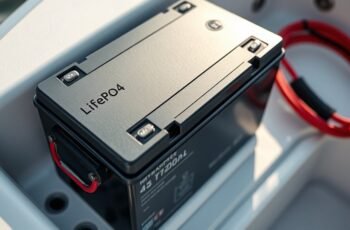
Determining the right size of a LiFePO4 battery is like balancing on a tightrope—precision is key to maintaining stability and efficiency. We need to carefully analyze each device’s wattage and daily usage, converting that into an overall energy requirement. But this is only the beginning; understanding how battery chemistry, efficiency, and depth of discharge impact capacity is essential to avoid costly mistakes. So, how do we accurately match a battery to our specific power demands?
Key Takeaways
- Calculate your total daily energy consumption by summing the watt-hours of all devices used.
- Determine the battery capacity in Wh needed to meet your energy requirements, considering efficiency and depth of discharge.
- Match the battery’s Ah or Wh capacity to your peak and average device power demands.
- Account for factors like load demands, usage frequency, and future energy needs when sizing the battery.
- Ensure proper sizing to balance cost, lifespan, and safety, avoiding both undersizing and oversizing.
How to Calculate Your Energy Needs for a Lifepo4 Battery
To accurately determine the size of a LiFePO4 battery needed for your application, you must first calculate your total energy consumption in watt-hours (Wh). Start by listing all devices’ power ratings in watts and multiplying each by their daily usage hours. Sum these values to get your total energy requirement. Considering the battery chemistry, LiFePO4 offers high efficiency and stability, which influences the number of charging cycles it can endure—typically over 2,000 cycles. This means you’ll want to size your battery to accommodate your energy needs while factoring in depth of discharge to extend lifespan. Proper calculation guarantees your battery will meet your power demands reliably, maximizing efficiency over its lifespan and minimizing unnecessary replacements.
Understanding Battery Capacity and How It Affects Your Power Supply

Understanding battery capacity is essential because it directly determines how long your power supply can meet your energy demands. Battery capacity, measured in ampere-hours (Ah) or watt-hours (Wh), depends on factors like battery chemistry and design. For instance, Lithium Iron Phosphate (LiFePO4) batteries typically offer longer cycle life and better thermal stability. Key considerations include:
- Capacity Rating: Higher Ah or Wh indicates longer runtime.
- Battery Chemistry: Affects efficiency, lifespan, and safety.
- Charging Cycles: More cycles mean a longer service life and sustained capacity.
- Depth of Discharge: Deeper discharges reduce overall capacity over time, impacting power availability.
Matching Battery Size to Your Typical Usage and Devices
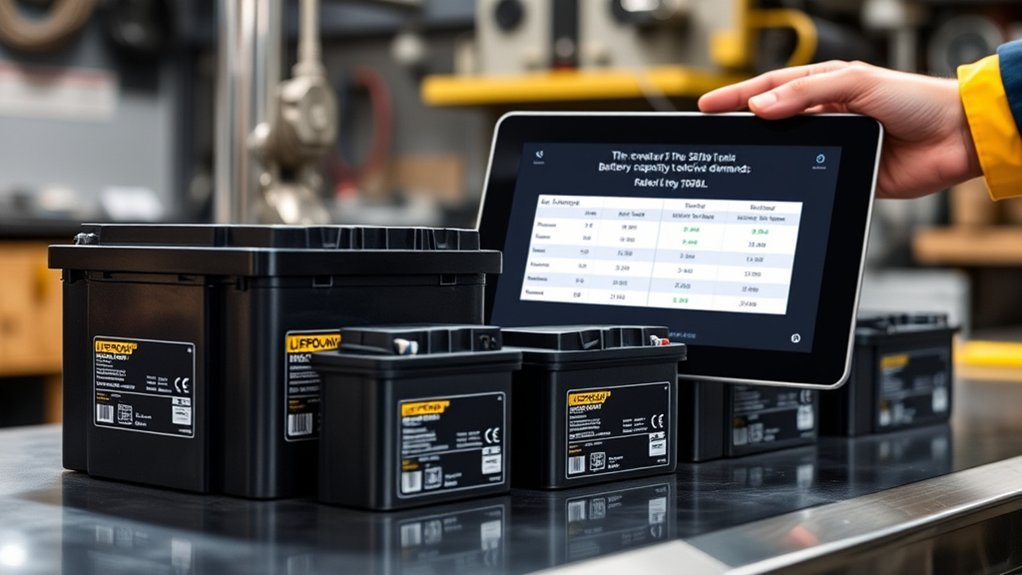
When selecting the right LiFePO4 battery size, it’s important to analyze your typical energy consumption patterns and the specific devices you plan to power. Precise calculations of power draw during peak and average usage help determine the necessary capacity, guaranteeing your system doesn’t underperform or overextend. For example, high-drain devices require larger batteries to handle surge currents. Proper installation guidelines should be followed to optimize safety and performance, including secure mounting and correct wiring. Regular battery maintenance, such as checking connections and monitoring voltage, prolongs lifespan and maintains efficiency. Matching your battery size accurately to your needs minimizes unnecessary costs and ensures reliable operation, especially when considering future device additions or increased energy demands.
Factors That Influence the Right Size Lifepo4 Battery for You
Selecting the appropriate size of a LiFePO4 battery requires careful consideration of several critical factors that directly impact performance and longevity. These include:
Choosing the right LiFePO4 battery size is essential for optimal performance and durability.
- Load demands – Higher power needs shorten battery lifespan due to increased stress on charging cycles.
- Usage frequency – Frequent cycling accelerates capacity degradation, influencing ideal size for longevity.
- Desired battery longevity – Larger capacity batteries generally sustain more charging cycles, extending overall lifespan.
- Charge/discharge rates – Faster charging or discharging can reduce battery longevity if the size isn’t matched to load requirements.
Understanding these factors ensures you select a size that balances capacity, reduces stress on the battery, and maximizes both performance and lifespan.
Tips for Choosing a Battery Size That Saves Money and Ensures Reliability
Choosing the right battery size is essential for balancing upfront costs with long-term reliability; selecting a capacity that closely matches your actual load requirements prevents unnecessary expenditure and reduces the risk of premature battery failure. To maximize battery longevity and cost efficiency, consider not only your current energy demands but also potential future increases. Oversizing can lead to reduced battery lifespan due to deeper cycles, while undersizing may cause insufficient power supply and frequent recharging. Precise calculations of your load profile help determine the ideal capacity, ensuring reliable operation without excess capacity that drives up initial costs. Properly sized batteries minimize wear and tear, extend service life, and maximize overall cost efficiency, making your investment sustainable and dependable over the long term.
Frequently Asked Questions
Can I Upgrade My Lifepo4 Battery Later if My Needs Change?
Yes, you can upgrade your Lifepo4 battery later by choosing a higher capacity, considering battery weight differences, and ensuring compatibility with your system’s voltage and connectors, enabling flexible capacity adjustments as your needs evolve.
How Does Temperature Affect Lifepo4 Battery Performance and Size Requirements?
Think of temperature effects on Lifepo4 batteries like a garden in different seasons; cold reduces performance, hot accelerates aging. This impacts battery sizing, as we must account for temperature variations to guarantee reliable power and longevity.
What Safety Considerations Are Involved in Choosing the Right Battery Size?
We guarantee safety by matching battery capacity to load demands and verifying voltage compatibility, preventing overcurrent risks and thermal issues. Properly rated batteries reduce fire hazards, promote longevity, and maintain system stability during operation.
Are There Specific Brands Known for Reliable Lifepo4 Battery Sizes?
Some brands are legendary for reliability, like Battle Born and Renogy, ensuring size compatibility and consistent performance. We trust their reputation for delivering dependable LiFePO4 batteries, making them top choices for technical precision and long-term safety.
How Does Battery Cycle Life Impact the Ideal Battery Size Choice?
We consider battery cycle life, as higher cycle longevity reduces cycle degradation, making the battery size more efficient and cost-effective over time. Longer-lasting batteries guarantee consistent performance, minimizing replacement frequency and optimizing overall system reliability and lifespan.
Conclusion
By carefully calculating our energy needs and understanding battery capacity, we can select a LiFePO4 battery that balances reliability and cost-efficiency. Considering factors like device wattage, usage patterns, and depth of discharge guarantees the most effective sizing, prolonging battery lifespan. As the saying goes, “Measure twice, cut once”—a meticulous approach guarantees our power system is both robust and economical, avoiding over- or under-sizing that could compromise performance or longevity.