As we explore Lifepo4 batteries, it’s crucial to understand their unique chemistry, which uses lithium iron phosphate as the cathode material. This choice enhances safety, thermal stability, and cycle life, making them suitable for critical applications. Despite lower energy density than other lithium-ion types, their environmental benefits and reliability are significant. To optimize their benefits and guarantee safe operation, a thorough examination of their features and usage considerations is necessary.
Key Takeaways
- Lifepo4 batteries use lithium iron phosphate as the cathode, offering enhanced safety and thermal stability.
- They provide long cycle life, making them durable for stationary storage and electric vehicles.
- Their energy density is lower than other lithium-ion chemistries, around 90-160 Wh/kg.
- They are safer with reduced risk of thermal runaway and environmentally friendly due to easier recycling.
- Proper maintenance, correct charging, and avoiding deep discharges extend their lifespan and performance.
What Are Lifepo4 Batteries and How Do They Work?
Have you ever wondered what distinguishes LiFePO4 batteries from other types of rechargeable batteries? Their key difference lies in their battery chemistry, which uses lithium iron phosphate as the cathode material. This chemistry provides enhanced thermal stability and safety, reducing the risk of thermal runaway. When charged, lithium ions move from the cathode to the anode through an electrolyte, enabling energy storage and release. Although LiFePO4 batteries have a lower energy density compared to other lithium-ion chemistries, they compensate with longer cycle life and improved safety. The energy density, typically around 90-160 Wh/kg, limits their use in high-weight, space-constrained applications but makes them ideal for stationary storage and electric vehicles requiring durability and safety.
Key Advantages of Using Lifepo4 Batteries

Lifepo4 batteries offer several key advantages that make them a preferred choice in various applications. They exhibit superior safety profiles due to thermal stability, reducing risks of thermal runaway. Their long cycle life enhances durability, lowering replacement frequency. The environmental impact is minimized through efficient battery recycling processes, which recover valuable materials and reduce waste. Additionally, Lifepo4 batteries have a lower self-discharge rate, ensuring sustained performance over time. They also provide consistent power output, ideal for demanding applications.
- Safer chemistry with reduced thermal runaway risk
- Extended cycle life for longevity
- Environmentally friendly due to efficient recycling
- Reduced self-discharge rate
- Stable power delivery under load
How Do Lifepo4 Batteries Compare to Other Lithium-Ion Types?
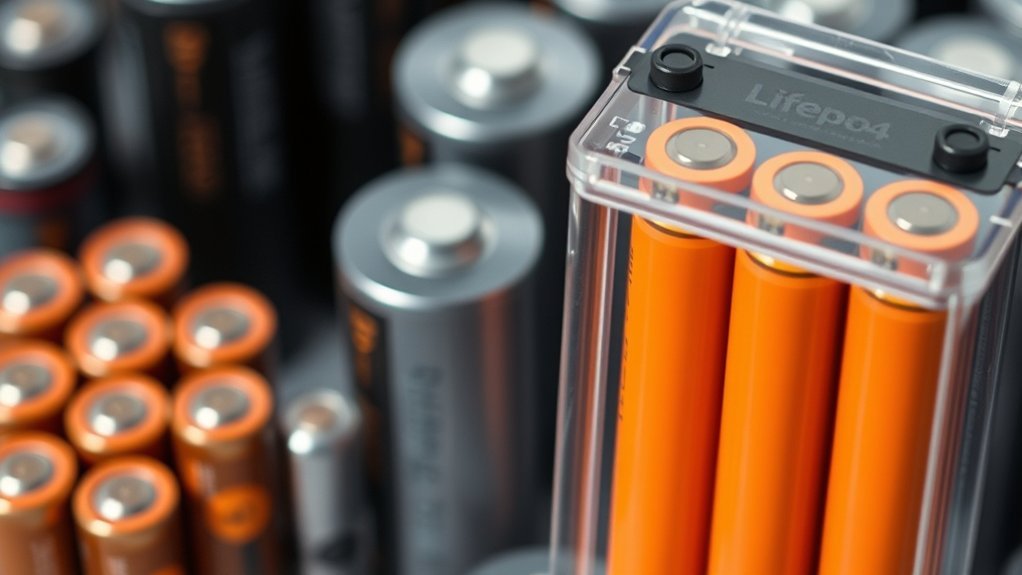
When comparing Lifepo4 batteries to other lithium-ion chemistries, differences in safety, lifespan, and performance become apparent. Lifepo4 cells offer superior thermal stability, reducing risks of thermal runaway and enhancing safety. They typically have a longer cycle life—often exceeding 2,000 cycles—outlasting other lithium-ion types. Performance-wise, Lifepo4 batteries maintain consistent power output and exhibit low self-discharge rates. Additionally, they have a lower environmental impact due to their more stable chemistry and reduced toxic materials. Regarding battery recycling, Lifepo4 batteries are generally easier to process safely, minimizing ecological risks. These attributes make Lifepo4 a sustainable choice, aligning with increasing emphasis on environmentally responsible energy storage solutions. Overall, Lifepo4 batteries outperform many lithium-ion variants across safety, durability, and ecological considerations.
Important Factors to Consider When Choosing a Lifepo4 Battery
When selecting a Lifepo4 battery, we focus on key factors such as capacity and power output to meet your energy demands. We also evaluate cycle life expectancy to guarantee long-term performance, alongside safety features and certifications for reliable operation. Understanding these elements helps us choose the best battery for your specific application.
Battery Capacity and Power
How do we determine the suitability of a Lifepo4 battery for our specific application? We assess its capacity and power output, vital for meeting energy demands. Battery capacity, measured in ampere-hours (Ah) or watt-hours (Wh), indicates total stored energy, directly influencing runtime. Power, expressed in continuous and peak discharge rates, reflects how quickly the battery can deliver energy without degradation. Considering battery chemistry, Lifepo4 offers high energy density and stability, making it ideal for demanding applications. Key factors include:
- Energy density for compact, lightweight designs
- Continuous discharge rate for steady power needs
- Peak discharge capacity for surge demands
- Compatibility with device voltage requirements
- Long-term capacity retention under load
These parameters guarantee ideal performance tailored to specific use cases.
Cycle Life Expectancy
Cycle life expectancy is a critical factor in selecting a Lifepo4 battery, as it determines the number of charge-discharge cycles the battery can sustain before its capacity drops below 80%. This metric directly influences overall durability and long-term performance. Lifepo4 batteries typically offer a high cycle life, often exceeding 2,000 cycles, making them suitable for demanding applications. Proper management of charge rates and operating temperatures can optimize cycle longevity. Additionally, considering battery recycling options is essential for minimizing environmental impact, as Lifepo4 batteries contain fewer hazardous materials compared to other chemistries. This sustainable aspect bolsters their appeal, aligning technical performance with ecological responsibility. Ultimately, understanding cycle life helps ensure reliable operation and promotes environmentally conscious choices.
Safety and Certification
Choosing a Lifepo4 battery involves more than just evaluating its cycle life; safety and certification standards are essential for reliable, secure operation. Proper certifications guarantee the battery meets strict safety protocols, mitigating risks like thermal runaway or fire. Additionally, certified batteries often adhere to environmental regulations, supporting sustainable practices such as battery recycling and minimizing environmental impact. When selecting a battery, consider these factors:
- Compliance with international safety standards (e.g., UL, CE)
- Proven resistance to overcharge, short circuit, and over-discharge
- Certification of environmentally responsible manufacturing
- Clear labeling for recycling instructions
- Documentation supporting environmental impact reduction
Prioritizing these certifications helps ensure safety, promotes responsible disposal, and reduces ecological footprint.
Proper Maintenance and Care for Longevity
Maintaining Lifepo4 batteries requires strict adherence to proper charging routines; regular, controlled charging helps preserve capacity over time. Avoiding deep discharges is vital, as excessive depletion can accelerate capacity loss and reduce lifespan. Implementing these practices guarantees peak performance and extends the battery’s operational life.
Regular Charging Practices
Proper charging practices are essential to maximize the lifespan and performance of LiFePO4 batteries. Maintaining ideal charge levels reduces the number of charging cycles, thereby minimizing battery degradation over time. Consistent, controlled charging prevents overvoltage and excessive heat, which accelerate capacity loss. To guarantee longevity, follow these principles:
- Charge within the recommended voltage window
- Avoid frequent partial charges or overcharging
- Use compatible, high-quality chargers
- Monitor temperature during charging
- Limit deep discharges to reduce stress on the battery
Adhering to these practices helps preserve capacity, reduces the rate of battery degradation, and extends operational life. Proper management of charging cycles is critical for maintaining the battery’s health and ensuring reliable performance over its lifespan.
Avoid Deep Discharges
To guarantee the longevity of LiFePO4 batteries, we must prevent deep discharges that can cause irreversible damage to the cells’ internal structure. Deep discharges, where voltage drops below a critical threshold, accelerate capacity loss and reduce lifespan. Proper maintenance involves monitoring voltage levels and avoiding complete depletion. Additionally, responsible battery recycling minimizes environmental impact, preventing hazardous materials from contaminating ecosystems. By prioritizing controlled discharge levels, we extend battery life and promote sustainability. Understanding the importance of avoiding deep discharges helps us optimize performance while reducing the need for frequent replacements. This not only preserves resources but also aligns with eco-friendly practices, emphasizing the importance of proper disposal and recycling methods to mitigate environmental impact.
Common Applications of Lifepo4 Batteries in Daily Life
Have you ever considered how Lifepo4 batteries are integrated into our daily routines? Their stability, longevity, and safety make them ideal for various applications. In solar energy systems, Lifepo4 batteries efficiently store excess power, enabling reliable energy use during low sunlight periods. They’re also fundamental in electric vehicles, providing high energy density and fast charging capabilities essential for performance and range. Additionally, Lifepo4 batteries are used in:
Lifepo4 batteries power solar, EVs, and backup systems with safety and longevity.
- Uninterruptible power supplies (UPS)
- Portable power banks
- Marine and RV applications
- Off-grid solar systems
- Emergency backup systems
These applications benefit from Lifepo4’s thermal stability, cycle life, and environmental resilience, making them a versatile choice for both residential and commercial energy solutions.
Safety Tips to Maximize Lifepo4 Battery Performance
Ensuring safety when handling Lifepo4 batteries is essential for maximizing their performance and lifespan. Proper safety measures prevent thermal runaway, overcharging, and potential damage that could compromise battery integrity. We recommend using compatible chargers and monitoring voltage and temperature during operation. Responsible battery recycling is critical to mitigate environmental impact, as Lifepo4 batteries contain materials that can be reclaimed and reused, reducing waste. Avoid exposing batteries to extreme temperatures or physical damage, which can degrade cell performance. Regularly inspecting connections and ensuring proper ventilation minimizes risks associated with potential gas release. Prioritizing safety not only extends battery life but also supports eco-friendly disposal practices, contributing to reduced environmental impact and promoting sustainable energy solutions.
Troubleshooting Typical Lifepo4 Battery Issues
When Lifepo4 batteries exhibit issues, identifying the root causes is essential to maintaining their performance and safety. Common problems include reduced capacity, abnormal heating, inconsistent voltage, rapid self-discharge, and difficulty in charging. Troubleshooting requires systematic analysis:
- Check for cell imbalance, which can impair capacity and safety.
- Monitor temperature to prevent overheating and potential thermal runaway.
- Verify proper charging protocols to avoid under- or overcharging.
- Inspect for physical damage or corrosion on terminals and connectors.
- Consider the environmental impact of disposal; appropriate battery recycling minimizes ecological harm.
Addressing these issues promptly extends battery lifespan and reduces environmental impact. Proper maintenance also supports sustainable practices, emphasizing the importance of responsible disposal and recycling, integral to minimizing the ecological footprint of Lifepo4 batteries.
Future Trends and Innovations in Lifepo4 Technology
Advancements in Lifepo4 battery technology are poised to substantially enhance performance, safety, and sustainability through innovative materials and design approaches. Future developments focus on optimizing solar integration, enabling more efficient energy storage for renewable systems, and improving charge/discharge cycles. Researchers are exploring advanced electrode materials to increase energy density and lifespan. Additionally, recycling methods are evolving to facilitate the recovery of critical materials, minimizing environmental impact and supporting circular economy principles. Enhanced thermal management strategies will further improve safety and operational stability. These innovations aim to reduce manufacturing costs, extend battery longevity, and facilitate seamless integration into diverse applications like grid storage and electric vehicles. Overall, ongoing research underscores a commitment to making Lifepo4 technology more sustainable, reliable, and adaptable for future energy needs.
Frequently Asked Questions
What Is the Typical Lifespan of a Lifepo4 Battery?
We find Lifepo4 batteries typically last around 2,000 to 3,000 charge cycles, with minimal battery degradation over time. Proper maintenance guarantees ideal lifespan, making them highly durable compared to other lithium-ion chemistries.
Are Lifepo4 Batteries Environmentally Friendly?
We believe LiFePO4 batteries are eco-friendly, utilizing eco-friendly materials and offering high recyclability benefits, which minimize environmental impact. Their long lifespan further reduces waste, making them a sustainable choice for energy storage solutions.
How Do Temperature Extremes Affect Lifepo4 Battery Performance?
Temperature extremes impair LiFePO4 battery performance by reducing thermal stability and risking damage. Effective temperature management guarantees ideal operation, maintaining battery longevity and safety by preventing overheating in hot conditions and cold-related capacity loss.
Can Lifepo4 Batteries Be Recycled?
We can recycle Lifepo4 batteries through specialized battery recycling processes, greatly reducing environmental impact. Recycling guarantees valuable materials are recovered, minimizes waste, and promotes sustainable practices, making it essential for responsible battery lifecycle management.
What Are the Cost Differences Between Lifepo4 and Other Lithium Batteries?
Cost differences between Lifepo4 and other lithium batteries are significant, mainly due to market adoption and manufacturing costs. While Lifepo4 batteries often cost more upfront, their durability and safety can save money long-term, making them a wise investment.
Conclusion
In exploring LiFePO4 batteries, we see their safety, durability, and environmental benefits align with sustainable energy goals. While some believe their lower energy density limits application, research shows ongoing innovations are closing this gap. By understanding their mechanics and proper maintenance, we can maximize their potential. This suggests that embracing LiFePO4 technology isn’t just about current needs, but about investing in a resilient, eco-friendly energy future rooted in scientific progress and responsible choices.