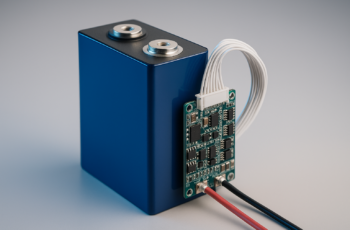
Sizing a LiFePO4 battery is like balancing a delicate scale—each component and factor must be carefully weighed to guarantee ideal performance and longevity. As system demands grow more complex, understanding the precise relationship between energy needs, safety margins, and future expansion becomes vital. Without this knowledge, you risk inefficiency or premature failure. To build a reliable, efficient battery system, it’s important to analyze each aspect thoroughly, and that’s where detailed strategies come into play.
Key Takeaways
- Calculate total daily energy consumption by listing devices, their wattage, and usage hours.
- Include a safety margin of 20-30% to accommodate load fluctuations and environmental factors.
- Determine battery capacity based on energy needs, ensuring it supports future expansion and peak demands.
- Avoid deep discharges by sizing batteries to prevent capacity degradation and extend lifespan.
- Regularly monitor voltage and capacity during discharge to validate sizing accuracy and maintain system health.
How to Calculate Your Total Power Needs for a LiFePO4 Battery
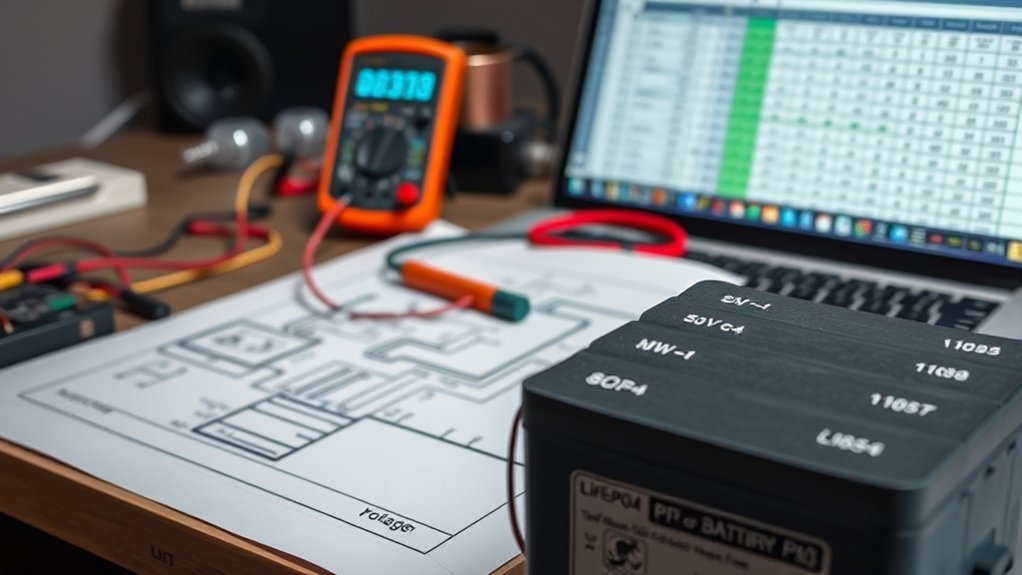
To determine the appropriate size for your LiFePO4 battery, we first need to calculate your total power consumption. Understanding your energy requirements involves analyzing your devices’ power draw and usage duration. Battery chemistry influences how efficiently the battery can store and deliver power, making LiFePO4 a reliable choice for long-term stability and safety. The installation location also impacts your calculation, as environmental factors like temperature and space constraints can affect performance and cooling needs. To precisely size your battery, list all connected devices, note their wattage, and estimate daily usage hours. Summing these values gives your total daily energy demand. This systematic approach guarantees your battery capacity aligns with actual power needs, optimizing performance and longevity.
Understanding the Capacity and Discharge Rates of LiFePO4 Batteries

Understanding the capacity and discharge rates of LiFePO4 batteries is essential for ensuring they meet your energy demands efficiently and safely. Battery chemistry influences both the total capacity and the rate at which energy can be drawn without degradation. LiFePO4’s stable chemistry allows for high discharge rates, often up to 3C or more, enabling rapid energy delivery when needed. However, discharge rates beyond recommended levels can shorten lifespan or cause safety risks. Storage temperature also plays a critical role; operating outside ideal temperature ranges can impair capacity and affect discharge performance. Maintaining proper storage conditions preserves battery health, ensuring consistent capacity and reliable discharge rates over time. This understanding helps in selecting the right battery size for your application while maximizing longevity and safety.
How to Determine Your Daily Energy Consumption and Usage Patterns

Accurately determining your daily energy consumption requires analyzing your typical usage patterns and quantifying the power demands of each device or system involved. This involves tracking device runtime, power ratings, and operational cycles to establish a detailed energy profile. Understanding these patterns helps optimize battery maintenance by preventing over- or under-sizing, which can impact system longevity. Environmental considerations also influence consumption estimates—temperature fluctuations and humidity can alter device efficiency and energy needs. Precise measurement guarantees the battery capacity aligns with actual usage, reducing waste and enhancing performance. By carefully analyzing these factors, you can select a Lifepo4 battery that meets your daily demands while accounting for environmental impacts, leading to more reliable and sustainable energy storage.
Selecting the Right Battery Size Based on Your System Components and Future Expansion
When selecting the appropriate battery size, we need to analyze the power demands and capacity of our system components to guarantee reliable operation. Planning for future expansion requires us to take into account potential increases in load and additional components, which influence our overall capacity requirements. By aligning these factors, we can optimize battery sizing to meet current needs and accommodate growth efficiently.
Power Demands and Capacity
To select the appropriate LiFePO4 battery size, we must first analyze the power demands of your system components and anticipate future expansion. Key factors include the total energy consumption, the peak load capacity, and environmental considerations affecting battery performance.
- Calculate the average and peak power draw of all components to determine capacity needs.
- Consider the battery chemistry’s efficiency and discharge rates to ensure reliability.
- Account for environmental factors like temperature variations that impact capacity and lifespan.
Understanding these aspects ensures the battery can meet current demands and accommodate potential upgrades. Proper sizing prevents underperformance and extends the lifespan of your LiFePO4 system, making it essential to evaluate both immediate power needs and environmental influences.
Planning for Expansion
How can we guarantee your battery system remains reliable as your energy needs grow? Planning for expansion requires selecting a battery size aligned with your current system components and future demands. We consider battery chemistry to optimize longevity and performance, ensuring compatibility with your existing setup. Installation guidelines emphasize scalability, allowing for seamless addition of modules without compromising safety or efficiency. To illustrate, consider these factors:
| Future Load | Battery Capacity | Expansion Compatibility |
|---|---|---|
| Increased appliances | 20% buffer | Modular design |
| System upgrades | Larger inverter | Wiring flexibility |
Accounting for Safety Margins and Battery Longevity in Your Sizing
To optimize battery lifespan and guarantee safety, we must incorporate buffer capacity into our sizing calculations, accounting for unexpected load variations. Balancing charge cycles is essential, as it minimizes stress on the cells and prolongs overall longevity. By systematically applying these considerations, we can achieve a more reliable and durable Lifepo4 battery system.
Incorporating Buffer Capacity
Including buffer capacity in battery sizing is essential for ensuring safety margins and extending battery lifespan. Adequate buffer accounts for variations in battery chemistry, thermal management, and load fluctuations. Specifically:
- Safety Margin: Incorporate a percentage (typically 20-30%) of additional capacity to handle unexpected demand surges or inefficiencies.
- Thermal Management: Buffer capacity prevents thermal stress during rapid charge/discharge cycles, preserving battery integrity.
- Battery Longevity: Maintaining a reserve reduces deep discharges, which are detrimental to Lifepo4 chemistries, consequently prolonging cycle life.
Balancing Charge Cycles
Balancing charge cycles is critical for maximizing battery lifespan and ensuring reliable performance, especially when factoring in safety margins. Proper balancing accounts for the inherent characteristics of LiFePO4 chemistry, which benefits from consistent voltage levels across cells. Implementing effective charging protocols—such as multi-stage charging—helps prevent overcharging or deep discharges that accelerate cell imbalance. Regular balancing minimizes capacity fade caused by uneven cell aging, ultimately extending the battery’s service life. When sizing a system, we must consider how charge cycles interact with safety margins, ensuring that the battery operates within ideal voltage and current limits. This approach preserves cell health, maintains capacity, and enhances longevity, making balancing charge cycles an essential aspect of designing robust, durable LiFePO4 battery systems.
How to Match Your Battery Size With Your Charging and Inverter Requirements
Matching your battery size with your charging and inverter requirements requires a careful analysis of both power demands and system capacity. Proper sizing guarantees efficient energy use, reduces maintenance needs, and supports renewable integration. To achieve this, consider these factors:
- Peak Power Demand: Calculate the maximum load the inverter will handle, ensuring the battery can supply this power without strain.
- Charge Rate Compatibility: Confirm your charger’s output aligns with the battery’s maximum charge rate to optimize battery maintenance and longevity.
- System Capacity: Match battery capacity to the total energy consumption, preventing under or over-sizing, which impacts system efficiency and durability.
Accurate sizing minimizes performance issues, supports renewable energy goals, and promotes long-term system stability.
Tips for Verifying and Adjusting Your Battery Size for Real-World Performance
To guarantee your LiFePO4 battery performs reliably under real-world conditions, it’s essential to verify its capacity and adjust as necessary based on actual usage data. Regular battery maintenance, including capacity testing, helps identify discrepancies between rated and actual performance. Monitoring voltage regulation during discharge cycles reveals efficiency drops or voltage sag, indicating potential capacity issues. If the battery consistently underperforms, consider increasing its size or adjusting load demands to prevent over-discharge. Accurate measurements enable precise recalibration of system components, ensuring peak operation. Adjustments should prioritize maintaining voltage stability and preventing deep discharges, which can degrade battery health. These steps ensure your battery system aligns with real-world demands, maximizing lifespan and performance through informed capacity verification and targeted modifications.
Frequently Asked Questions
How Does Temperature Affect Lifepo4 Battery Sizing?
Temperature effects profoundly influence Lifepo4 battery sizing because extreme cold diminishes performance and capacity, while high heat accelerates degradation. We analyze these factors to guarantee ideal battery performance and longevity under varying temperature conditions.
Can I Upgrade My Battery Size Later Easily?
Yes, you can upgrade your battery capacity later, but guarantee voltage compatibility and system wiring match. We recommend analyzing your power needs and consulting technical specs to prevent potential system overloads or damage during the upgrade process.
What Safety Considerations Are Involved in Sizing?
Sizing a Lifepo4 battery requires careful attention to battery chemistry and charging protocols, ensuring compatibility and safety. We analyze voltage, capacity, and thermal management to prevent overcharging, overheating, or voltage imbalance, safeguarding both equipment and user.
How Do Aging and Battery Degradation Impact Size Calculations?
Aging and degradation reduce battery capacity and lifespan, requiring us to adjust size calculations proactively. We analyze lifespan estimation and factor in capacity loss over time to guarantee reliable, long-term performance in our battery sizing strategies.
Is There a Recommended Brand or Model for Specific Sizes?
We recommend reputable brands like Winston or CALB for Lifepo4 batteries, considering their consistent quality. Always verify battery chemistry and adhere to specific charging protocols to guarantee peak performance and longevity in your sizing calculations.
Conclusion
In essence, sizing a LiFePO4 battery is like tuning a finely balanced instrument—precision and foresight guarantee optimal performance. By thoroughly analyzing your energy needs, accounting for safety margins, and considering future expansion, we can create a reliable, resilient system. Regular monitoring and adjustments are essential to keep this complex machinery harmonized. With careful planning and execution, your battery setup will perform consistently, powering your needs smoothly—like a well-orchestrated symphony in perfect harmony.