When steering through the complexities of selecting a LiFePO4 battery, it’s crucial to approach with a strategic mindset, as the right choice can greatly influence your system’s reliability and safety. We understand that evaluating capacity, voltage, and safety features isn’t straightforward and requires careful analysis. By considering these factors systematically, you can avoid costly mistakes and guarantee long-term performance. So, let’s explore what truly matters when making this critical investment and how to make an informed decision.
Key Takeaways
- Verify the battery’s nominal voltage and capacity to match system requirements and runtime needs.
- Assess safety features like BMS, thermal management, and casing quality for reliable operation.
- Ensure compatibility with existing systems’ voltage and connector types to prevent damage.
- Consider long-term costs, including lifespan, maintenance, and potential replacements.
- Evaluate the battery chemistry’s safety profile, environmental impact, and recyclability.
Understanding LiFePO4 Battery Capacity and Voltage Requirements
How do we determine the appropriate capacity and voltage for a LiFePO4 battery in our application? We start by analyzing the battery chemistry’s characteristics, particularly its stable voltage and safety profile. LiFePO4 offers a lower energy density compared to other chemistries, which influences size and weight considerations. To meet our power needs, we calculate the required capacity in ampere-hours based on energy consumption patterns, ensuring sufficient runtime. Voltage requirements are dictated by the system’s voltage thresholds; LiFePO4 cells typically provide a nominal 3.2V, so we configure series strings accordingly. This approach balances energy density, ensuring the battery can deliver reliable power while maintaining safety and efficiency in line with the specific demands of our application.
Factors to Consider When Choosing a Battery Size for Your Application
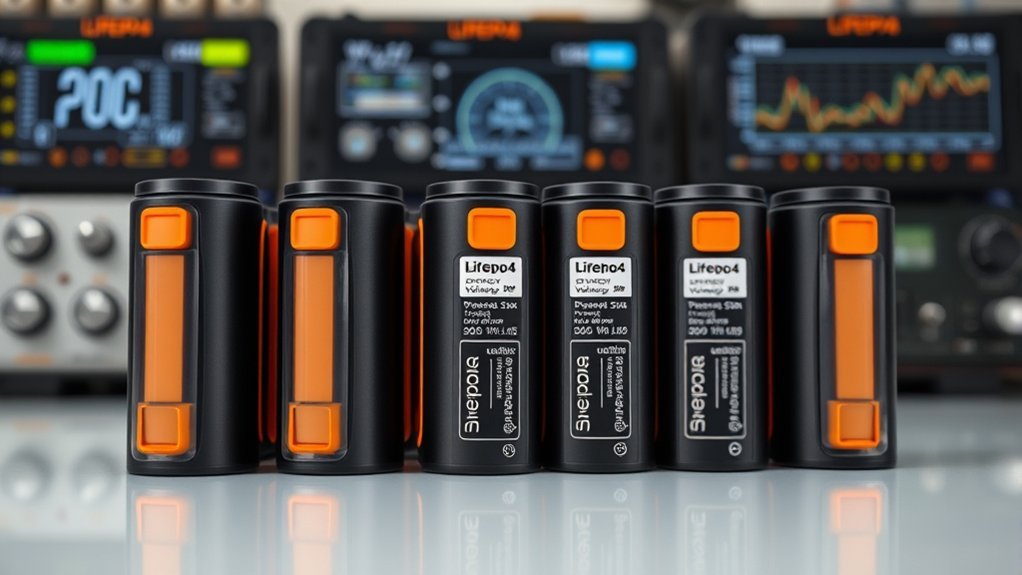
Selecting the appropriate battery size for your application requires a thorough analysis of your power consumption patterns and operational demands. To optimize performance, consider factors such as load requirements, runtime needs, and future scalability. Proper battery installation guarantees safety and efficiency, preventing potential damage. Use the following table to evaluate your needs:
| Application Load | Estimated Runtime | Recommended Capacity (Ah) |
|---|---|---|
| Low (lights, sensors) | 4-6 hours | 50-100 Ah |
| Medium (small appliances) | 2-4 hours | 100-200 Ah |
| High (RV, solar systems) | 1-2 hours | 200+ Ah |
| Continuous Use | 24 hours | Consult experts |
Maintenance tips include regular inspection and avoiding deep discharges. Accurate sizing reduces maintenance and extends lifespan.
How to Evaluate LiFePO4 Battery Quality and Safety Features

Evaluating the quality and safety features of LiFePO4 batteries is vital to guarantee reliable performance and user protection. We assess cell consistency, manufacturing standards, and built-in safety mechanisms like thermal management and overcharge protection. High-quality batteries incorporate advanced BMS (Battery Management Systems) to prevent faults and extend lifespan. Safety features also include robust casing and flame retardants, reducing risks during operation. Additionally, considering the environmental impact, we examine the battery’s recyclability and adherence to eco-friendly standards. Proper recycling protocols minimize hazardous waste and reduce ecological footprint. A thorough evaluation ensures the battery not only meets performance benchmarks but also aligns with sustainability goals, reinforcing safe usage and responsible disposal practices essential for long-term reliability and environmental stewardship.
Cost and Budgeting: Getting the Best Value for Your Investment
To maximize the value of your investment in LiFePO4 batteries, it’s essential to analyze the total cost of ownership rather than just the upfront purchase price. Market trends indicate a gradual decrease in battery costs due to manufacturing efficiencies, but initial prices still vary considerably across brands and capacities. Effective budget planning involves evaluating not only purchase price but also factors like lifespan, maintenance, and replacement costs. A higher upfront investment in a quality battery can yield lower long-term expenses through improved cycle life and reduced maintenance needs. By focusing on the overall cost-benefit ratio, you guarantee your investment aligns with your energy needs and financial goals, ultimately ensuring better value and more predictable performance over the battery’s lifespan.
Compatibility With Your Existing System or Device
Ensuring voltage compatibility is essential to prevent system malfunctions or damage, so we must verify that the battery’s voltage aligns with your device’s requirements. Additionally, connector compatibility is critical; mismatched connectors can hinder installation or cause electrical issues. Addressing these points guarantees a seamless integration with your existing system or device.
System Voltage Compatibility
When selecting a Lifepo4 battery, verifying compatibility with your existing system voltage is crucial to prevent damage and guarantee peak performance. Proper alignment ensures that the battery chemistry’s voltage profile integrates seamlessly with your device’s voltage regulation system. Mismatched voltages can lead to inefficient operation or component failure. Consider these points:
- Confirm the system’s nominal voltage matches the battery’s rated voltage.
- Ensure the battery’s voltage range aligns with your system’s voltage regulation capacity.
- Evaluate if the Lifepo4’s stable voltage output supports your device’s voltage requirements throughout discharge cycles.
This careful assessment avoids voltage mismatches that could compromise safety and longevity, guaranteeing optimal performance and protecting your investment.
Device Connector Compatibility
How well does the battery’s connector interface with your existing system components? This hinges on understanding connector standards and pin configurations. Compatibility requires matching the Lifepo4 battery’s connector type to your device’s port, guaranteeing secure electrical contact. Variations in connector standards—such as MC4, XT60, or Anderson Powerpole—dictate whether the battery can directly connect or needs adapters. Pin configurations are equally critical; mismatched pins can lead to improper connections, potential damage, or safety hazards. Precise alignment of positive and negative terminals, along with correct pin arrangements, ensures reliable power transfer. Before purchasing, verify that your system’s connectors and pin configurations align with those of the battery to prevent compatibility issues and maintain ideal performance.
Key Performance Metrics: Longevity, Charging, and Discharge Rates
Understanding the key performance metrics of LiFePO4 batteries is essential for making an informed purchase. Longevity, charging, and discharge rates directly influence operational efficiency and maintenance requirements. For example, higher cycle life reduces battery replacements, lowering environmental impact. When evaluating these metrics, consider:
- Cycle Life: Longer cycles indicate increased longevity, reducing battery replacement frequency and enhancing sustainability.
- Charge Rate: Faster charging capabilities improve operational flexibility but must be balanced against battery health to prevent degradation.
- Discharge Rate: Higher discharge rates enable better power delivery, but excessive rates can accelerate wear, affecting battery lifespan and maintenance needs.
Tips for Purchasing From Reputable Suppliers and Ensuring Warranty Support
Selecting a reputable supplier is vital to guaranteeing the quality, safety, and performance of your LiFePO4 batteries, as the market is often flooded with varying standards and certifications. We recommend evaluating supplier reputation through third-party reviews, industry certifications, and technical support responsiveness. A supplier with a strong reputation typically guarantees consistent product quality and adherence to safety standards. Additionally, verifying warranty coverage is essential—it provides a safeguard against manufacturing defects and premature failure. Ensure the warranty terms are clear, extensive, and include aspects like replacement policies and technical support duration. By prioritizing suppliers with proven reliability and robust warranty coverage, you minimize risks of subpar performance, counterfeit products, and costly replacements, guaranteeing your investment remains protected and your battery’s lifespan maximized.
Frequently Asked Questions
How Do Lifepo4 Batteries Perform in Extreme Temperatures?
Lifepo4 batteries exhibit strong temperature resilience, but thermal regulation is essential in extreme conditions. They perform reliably in cold and hot environments, though efficiency may decline without proper thermal management, ensuring safety and longevity.
What Are the Environmental Impacts of Disposing of Lifepo4 Batteries?
We analyze how disposing of LiFePO4 batteries impacts the environment, considering their battery lifespan and disposal regulations; improper disposal risks resource pollution, while adhering to regulations minimizes ecological harm, emphasizing the importance of responsible recycling and waste management practices.
Can Lifepo4 Batteries Be Recycled Easily?
We find that LiFePO4 batteries are recyclable through established methods, leveraging their long battery lifespan and stable chemistry. These recycling methods efficiently recover valuable materials, making LiFePO4 batteries an environmentally responsible choice in energy storage solutions.
How Do I Safely Store Lifepo4 Batteries Long-Term?
We store Lifepo4 batteries long-term in a cool, dry place, ensuring they’re at 50-70% capacity for maximum longevity. Prioritize charging safety by monitoring voltage, avoiding over-discharge, and preventing temperature extremes to protect their integrity.
Are There Any Industry Certifications to Look for When Buying?
We look for industry certifications with reputable quality standards and certification marks, ensuring safety, reliability, and compliance. These indicators help us verify the battery’s manufacturing quality and adherence to international safety and performance benchmarks.
Conclusion
Choosing the right LiFePO4 battery isn’t just about specs; it’s about anticipating future demands and safeguarding your investment. By thoroughly evaluating capacity, safety features, and compatibility, you lay the groundwork for reliable performance. But remember, the true test lies in how well your system adapts over time. Will your chosen battery stand the test of evolving needs? The answer hinges on your careful analysis today—because tomorrow’s reliability depends on it.