When selecting a LiFePO4 battery, accurately sizing it requires a thorough understanding of your energy demands and system parameters. We recognize that factors like load variability, peak power, and potential future expansion markedly influence the right capacity. To optimize performance and guarantee longevity, it’s vital to analyze these elements carefully. Exploring the detailed steps involved can help you develop a reliable, efficient energy storage solution tailored to your specific needs—something that’s essential as system complexity grows.
Key Takeaways
- Calculate total energy needs by analyzing device wattage and daily usage hours to determine required battery capacity.
- Consider load variability, surge demands, and peak power to select batteries that handle transient power spikes.
- Ensure battery voltage and configuration match your system’s voltage requirements for compatibility and efficiency.
- Account for discharge rates and cycle life to optimize battery longevity and performance under expected operating conditions.
- Plan for future expansion by choosing modular, scalable battery systems that accommodate increased energy demands.
How to Assess Your Power Needs for a LiFePO4 Battery System
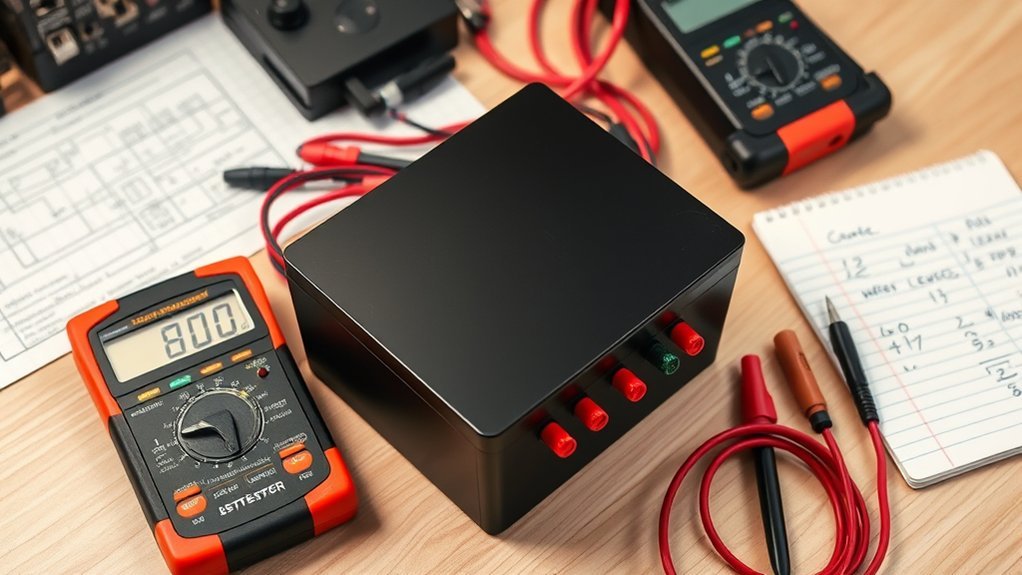
To accurately determine your power requirements for a LiFePO4 battery system, we must first analyze your energy consumption patterns and load demands. Understanding the specifics of your load profile allows us to evaluate the necessary battery capacity and discharge rates. Battery chemistry plays a vital role, as LiFePO4 offers stable performance with high cycle life and safety margins. Accurate assessment also requires considering ideal charging protocols, ensuring proper voltage regulation and balanced cell health. This prevents overcharging or deep discharging, which can compromise system longevity. By precisely mapping your energy needs and aligning them with appropriate battery chemistry and charging protocols, we can establish a reliable foundation for selecting the right battery size that meets your operational requirements efficiently.
Factors Influencing the Right Battery Size for Your Application
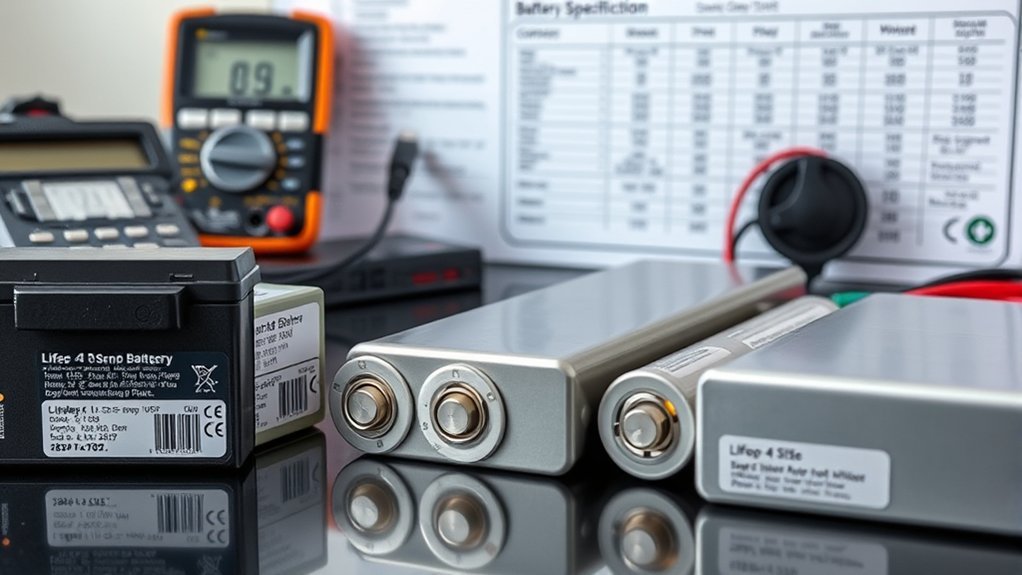
Understanding your power consumption requirements and the duration of use is essential for selecting the appropriate battery size. These factors directly influence the capacity needed to meet operational demands without overdimensioning. By analyzing load profiles and usage patterns, we can optimize battery sizing for efficiency and reliability.
Power Consumption Requirements
Have you considered how your device’s power consumption directly impacts the size of the battery needed? High power demands require larger capacity batteries, while lower consumption allows for more compact solutions. Critical factors include the device’s average and peak power draw, which influence battery sizing. Additionally, understanding the interplay between battery chemistry and charger compatibility guarantees ideal performance and longevity.
Key considerations include:
- Continuous vs. peak power demands
- Efficiency of power conversion
- Battery chemistry’s discharge characteristics
- Load variability and surge requirements
- Compatibility between battery capacity and charger output
Accurately evaluating these elements helps prevent under- or over-sizing, ensuring reliable operation and efficient energy use. Proper appraisal of power consumption requirements supports informed decisions when selecting the appropriate Lifepo4 battery size for your application.
Duration of Use
The length of time a device needs to operate continuously or intermittently considerably influences the overall battery capacity required. To accurately size a Lifepo4 battery, we must analyze the application’s duration demands, considering both operational cycles and rest periods. Proper battery maintenance guarantees peak performance over extended use, reducing capacity loss due to degradation. Additionally, understanding and implementing correct charging protocols is essential; improper charging can impair longevity and efficiency, affecting overall runtime. Shorter durations demand smaller capacities, but longer operation periods necessitate larger batteries to prevent over-discharge and ensure reliable performance. By evaluating these factors—usage duration, maintenance routines, and charging practices—we can determine the appropriate battery size that balances capacity, lifespan, and operational stability for your specific application.
How to Calculate Your Daily Energy Consumption

To accurately size a Lifepo4 battery, we must first determine our daily energy consumption, which involves quantifying the total energy required to operate all devices and systems over a 24-hour period. This process ensures efficient capacity planning and minimizes environmental impact by reducing overproduction and waste. Key steps include:
- Listing all devices and their power ratings in watts
- Estimating each device’s daily operational hours
- Calculating individual energy usage: Power (W) × Hours of use
- Summing all device energy consumptions for total daily demand
- Factoring in inefficiencies and future energy needs
Understanding these parameters aids in optimizing battery recycling efforts by preventing premature disposal. Accurate calculations reduce resource waste and promote sustainable energy solutions, underscoring the importance of precise energy management in minimizing environmental impact.
Choosing the Correct Battery Capacity Based on Usage Patterns
Once we’ve calculated the total daily energy consumption, the next step involves selecting a battery capacity that aligns with our actual usage patterns. We need to take into account the battery chemistry, as Lifepo4 batteries typically handle deeper cycles and higher currents more efficiently than other chemistries. This influences the capacity we choose to guarantee longevity and performance. Additionally, charging methods impact capacity selection; faster charging requires a buffer to prevent thermal stress and degradation. We should account for peak loads and potential inefficiencies in charging and discharging. By analyzing how often and how intensely the battery is used, we can determine an ideal capacity that balances operational needs with lifespan, ensuring we avoid over- or under-sizing, thereby maximizing the lifespan and reliability of the battery system.
Determining the Discharge Rate and Its Impact on Battery Sizing
The discharge rate directly affects both battery longevity and system performance, as higher rates can accelerate capacity fade and thermal stress. We need to quantify these impacts to optimize battery sizing for specific load demands. Understanding this relationship guarantees reliable operation and maximizes lifespan.
Effects on Battery Longevity
Discharge rate considerably influences lithium iron phosphate (LiFePO4) battery longevity by affecting the depth of discharge and internal stress. Higher discharge rates accelerate capacity fade, reducing overall cycle life, and can lead to increased thermal stress that hampers battery health. This impacts not only longevity but also the sustainability of battery recycling efforts, as shortened lifespan increases waste and environmental impact.
- Elevated discharge rates induce faster electrode degradation
- Increased internal resistance accelerates capacity loss
- Greater thermal stress impacts long-term stability
- Reduced cycle count diminishes the effective lifespan
- Shorter lifespan complicates environmental impact mitigation strategies
Balancing discharge rates is essential for optimizing lifespan and minimizing environmental footprint, ensuring sustainable battery reuse and recycling practices.
Influence on System Performance
Determining the appropriate discharge rate is essential for enhancing system performance and accurately sizing a LiFePO4 battery. The battery chemistry influences how the discharge rate affects capacity and efficiency; higher rates can lead to voltage drops and reduced usable capacity. A careful analysis ensures the system’s power demands align with the battery’s capabilities, preventing premature degradation. Additionally, the discharge rate impacts charging cycles, as excessive rates accelerate wear and diminish overall longevity. By selecting a suitable discharge rate, we balance performance with longevity, maximizing energy output without stressing the chemistry. Proper sizing based on these parameters ensures reliable operation, maintains consistent voltage levels, and preserves the battery’s lifecycle. Ultimately, understanding this influence is critical for designing efficient, durable energy systems.
Considering Future Expansion and Battery Scalability
As we plan for battery system deployment, considering future expansion is essential to guarantee scalability aligns with evolving energy demands. Factors like battery chemistry influence how easily systems can scale, as some chemistries support higher charge rates and longer cycle life, facilitating growth. Additionally, selecting flexible charging methods ensures compatibility with larger battery banks, reducing operational constraints during expansion. Proper planning involves evaluating current capacity against projected needs, avoiding premature obsolescence.
- Compatibility of battery chemistry with expansion plans
- Modular design for seamless scalability
- Flexibility of charging methods for larger banks
- Infrastructure upgrades for increased capacity
- Impact of system voltage and configuration on expansion potential
Tips for Selecting the Optimal Battery Voltage and Cell Configuration
Selecting the most suitable battery voltage and cell configuration is critical to maximizing system efficiency and ensuring reliable performance. Voltage optimization involves choosing a voltage level that aligns with your system’s power requirements while minimizing losses. Proper cell arrangement—series, parallel, or a combination—directly influences voltage and capacity, impacting overall system stability and lifespan. We analyze your load demands to determine the best voltage, balancing between higher voltage for efficiency and lower voltage for simplicity. Cell configuration must be chosen to match desired capacity and voltage, ensuring balanced charge and discharge cycles. A well-planned configuration reduces thermal stress and enhances longevity. Ultimately, precise voltage selection and cell arrangement are essential for achieving an ideal, scalable, and resilient LiFePO4 battery system.
Common Mistakes to Avoid When Sizing Your LiFePO4 Battery
Misjudging the power requirements or overlooking system constraints can lead to critical sizing errors in your LiFePO4 battery setup. Common mistakes include neglecting the importance of understanding battery chemistry, which influences performance and longevity, and ignoring safety considerations that prevent thermal runaway or damage.
- Overestimating capacity without accounting for actual load profiles
- Ignoring system voltage compatibility, risking inefficient operation
- Failing to incorporate safety margins for surge currents and future expansion
- Overlooking the impact of temperature variations on battery performance
- Underestimating the importance of proper system monitoring and management
Avoid these pitfalls by conducting thorough load analysis and prioritizing safety considerations. Proper understanding of battery chemistry ensures peak performance, while adhering to safety protocols mitigates risks associated with improper sizing.
How to Match Your Battery Size With Your Budget and System Goals
Matching your battery size with your budget and system goals requires a strategic approach that balances performance needs with financial constraints. We analyze the system’s power demands, guaranteeing the selected LiFePO4 battery provides sufficient capacity while avoiding oversizing that inflates costs. Considering the environmental impact, it’s crucial to prioritize batteries with strong battery recycling programs, reducing long-term ecological effects. Proper sizing minimizes unnecessary battery capacity, extending lifespan and reducing waste. Cost-effective options should also factor in installation and maintenance expenses, aligning with your budget constraints. By optimizing size, you not only control upfront costs but also contribute to sustainability efforts. This analytical process ensures your system meets energy goals efficiently, with a clear focus on environmental responsibility and long-term financial viability.
Frequently Asked Questions
How Do Temperature Variations Affect Lifepo4 Battery Performance?
Temperature variations impact Lifepo4 battery performance considerably, affecting charge capacity and lifespan. We emphasize temperature stability through effective thermal management, ensuring ideal operation, preventing overheating or freezing, and maintaining consistent performance across varying environmental conditions.
What Maintenance Is Required for Lifepo4 Batteries?
We regularly perform battery calibration and voltage balancing to guarantee ideal Lifepo4 battery performance, prevent capacity loss, and extend lifespan. Proper maintenance involves monitoring voltage levels, inspecting connections, and recalibrating systems as needed for reliable operation.
Can Lifepo4 Batteries Be Used in Extreme Weather Conditions?
We find that LiFePO4 batteries perform well in extreme weather, maintaining voltage stability and capacity when properly specified, though extreme cold reduces capacity slightly and high temperatures require effective thermal management for ideal operation.
How Do You Safely Dispose of or Recycle Lifepo4 Batteries?
Sure, we just toss Lifepo4 batteries in the trash, right? Actually, proper disposal involves battery recycling and following specific disposal procedures to prevent environmental harm and recover valuable materials, ensuring safe, responsible, and environmentally friendly practices.
What Are the Signs of a Failing or Degraded Lifepo4 Battery?
We notice signs of a failing Lifepo4 battery through reduced capacity, uneven charging cycles, increased internal resistance, and overheating, indicating degraded battery lifespan; these symptoms signal it’s time for maintenance or replacement to guarantee peak performance.
Conclusion
By carefully evaluating your power needs, understanding your usage patterns, and considering future expansion, we can optimize your LiFePO4 battery system for performance, longevity, and cost-efficiency. Balancing capacity with demand, voltage with compatibility, and safety margins with scalability ensures a reliable energy solution. Ultimately, precise sizing aligns system capabilities with your goals, minimizes risks, and maximizes value—empowering us to design a sustainable, resilient energy storage system tailored to your evolving needs.