We recognize that safety, reliability, and performance are essential when selecting lithium batteries. We focus on the factors that influence safety, such as chemical stability, thermal management, and structural integrity. Among the various types, solid-state lithium batteries stand out due to their unique design and advanced features. Understanding why they are considered the safest requires examining their composition, safety mechanisms, and potential for future development—topics that demand careful consideration.
Key Takeaways
- Solid-state lithium batteries eliminate flammable liquid electrolytes, significantly reducing fire and thermal runaway risks.
- Lithium iron phosphate (LiFePO₄) batteries are inherently safer due to their stable chemical structure and lower propensity for overheating.
- Advanced battery management systems (BMS) monitor and regulate cell parameters to prevent overcharge, overheating, and internal faults.
- Use of fire-resistant separators and coatings enhances safety by containing internal failures and preventing ignition.
- Emerging safety technologies focus on non-flammable materials, real-time fault detection, and improved thermal management for higher safety margins.
What Makes a Lithium Battery Safe? Key Safety Features Explained
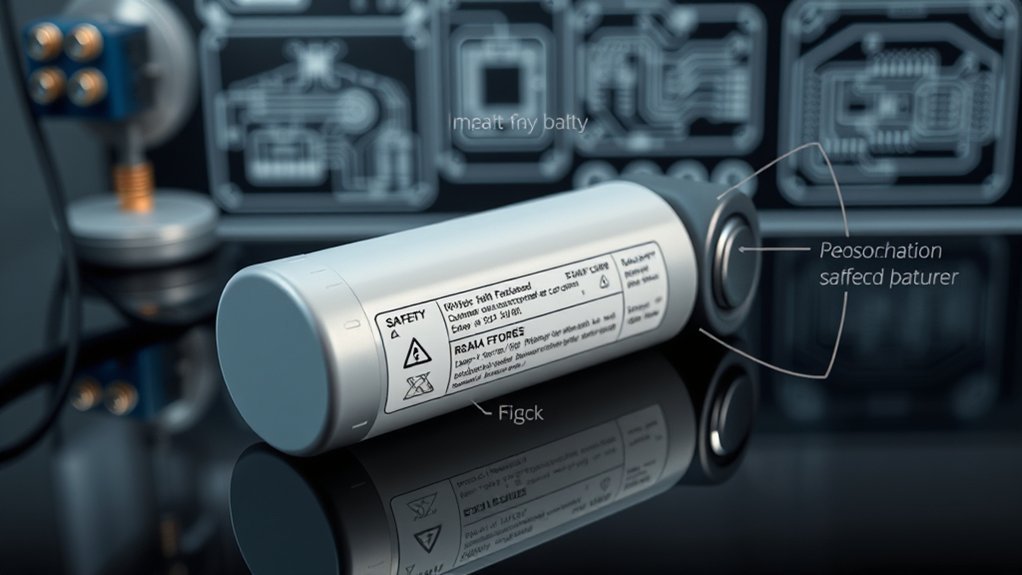
Understanding what makes a lithium battery safe requires examining the critical safety features integrated into its design. These include robust thermal management systems, current interrupt devices, and separator integrity, all aimed at preventing thermal runaway. Proper battery recycling protocols guarantee hazardous materials are handled safely, reducing environmental and safety risks. Additionally, user safety training is essential to minimize mishandling and accidental damage, which can compromise safety. Incorporating these safety measures into manufacturing and operational protocols enhances overall reliability. Smart design elements, such as venting mechanisms and fire-resistant casings, further mitigate risks. By integrating safety-focused practices, like emphasizing battery recycling and user education, manufacturers ensure that lithium batteries operate securely throughout their lifecycle.
Comparing Lithium Battery Chemistries: Which Are Less Prone to Thermal Runaway?

Different lithium battery chemistries exhibit varying levels of stability and risk regarding thermal runaway. Lithium iron phosphate (LiFePO₄) cells are notably less prone to thermal runaway due to their stable chemical structure, which resists overheating and decomposition. This chemical stability also reduces the likelihood of hazardous failures, making LiFePO₄ batteries safer overall. Conversely, nickel-cobalt-aluminum (NCA) and lithium nickel manganese cobalt oxide (NMC) chemistries tend to be more susceptible, requiring advanced battery management systems. When considering environmental impact, chemistries like LiFePO₄ also facilitate safer battery recycling processes, minimizing toxic waste and enabling more sustainable battery lifecycle management. Therefore, choosing chemistries with inherent thermal stability not only enhances safety but also supports eco-friendly disposal and recycling.
The Role of Battery Management Systems in Ensuring Safety
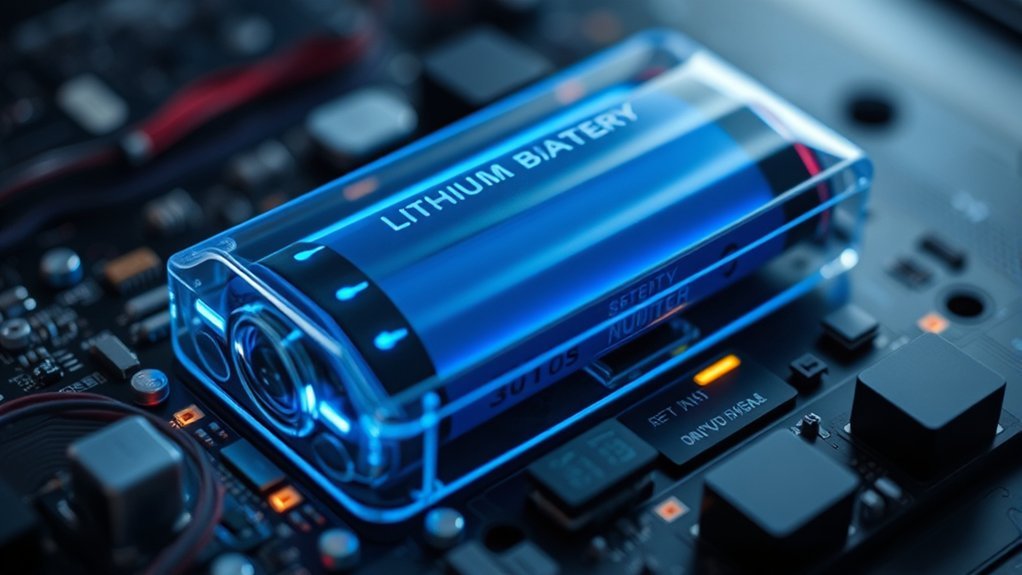
Battery management systems (BMS) play a vital role in maintaining lithium battery safety by continuously monitoring cell conditions to detect potential faults. They prevent overcharge risks through precise voltage regulation and guarantee proper cell balancing to avoid uneven degradation. These functions collectively reduce the likelihood of thermal events and extend the overall lifespan of the battery pack.
Monitoring Cell Conditions
How do we guarantee lithium battery safety during operation? Battery management systems (BMS) play a critical role by continuously monitoring cell conditions such as voltage, temperature, and current. This real-time data allows us to detect early signs of imbalance or degradation, preventing thermal runaway and assure safe operation. Proper charging etiquette, including avoiding overcharging and using appropriate chargers, supports these safety measures. Additionally, monitoring systems help optimize battery lifespan, encouraging responsible practices like battery recycling to reduce environmental risks. The BMS’s precise oversight ensures cells operate within safe parameters, minimizing hazards and extending battery life. Through vigilant monitoring and adherence to best practices, we uphold the highest safety standards for lithium batteries.
Preventing Overcharge Risks
Have you ever wondered how lithium batteries prevent dangerous overcharging during operation? Battery Management Systems (BMS) play a vital role in this process by continuously monitoring voltage levels, current flow, and temperature across cells. When a cell approaches its maximum charge capacity, the BMS automatically reduces or halts charging to prevent overvoltage, thereby avoiding thermal runaway or capacity degradation. This precise control extends battery lifespan and guarantees safety. Additionally, effective BMS protocols facilitate proper battery disposal and recycling. By accurately tracking charge cycles and health status, they help identify end-of-life batteries, enabling safe recycling protocols that minimize environmental impact. Through these measures, BMSs serve as an indispensable safeguard against overcharge risks and promote responsible battery lifecycle management.
Ensuring Proper Balancing
Maintaining balanced charge levels across all cells is key to ensuring lithium battery safety and longevity. Battery management systems (BMS) monitor individual cell voltages and temperatures, preventing overcharging or deep discharging that could lead to thermal runaway. Proper balancing reduces the risk of cell degradation, which is essential for extending battery lifespan and minimizing environmental impact. When cells are balanced correctly, the efficiency of battery recycling processes improves, as damaged or degraded cells are identified early. This proactive approach supports sustainable disposal and reduces hazardous waste. Ultimately, robust BMS functionality guarantees safer operation, lessens environmental risks associated with battery failure, and promotes responsible lifecycle management, emphasizing safety and environmental stewardship in lithium battery applications.
Understanding Solid-State Lithium Batteries and Their Safety Advantages
Solid-state lithium batteries offer enhanced thermal stability due to their solid electrolytes, substantially reducing the risk of thermal runaway. They also present a lower fire hazard and improved mechanical durability, making them safer for high-demand applications. Understanding these safety advantages is critical for advancing battery technology and mitigating potential hazards.
Enhanced Thermal Stability
Understanding the enhanced thermal stability of solid-state lithium batteries is essential for advancing safe energy storage solutions. Unlike traditional liquid electrolyte batteries, solid-state designs eliminate flammable liquids, substantially reducing thermal runaway risks. This increased stability improves thermal management, allowing the batteries to operate safely across a broader temperature range without degradation or safety hazards. The solid electrolyte’s stability under high temperatures minimizes the need for complex safety protocols associated with heat dissipation. Consequently, these batteries exhibit inherent safety advantages, including resistance to internal short circuits caused by dendrite formation. This robustness enhances reliability, making solid-state lithium batteries a promising foundation for safer applications. Overall, their improved thermal stability plays a critical role in developing safer, more resilient energy storage systems.
Reduced Fire Risk
How do solid-state lithium batteries considerably reduce fire risk compared to traditional designs? These batteries utilize a solid electrolyte instead of flammable liquid electrolytes, eliminating the risk of thermal runaway caused by electrolyte leakage or internal short circuits. This structural change markedly enhances safety, as the solid electrolyte resists ignition even under mechanical damage or extreme temperatures. Additionally, the absence of liquid electrolytes simplifies battery recycling processes, reducing environmental impact by minimizing hazardous waste. The inherent stability of solid-state batteries decreases the likelihood of catastrophic failures, making them safer for widespread use. Overall, the combination of improved stability and safer disposal supports both consumer safety and environmental sustainability, positioning solid-state lithium batteries as a safer, more sustainable energy storage solution.
Improved Mechanical Durability
Because they lack liquid electrolytes and contain rigid, crystalline structures, solid-state lithium batteries demonstrate markedly enhanced mechanical durability compared to traditional liquid-electrolyte designs. Their inherent mechanical resilience ensures they withstand physical stresses more effectively, reducing the risk of damage from impacts. The solid components provide superior impact resistance, preventing deformation or cracking under mechanical load. This structural integrity minimizes the formation of internal faults or fractures that could compromise safety. Additionally, the rigid architecture reduces the likelihood of electrolyte leakage, a common failure mode in conventional batteries. Overall, the improved mechanical durability of solid-state lithium batteries contributes considerably to their safety profile by maintaining operational stability under mechanical stresses, making them a more robust choice for high-demand applications.
How Safety Mechanisms Like Fire-Resistant Separators Work
Fire-resistant separators are critical safety components in lithium batteries, designed to prevent thermal runaway from propagating between electrodes. These separators are made from specialized materials that withstand high temperatures, effectively acting as a barrier when overheating occurs. Their primary function is thermal runaway prevention by halting the chain reaction that can lead to fires or explosions. When a cell’s temperature rises dangerously, fire-resistant separators maintain structural integrity, preventing direct contact between the anode and cathode. This containment limits the spread of heat and flammable electrolyte, reducing the risk of catastrophic failure. Incorporating fire resistant separators enhances overall battery safety, especially under abusive conditions, by providing a reliable line of defense against thermal events that could compromise both the battery and user safety.
The Impact of Battery Design and Construction on Safety Performance
The materials used in battery construction directly influence stability and safety, as high-quality, thermally stable components reduce the risk of thermal runaway. Structural integrity and durability guarantee the battery can withstand mechanical stresses and manufacturing defects without compromising safety. Understanding how design choices impact these factors is essential for developing safer lithium batteries.
Material Stability and Safety
The stability of lithium battery materials plays a essential role in ensuring overall safety performance, as it directly influences the likelihood of thermal runaway and other hazardous failures. Stable electrode and electrolyte chemistries minimize reactive incidents, reducing risk during operation and disposal. Material choices also impact battery recycling, as non-toxic, dependable components facilitate safer, more efficient recycling processes, lowering environmental impact. Conversely, unstable materials can release harmful substances, posing safety and ecological hazards. Advanced formulations prioritize high thermal stability and chemical inertness, which are critical for preventing catastrophic failures. By selecting materials with enhanced stability, manufacturers can improve safety, ease recycling efforts, and mitigate environmental risks, ultimately contributing to safer, more sustainable lithium battery systems.
Structural Integrity and Durability
Ensuring the structural integrity and durability of lithium batteries is essential because the design and construction directly influence their safety performance. Robust casing materials and precise manufacturing processes minimize risks of internal short circuits, thermal runaway, and mechanical failure. Durable batteries maintain their performance over repeated charge cycles, reducing the likelihood of rupture or leakage. This reliability also affects environmental impact, as sturdy construction facilitates safer battery recycling, limiting hazardous waste. Proper design prevents material degradation that could lead to environmental contamination. Additionally, structurally sound batteries are less prone to damage during transportation and handling, further supporting sustainable disposal practices. Overall, optimizing design and construction enhances safety, extends lifespan, and promotes responsible management of lithium batteries throughout their lifecycle.
Best Practices for Safe Handling and Usage of Lithium Batteries
To minimize the risk of thermal runaway, fires, or explosions, proper handling and usage of lithium batteries are essential. Always inspect batteries for damage, swelling, or leakage before use, and avoid exposing them to extreme temperatures or mechanical impacts. When charging, use manufacturer-approved chargers and follow recommended protocols to prevent overcharging. Proper disposal through battery recycling programs reduces environmental impact and prevents hazardous material release. Additionally, educate users on safe storage practices, keeping batteries away from flammable materials and out of reach of children. Handling procedures must prioritize safety to prevent accidents and environmental harm. By adhering to these best practices, we promote not only device safety but also responsible environmental stewardship through effective battery recycling efforts.
Top Lithium Battery Types for Safety in Portable Electronics and EVs
Among the various lithium battery chemistries, lithium iron phosphate (LiFePO4) and lithium nickel manganese cobalt oxide (NMC) are widely recognized for their enhanced safety profiles in portable electronics and electric vehicles (EVs). LiFePO4 batteries exhibit superior thermal stability and lower risk of thermal runaway, making them inherently safer during operation and mishandling. Similarly, NMC chemistries balance energy density with improved safety margins, reducing the likelihood of catastrophic failures. Both chemistries facilitate more sustainable practices through increased emphasis on battery recycling, which mitigates environmental impact by recovering valuable materials and minimizing hazardous waste. These advancements support safer use, easier disposal, and environmentally responsible lifecycle management, aligning technological safety improvements with ecological considerations.
Common Safety Concerns and How Leading Technologies Address Them
While advancements in lithium battery chemistries like LiFePO4 and NMC have improved overall safety profiles, several common concerns persist that can compromise safe operation. Thermal runaway remains a primary risk, potentially leading to fires or explosions, especially under mechanical damage or manufacturing defects. Overcharging and deep discharging also pose safety hazards, increasing the likelihood of internal short circuits. Leading technologies address these issues through sophisticated battery management systems (BMS) that monitor temperature, voltage, and current. Additionally, safety protocols now emphasize proper battery recycling to prevent environmental impact and reduce hazardous waste. Improved recycling methods guarantee safe disposal, minimizing ecological harm and resource depletion. Addressing these concerns collectively enhances lithium battery safety, ensuring reliable operation while mitigating environmental risks.
Future Innovations in Lithium Battery Safety to Watch For
Advancements in materials science and sensor technology are driving the development of next-generation safety features for lithium batteries. Researchers are focusing on integrating real-time monitoring sensors that detect thermal runaway or internal faults, enabling immediate shutdown mechanisms. Future innovations also aim to improve battery disposal and recycling protocols, reducing environmental impact and preventing hazardous chemical exposure. Enhanced recycling techniques will facilitate the recovery of valuable materials like lithium, cobalt, and nickel, minimizing waste and promoting sustainability. These safety-focused innovations will not only improve thermal stability and fault detection but also streamline end-of-life management, ensuring safer disposal and more efficient recycling processes. Collectively, these advancements will notably enhance lithium battery safety, addressing both operational risks and environmental concerns.
Frequently Asked Questions
Which Lithium Battery Types Are Most Resistant to Puncture and Physical Damage?
We find lithium iron phosphate (LiFePO4) batteries most impact-resistant and puncture-resistant due to their stable battery material. Their robust design enhances impact resistance, making them safer for applications prone to physical damage or puncture risks.
How Do Safety Features Differ Between Consumer and Industrial Lithium Batteries?
We observe that consumer lithium batteries prioritize compact battery management systems and thermal regulation to prevent overheating, while industrial variants incorporate advanced safety measures like venting, fire-resistant casings, and robust thermal regulation to guarantee reliability under demanding conditions.
Are There Specific Lithium Battery Chemistries Safer for High-Temperature Environments?
A stitch in time saves nine; certain lithium chemistries like LFP are safer in high temperatures due to enhanced thermal management and safer recycling processes, minimizing risks of thermal runaway and environmental harm in demanding environments.
What Testing Standards Ensure Lithium Battery Safety Before Market Release?
We rely on standards like UL 2054 and IEC 62133, which rigorously test lithium batteries for safety, incorporating battery recycling considerations and strict charging protocols to prevent hazards before market release.
How Do Different Battery Forms (E.G., Cylindrical, Prismatic) Impact Safety?
Like a fortress guarding its treasure, cylindrical batteries offer robust casing and predictable thermal management, reducing risks of thermal runaway. Prismatic cells, with their compact casing, present unique safety challenges requiring enhanced thermal control measures for ideal safety.
Conclusion
In conclusion, choosing the safest lithium battery hinges on advanced features like solid electrolytes and robust safety systems. As the saying goes, “A chain is only as strong as its weakest link,” so understanding these innovations helps us make informed decisions. By prioritizing solid-state technology and proper handling, we can considerably decrease risks. Staying updated on emerging safety advancements ensures we’re always ahead in protecting both users and the environment.