As we explore the fire risks associated with LiFePO4 batteries, it’s important to understand their inherent safety features and the conditions that can compromise them. While these batteries are generally safer than other lithium-ion chemistries, certain factors—like physical damage or improper handling—may still lead to thermal runaway. To guarantee safe operation, we need to identify potential hazards and best practices, which are critical as we consider their application in various systems.
Key Takeaways
- Manufacturing defects like microcracks or contamination can compromise separator integrity and increase fire risk.
- External damage from impacts or punctures can cause internal short circuits and thermal runaway.
- Overcharging and improper handling accelerate electrode degradation, raising the likelihood of fires.
- Warning signs such as swelling, overheating, or unusual odors indicate potential fire hazards.
- Proper fire suppression systems and safety protocols are essential for preventing and responding to battery fires.
What Are Lifepo4 Batteries and How Do They Work?
Lifepo4 batteries, also known as lithium iron phosphate batteries, are a type of rechargeable lithium-ion battery characterized by their chemical composition and stable performance. They utilize a phosphate-based cathode, which enhances thermal stability and reduces the risk of thermal runaway. This chemical structure contributes to their long cycle life and safety profile. Their design allows for efficient battery recycling, minimizing environmental impact by enabling the recovery of valuable materials like lithium, iron, and phosphate. Compared to other lithium-ion chemistries, Lifepo4 batteries produce less toxic waste and have lower failure rates, supporting eco-friendly disposal practices. Their stable chemistry and recyclability make them a sustainable choice, balancing high performance with reduced environmental footprint.
What Causes Fire Risks in Lifepo4 Batteries?
Understanding the fire risks associated with Lifepo4 batteries requires examining the conditions that can compromise their inherent safety features. Thermal runaway, internal faults, and improper handling, such as incorrect battery recycling procedures, can induce fires. Damage to the battery’s internal structure may lead to short circuits, generating heat and potentially igniting the electrolyte. Inadequate fire suppression systems exacerbate risks, especially during thermal events. Proper maintenance and safety protocols, including controlled recycling, minimize hazards. The following table summarizes key causes:
| Cause | Explanation |
|---|---|
| Internal faults | Manufacturing defects or damage during handling |
| Thermal runaway | Excess heat causes uncontrollable temperature rise |
| External damage | Physical impacts or punctures |
| Improper recycling | Unsafe disposal practices |
| Insufficient fire suppression | Lack of effective fire mitigation methods |
How Does Overcharging Lead to Fire Hazards?
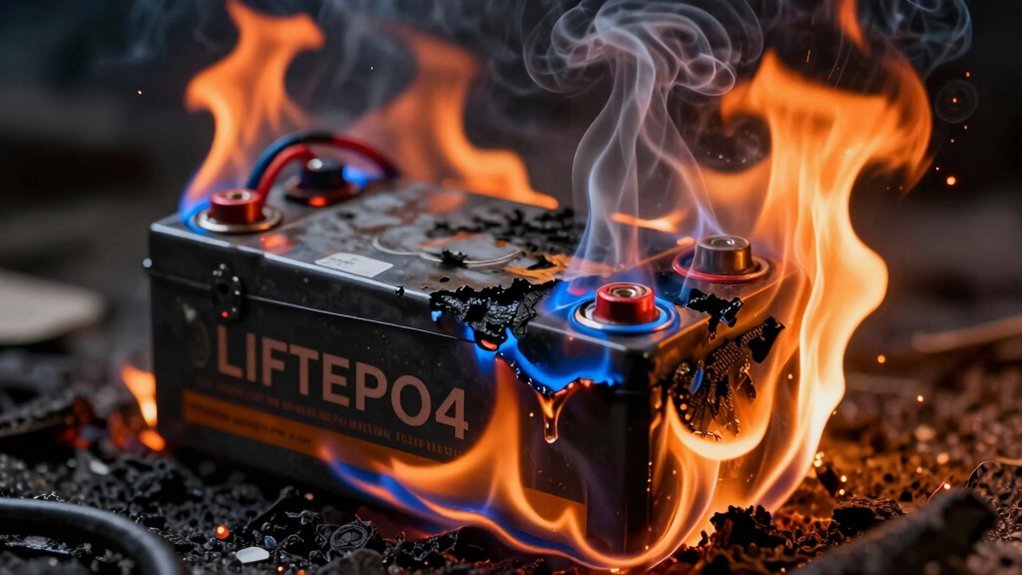
Overcharging a Lifepo4 battery results in overvoltage conditions that can trigger thermal runaway, leading to excessive heat buildup. This process damages the internal cells, weakening their structure and increasing the risk of ignition. Understanding these mechanisms is essential to preventing fire hazards associated with improper charging practices.
Overvoltage Causes Thermal Runaway
When a lithium iron phosphate (LiFePO4) battery is charged beyond its designated voltage limit, the excess energy causes the internal cell chemistry to destabilize. This overvoltage triggers a rapid increase in temperature, known as thermal runaway, which can lead to fire hazards. The destabilized chemistry releases gases and creates internal pressure, risking cell rupture and combustion. Overvoltage also complicates battery recycling processes, as damaged cells become hazardous and difficult to handle safely. Additionally, the environmental impact of overcharged batteries is significant, as thermal runaway may release toxic substances and impair recycling efficiency. Preventing overvoltage is vital to mitigate fire risks, protect environmental integrity, and ensure safe, sustainable battery disposal practices.
Excess Charging Damages Cells
Excess charging causes irreversible damage to lithium iron phosphate (LiFePO4) cells by forcing the electrodes beyond their designed capacity, which accelerates degradation of internal components. Overcharging leads to increased heat, risking thermal runaway and potential fires. This damage hampers battery recycling efforts, complicating disposal and increasing environmental impact. The table below illustrates key effects:
| Effect of Overcharging | Internal Changes | Environmental Consequences |
|---|---|---|
| Electrode degradation | Structural breakdown | Toxic waste generation |
| Increased heat | Cell swelling | Pollution risk |
| Reduced lifespan | Gas formation | Harm to ecosystems |
| Fire hazard | Material fatigue | Resource wastage |
Proper charge management is essential to mitigate fire risks and promote sustainable battery lifecycle practices.
The Impact of Physical Damage on Battery Safety
Physical damage to LiFePO4 batteries can substantially compromise their safety; consequently, harm may create internal faults that lead to thermal runaway or fires. External impact can induce physical deformation of the battery’s internal structures, damaging separators, electrodes, or the electrolyte. Such deformation disrupts the electrode-electrolyte interface, increasing the risk of short circuits. Even minor external impacts, if concentrated or repeated, can weaken the battery’s casing or internal components, facilitating internal faults. These faults can generate localized heat, initiating thermal runaway. It’s essential to recognize that physical damage—whether through impact, puncture, or crushing—compromises the structural integrity of the battery, greatly elevating fire risk. Proper handling and protective measures are vital to prevent damage-induced safety hazards in LiFePO4 batteries.
Recognizing Manufacturing Defects That Increase Fire Risk
Manufacturing defects such as poor quality cell assembly, inconsistent quality control, and defective separator materials can markedly elevate fire risks in Lifepo4 batteries. These issues often lead to internal short circuits or thermal instability, compromising safety. Recognizing these defects is essential for preventing potential failures and ensuring reliable performance.
Poor Quality Cell Assembly
Poor quality cell assembly often stems from manufacturing defects that compromise the battery’s structural integrity and safety. Defects such as inconsistent electrode coatings, improper separator placement, or weak welds can lead to internal short circuits, increasing fire risk. Variations in battery chemistry due to substandard materials can further exacerbate these issues, destabilizing cell performance under stress. When these defects occur, the likelihood of thermal runaway rises, challenging fire suppression efforts. High-quality manufacturing processes aim to minimize such defects, ensuring uniform cell chemistry and robust construction. Recognizing signs of poor assembly, such as swelling or leakage, is critical for safety. Preventing fires hinges on strict adherence to manufacturing standards, thorough quality assurance, and an understanding of how assembly flaws impact the battery’s resilience under operational conditions.
Inconsistent Quality Control
Inconsistent quality control during LiFePO4 battery production can introduce critical defects that substantially elevate fire risk. Manufacturing variances may lead to:
- Irregular cell formation, causing uneven charge distribution and overheating.
- Contamination of active materials, which can compromise thermal stability.
- Poor sealing and insulation, increasing the likelihood of internal short circuits.
Such defects not only heighten fire hazards but also impact battery recycling processes, complicating material separation and disposal. These issues amplify environmental impact by generating hazardous waste and hindering sustainable disposal. Strict quality control guarantees uniformity, reducing defect probability and associated fire risks. Addressing these manufacturing inconsistencies is vital for safety, environmental sustainability, and the long-term viability of LiFePO4 batteries in energy storage systems.
Defective Separator Materials
Defective separator materials considerably elevate the risk of thermal runaway and fires in LiFePO4 batteries. Separator integrity is critical for preventing internal short circuits, which can trigger catastrophic failures. Manufacturing quality directly influences the consistency and reliability of separator materials; defects such as microcracks, pinholes, or uneven coatings compromise their insulating properties. These flaws allow direct contact between the positive and negative electrodes, increasing the likelihood of localized heating. Poorly manufactured separators can deteriorate over time, further weakening their barrier function. Ensuring strict quality control during production minimizes these defects, maintaining separator integrity and reducing fire risk. Recognizing the importance of high manufacturing standards is essential for developing safer, more reliable LiFePO4 batteries with lower propensity for thermal events.
Safe Handling and Storage Practices for Lifepo4 Batteries
Proper handling and storage of LiFePO4 batteries are essential to minimize fire risks and guarantee safety. Correct practices include:
- Storing batteries in a cool, dry, and ventilated environment, away from direct sunlight and heat sources, to prevent thermal runaway.
- Regularly inspecting batteries for physical damage, corrosion, or swelling, and promptly initiating fire suppression measures if abnormalities occur.
- Ensuring proper procedures for battery recycling at end-of-life, preventing hazardous disposal and reducing fire hazards associated with improper disposal methods.
Adhering to these practices reduces the likelihood of fire incidents. Additionally, using appropriate fire suppression systems designed for lithium iron phosphate batteries can contain potential fires. Proper handling and storage are crucial components of an all-encompassing safety strategy.
What Are the Warning Signs of a Potential Fire Hazard?
Recognizing early warning signs of a potential fire hazard in LiFePO4 batteries is critical for preventing dangerous incidents. Regular battery maintenance and adherence to fire safety protocols help identify issues before escalation. Key warning signs include abnormal temperature increases, swelling, or deformation of the battery case, and unusual odors such as chemical fumes. Also watch for rapid voltage drops or inconsistent performance during operation. Physical damage like cracks or corrosion indicates compromised integrity.
| Sign | Possible Cause | Action Required |
|---|---|---|
| Excessive heat | Overcharging, internal short circuit | Discontinue use, inspect system |
| Swelling or deformation | Gas buildup from thermal runaway | Isolate battery immediately |
| Unusual odors | Chemical leakage or overheating | Ventilate area, replace battery |
| Voltage irregularities | Cell imbalance or degradation | Conduct detailed diagnostics |
| Physical damage | Impact or manufacturing defect | Replace or repair as needed |
How to Prevent Fires in Lifepo4 Battery Systems?
To effectively prevent fires in LiFePO4 battery systems, we must implement strict operational protocols and regular maintenance practices. Proper management minimizes risks associated with thermal runaway and internal faults. Key measures include:
- Regular Inspection and Testing: Monitor for signs of degradation, corrosion, or physical damage, and ensure cell balancing procedures are up to date.
- Battery Recycling and Disposal: Safely recycle or dispose of aging or damaged cells to prevent internal short circuits that could ignite fires.
- Fire Suppression Readiness: Install automated fire suppression systems tailored for lithium iron phosphate batteries, reducing fire spread risk during faults.
What Should You Do If a Lifepo4 Battery Starts to Smolder or Catch Fire?
When a LiFePO4 battery begins to smolder or catch fire, immediate action is critical to minimize damage and guarantee safety. First, disconnect the power source if possible, and activate a fire suppression system if available. Do not attempt to extinguish with water, as it can exacerbate chemical reactions. Instead, use a Class D fire extinguisher or a lithium-ion specific suppressant. After extinguishing, ensure proper ventilation and avoid inhaling fumes. Safely dispose of the damaged battery via certified battery recycling facilities to prevent environmental hazards.
| Step | Action | Precaution |
|---|---|---|
| 1 | Disconnect power | Prevents electrical escalation |
| 2 | Use appropriate fire suppression | Avoid water; use Class D extinguisher |
| 3 | Ventilate area | Reduce toxic fumes |
| 4 | Dispose via battery recycling | Prevent environmental contamination |
Frequently Asked Questions
Are Lifepo4 Batteries More Fire-Resistant Than Other Lithium-Ion Batteries?
We believe LiFePO4 batteries are more fire-resistant than other lithium-ion types due to safer battery manufacturing and inherent chemistry. Their stable structure enhances fire prevention, making them a technically reliable choice for applications demanding higher safety standards.
How Do Environmental Conditions Affect Lifepo4 Battery Fire Risk?
Environmental factors like high temperatures increase fire risk by over 50%, making safety protocols essential. We recommend controlling ambient temperature, avoiding moisture exposure, and monitoring battery health to minimize fire hazards and guarantee safe operation.
Can Age or Prolonged Use Increase Fire Hazards in Lifepo4 Batteries?
Yes, as batteries age, degradation can cause thermal instability, increasing fire hazards. Prolonged use accelerates battery degradation, which may compromise safety. Regular monitoring and maintenance help mitigate risks associated with aging Lifepo4 batteries.
What Role Do Charging Cycles Play in Battery Fire Safety?
Charging cycles are like delicate dance steps; proper protocols and thermal management are vital to prevent missteps that could spark fires. Following strict charging protocols guarantees safe operation, reducing risks tied to repeated cycling and thermal buildup.
Are There Specific Fire Suppression Methods for Lifepo4 Battery Fires?
We recommend using aerosol extinguishers specifically designed for lithium iron phosphate fires and deploying fire-resistant barriers to contain thermal runaway, ensuring safety during suppression. These methods effectively address the unique chemical and thermal properties of Lifepo4 battery fires.
Conclusion
In summary, careful care and constant caution are vital when handling LiFePO4 batteries. By understanding their workings, risk factors, and safety strategies, we can prevent potential fires and promote safer storage and usage. Vigilance in inspection, vigilant handling, and vigilant prevention create a fortress against fire hazards. Let’s prioritize proper procedures to protect people, property, and our power solutions, ensuring we keep the fire risks firmly in check and our systems safely secure.