Did you know that LiFePO4 batteries have a more stable crystal structure, which substantially reduces the risk of thermal runaway? While this stability suggests they might be safer, understanding how they compare to traditional lithium-ion batteries requires examining their chemical properties, performance under stress, and real-world safety records. Exploring these differences is essential for evaluating whether Lifepo4 batteries truly provide a safer alternative in demanding applications.
Key Takeaways
- Lifepo4 batteries have a stable crystal structure that resists thermal runaway, reducing fire and explosion risks.
- They contain less toxic metals, simplifying recycling and lowering environmental hazards.
- Their chemical stability makes them safer to handle, manufacture, and dispose of.
- Lifepo4 batteries are more resilient to overcharging and damage, minimizing safety concerns.
- They exhibit longer lifespan and higher thermal stability, decreasing safety hazards over time.
How Do Lifepo4 Batteries Differ From Lithium-Ion Batteries?
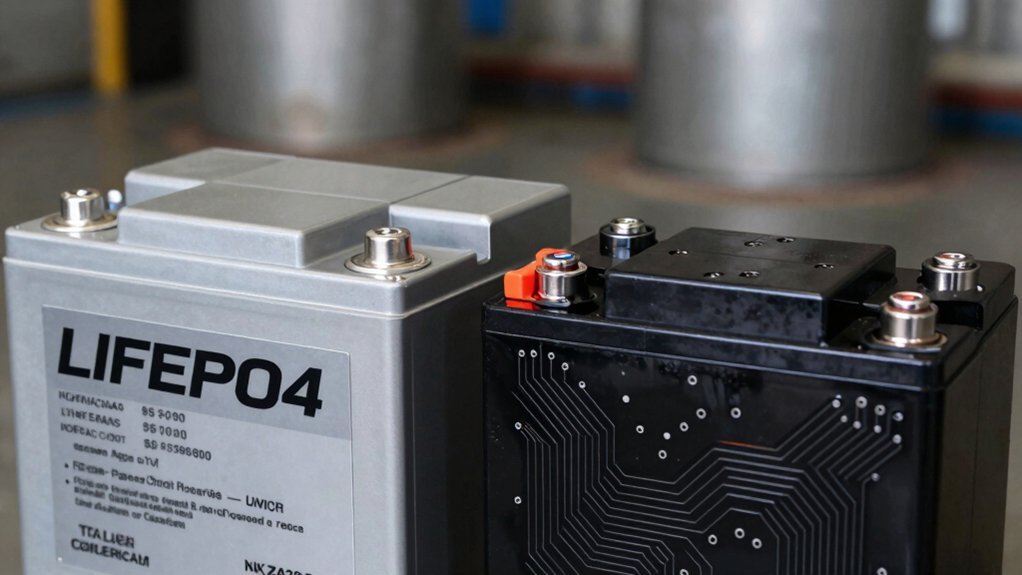
While both Lifepo4 (lithium iron phosphate) batteries and traditional lithium-ion batteries operate on similar principles, their fundamental chemical compositions lead to notable differences in performance and safety. Lifepo4’s cathode material, consisting of lithium iron phosphate, offers enhanced thermal stability and diminishes risks associated with overheating. These chemical distinctions influence manufacturing processes, as Lifepo4 batteries require specific handling considerations to guarantee safety and consistency. Additionally, their chemistry impacts battery recycling; Lifepo4 batteries contain less toxic metals, simplifying recycling procedures and reducing environmental risks. In contrast, lithium-ion batteries often involve more complex manufacturing processes and pose greater safety concerns during production, use, and disposal. These differences highlight how chemistry directly informs safety, sustainability, and manufacturing efficiency.
What Makes Lifepo4 Batteries Chemically Safer?
The chemical stability of Lifepo4 batteries markedly contributes to their safety profile. Unlike other lithium-ion chemistries, Lifepo4’s stable crystal structure resists thermal runaway, reducing the risk of fires or explosions. This intrinsic chemical stability aligns well with rigorous safety standards, ensuring predictable behavior under various conditions. The phosphates used in Lifepo4 are less reactive and do not decompose easily, even when damaged or exposed to high temperatures. Consequently, they pose fewer safety hazards and are less prone to catastrophic failure. This stability not only enhances safety but also simplifies manufacturing and handling processes, facilitating compliance with strict safety standards. Overall, the inherent chemical properties of Lifepo4 batteries considerably improve their safety, making them a more reliable choice in demanding applications.
How Do Lifepo4 Batteries Perform in Real-World Applications?
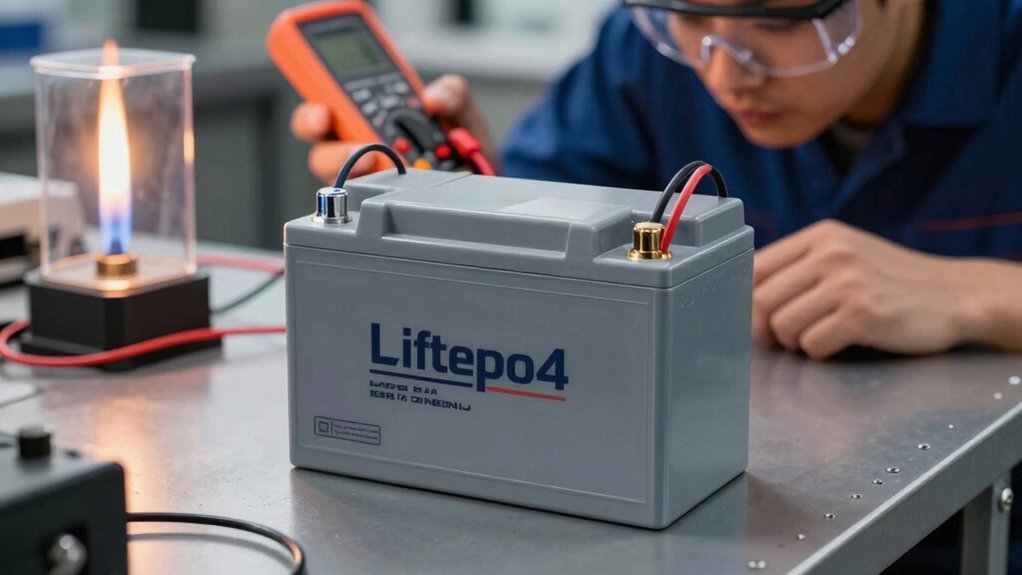
Lifepo4 batteries have demonstrated notable performance across various practical applications, thanks to their stability and safety features. In real-world scenarios, they excel in stationary energy storage, electric vehicles, and portable devices, often outperforming traditional lithium-ion batteries in safety and longevity. Their chemical stability reduces risks associated with thermal runaway, enabling safer operation. However, considerations such as battery recycling are critical, as Lifepo4’s materials impact disposal and reuse processes. Additionally, manufacturing costs remain higher than some lithium-ion counterparts, influenced by material quality and processing requirements. Despite these challenges, their durability and safety advantages make them suitable for demanding applications. Continuous advancements in manufacturing techniques could lower costs, further improving Lifepo4’s viability in diverse fields while maintaining their inherent safety benefits.
Are Lifepo4 Batteries Less Prone to Thermal Runaway?
Lifepo4 batteries exhibit enhanced thermal stability compared to traditional lithium-ion chemistries, which markedly reduces the risk of thermal runaway. This inherent stability minimizes the likelihood of uncontrolled heating and combustion under fault conditions. Consequently, Lifepo4’s safety profile appears to be particularly improved in scenarios prone to thermal instability.
Thermal Stability Advantages
Because thermal runaway poses a significant safety concern in lithium-ion batteries, understanding how different chemistries respond under thermal stress is essential. Lifepo4 batteries demonstrate notable thermal stability advantages, reducing the risk of runaway. Their stable crystal structure resists decomposition at elevated temperatures, making them inherently safer. Additionally, manufacturing processes for Lifepo4 cells emphasize rigorous quality control, minimizing defects that could induce thermal issues. Lifepo4 chemistry’s lower operating voltage and stable thermal profile also facilitate safer battery recycling, reducing hazards during disposal. Key points include:
- Reduced internal overheating risk
- Lower propensity for thermal decomposition
- Enhanced structural stability under stress
- Safer handling during manufacturing processes
- Minimized safety concerns in recycling procedures
All these factors contribute to Lifepo4 batteries’ improved thermal stability profile, making them a safer choice overall.
Reduced Fire Risk
The inherent thermal stability of Lifepo4 batteries directly influences their propensity for thermal runaway, a primary cause of fire hazards in lithium-ion systems. This stability reduces the likelihood of internal short circuits that can trigger fires, thereby lowering overall fire risk. In addition, Lifepo4’s longer battery lifespan means fewer replacements and less environmental impact over time, contributing to sustainability. Their chemical composition makes them less prone to overheating under stress, which further enhances safety. While no battery is entirely fire-proof, Lifepo4’s reduced risk of thermal runaway supports safer operation in various applications. Consequently, their lower fire risk not only improves safety but also offers environmental benefits by decreasing waste and associated hazards.
What Are the Safety Risks Associated With Lithium-Ion Batteries?
While lithium-ion batteries have become a popular energy storage solution, they also pose significant safety risks due to their chemical composition and design. These risks include thermal runaway, overcharging, and internal short circuits, which can cause fires or explosions. Manufacturing processes and battery recycling methods can inadvertently introduce defects or contaminants, increasing safety hazards. Key risks include:
Lithium-ion batteries pose safety risks like fires, explosions, and chemical leaks due to design flaws and manufacturing defects.
- Thermal runaway triggered by internal faults
- Risk of fire during improper handling or damage
- Toxic chemical exposure from battery leaks
- Propagation of failures through interconnected cells
- Challenges in safe battery recycling and disposal
Understanding these dangers emphasizes the importance of rigorous manufacturing standards and effective battery recycling practices, which are essential to minimizing safety risks associated with lithium-ion technology.
How Do Lifepo4 Batteries Handle Damage and Overcharging?
LiFePO4 batteries are inherently more resilient to damage and overcharging compared to traditional lithium-ion chemistries. Their stable chemical composition reduces the risk of thermal runaway, even under severe damage or overcharge conditions. When overcharged, these batteries tend to plateau in voltage, preventing catastrophic failure. Damage, such as punctures or impacts, rarely causes fires or explosions, making them safer overall. Additionally, their design influences battery recycling processes, as they generate fewer hazardous byproducts. Manufacturing emissions are also lower due to their longer lifespan and higher thermal stability, which reduces the frequency of replacement. While no battery is completely immune to damage, LiFePO4’s resilience makes them a safer choice, particularly considering the environmental impacts associated with manufacturing emissions and end-of-life recycling challenges.
Which Factors Should You Consider When Choosing Between Lifepo4 and Lithium-Ion?
When choosing between LiFePO4 and lithium-ion batteries, it’s essential to take into account multiple technical and application-specific factors to guarantee ideal performance and safety. Key considerations include:
- Energy density: Lithium-ion typically offers higher energy density, impacting portability and space constraints.
- Cycle life: LiFePO4 batteries often outperform in longevity, reducing replacement frequency.
- Safety profile: LiFePO4’s stability minimizes risks associated with thermal runaway.
- Manufacturing costs: LiFePO4 batteries generally have higher initial costs but may offer savings over time due to durability.
- Environmental impact: Battery recycling processes differ, affecting sustainability and disposal considerations.
Evaluating these factors helps guarantee best possible choice tailored to specific operational needs and safety priorities.
Is It Worth Investing in Lifepo4 Batteries for Enhanced Safety?
Investing in LiFePO4 batteries primarily hinges on evaluating their safety benefits against other factors such as cost and performance. While their inherent stability reduces risks like thermal runaway, the decision also involves considering market availability and lifecycle impacts. LiFePO4 batteries are generally more environmentally friendly due to simpler, safer battery recycling processes, which enhances their long-term sustainability. Their increasing market availability ensures better supply chains and potential cost reductions, making them more accessible for various applications. However, the initial investment remains higher compared to traditional lithium-ion options. Ultimately, the safety advantages may justify the premium for sectors prioritizing reliability and environmental responsibility. Still, a thorough assessment of recycling infrastructure and market trends is essential before making a definitive investment decision.
Frequently Asked Questions
How Do Lifepo4 Batteries Compare in Lifespan to Lithium-Ion Batteries?
We find Lifepo4 batteries generally outlast lithium-ion counterparts, thanks to their stable chemistry, which enhances manufacturing safety and reduces degradation. Their longevity also benefits battery recycling, making them a more sustainable choice overall.
Are Lifepo4 Batteries Environmentally Friendlier Than Lithium-Ion Options?
Coincidentally, Lifepo4 batteries are generally more environmentally friendly, thanks to safer manufacturing practices, easier battery recycling, and less toxic materials, making them a better choice for sustainable energy solutions compared to traditional lithium-ion options.
What Are the Common Failure Modes of Lifepo4 Versus Lithium-Ion Batteries?
We observe that Lifepo4 batteries face failure modes like capacity fade and internal short circuits, risking fire safety, but are less prone to thermal runaway. Proper battery recycling and safety measures are essential for both types.
Can Lifepo4 Batteries Be Used Safely in Extreme Temperatures?
Lifepo4 batteries, like a sturdy ship in rough seas, show remarkable temperature resilience, but safety protocols remain essential. We recommend cautious use in extreme temperatures, ensuring proper thermal management to prevent degradation or safety hazards.
How Does the Cost of Lifepo4 Batteries Compare to Lithium-Ion Batteries?
We find LiFePO4 batteries generally cost more upfront due to manufacturing costs and raw materials, but their longer lifespan and easier recycling can offset initial expenses, making them potentially more economical over their lifecycle compared to traditional lithium-ion batteries.
Conclusion
In summary, Lifepo4 batteries stand out as a safer choice, akin to a sturdy fortress against thermal threats. Their stable crystal structure and chemical resilience act as reliable guards, reducing risks of fire or explosion. While no battery is infallible, the analytical safety profile of Lifepo4 offers peace of mind in demanding applications. We believe that understanding these nuances helps us make informed, cautious decisions—ensuring our energy storage remains secure, much like a well-anchored ship in calm, yet vigilant, waters.