Many people are unaware that LiFePO4 batteries can outperform lead-acid options in safety and longevity due to their unique chemical stability. This stability not only reduces fire risks but also extends lifespan considerably, making them more cost-effective over time. Understanding these fundamental differences can influence your decision-making for energy storage solutions, yet the full scope of their advantages often remains underappreciated—prompting questions about how these factors translate into practical benefits.
Key Takeaways
- LiFePO4 batteries have higher energy density, offering longer runtime in a smaller, lighter package.
- They feature a longer cycle life, providing more charge-discharge cycles and durability.
- LiFePO4 is safer due to its chemical stability and non-flammable electrolytes, reducing fire risks.
- They require minimal maintenance with sealed designs, unlike lead-acid batteries needing regular watering and cleaning.
- LiFePO4 batteries are more environmentally friendly, with easier recycling and lower toxic waste.
How Do Lifepo4 Batteries Differ From Lead Acid Batteries?
While both LiFePO4 and lead-acid batteries serve as energy storage solutions, they differ markedly in their chemistry, performance, and application. LiFePO4 batteries utilize lithium iron phosphate chemistry, providing higher energy density and longer cycle life, whereas lead-acid batteries rely on lead plates submerged in sulfuric acid. Manufacturing processes for LiFePO4 batteries are more complex, involving precise synthesis of lithium compounds, but they benefit from more sustainable practices, including easier battery recycling. In contrast, lead-acid batteries pose environmental challenges due to toxic lead and acid disposal, emphasizing the importance of proper battery recycling. These differences influence their use cases, with LiFePO4 favored in applications demanding longevity and safety, while lead-acid remains common for cost-effective, short-term energy storage solutions.
What Are the Safety Benefits of Lifepo4 Batteries?
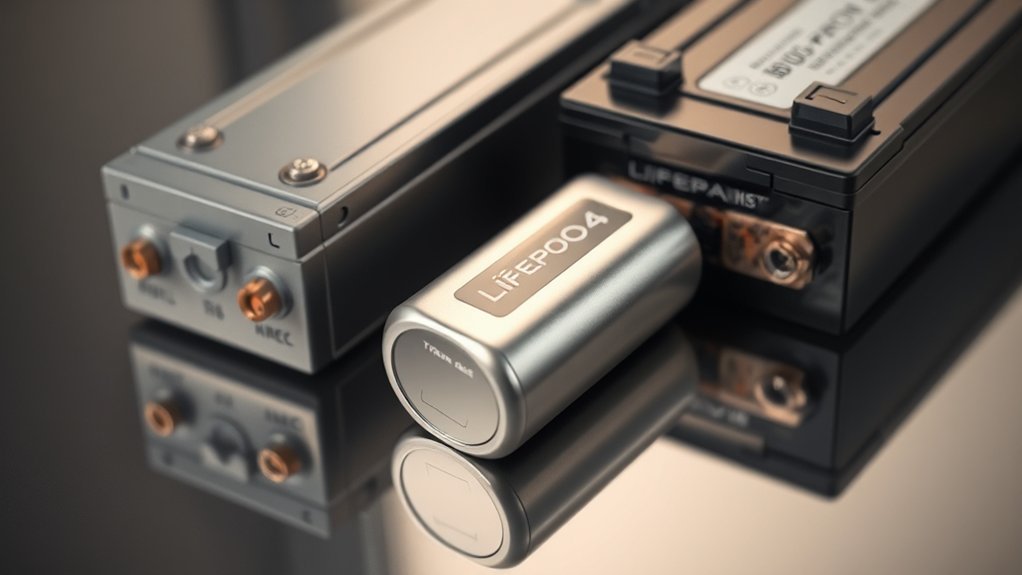
LiFePO4 batteries offer significant safety advantages primarily due to their stable chemical composition, which reduces the risk of thermal runaway and combustion. This inherent stability minimizes hazards during operation and charging, making them safer than other chemistries. Additionally, effective thermal management prevents overheating, further enhancing safety. Their design also facilitates safer battery recycling, reducing environmental risks. Below is a comparison of safety features:
| Feature | Impact | Significance |
|---|---|---|
| Chemical stability | Reduces thermal runaway | Lower risk of fires or explosions |
| Thermal management | Prevents overheating | Maintains safe operating temps |
| Battery recycling ease | Less hazardous disposal | Environmentally safer |
| Structural integrity | Resists physical damage | Minimizes safety hazards |
| Non-flammable electrolyte | Decreases combustion risk | Safer handling and storage |
Why Do Lifepo4 Batteries Last Longer Than Lead Acid Options?

The longer lifespan of LiFePO4 batteries compared to lead-acid options stems from their superior chemical and structural stability, which directly impacts their durability over repeated charge cycles. LiFePO4 chemistry resists degradation better, maintaining voltage stability throughout discharge and charging. This stability minimizes the formation of harmful byproducts, extending cycle life and reducing capacity fade. Additionally, LiFePO4 batteries are more environmentally friendly, supporting sustainable battery recycling processes that preserve material integrity. Their structural resilience prevents the internal corrosion common in lead-acid batteries, further prolonging usability. Consequently, LiFePO4 batteries deliver a consistent performance over a considerably higher number of cycles, making them a more durable, stable, and eco-conscious choice for long-term energy storage solutions.
How Do Charging and Maintenance Compare Between the Two?
Charging and maintenance procedures differ markedly between LiFePO4 and lead-acid batteries, impacting overall user requirements and operational efficiency. LiFePO4 batteries follow specific charging protocols that typically involve a balanced, multi-stage process with a constant current/constant voltage approach, preventing overcharging and extending lifespan. Conversely, lead-acid batteries require careful voltage regulation and regular equalization to avoid sulfation and capacity loss. Maintenance routines for lead-acid batteries are more intensive, involving periodic water top-ups and terminal cleaning, whereas LiFePO4 batteries demand minimal upkeep due to their sealed design and stable chemistry. These differences mean LiFePO4 systems offer simplified, more reliable charging and maintenance, reducing downtime and operational costs while enhancing safety and longevity.
Which Applications Benefit Most From Lifepo4 Technology?
Certain applications derive significant advantages from the unique characteristics of LiFePO4 batteries, particularly in environments demanding high safety, durability, and performance consistency. Renewable integration benefits greatly, as LiFePO4’s stable voltage output and long cycle life support efficient energy storage and grid stabilization. These batteries excel in portable devices due to their lightweight design, high energy density, and low maintenance requirements, enabling longer operation times and enhanced reliability. Additionally, their thermal stability minimizes safety risks in confined or sensitive environments. The capacity for rapid charging and deep discharge cycles makes LiFePO4 ideal for off-grid systems, electric vehicles, and backup power supplies. Overall, applications requiring dependable, safe, and long-lasting energy solutions are most suited to leverage the advantages of LiFePO4 technology.
How Do Lifepo4 Batteries Impact Environmental Sustainability?
LiFePO4 batteries considerably contribute to environmental sustainability by offering a safer and more eco-friendly alternative to traditional energy storage solutions. Their longer lifespan reduces waste, and they facilitate renewable integration by providing reliable energy storage for solar and wind systems. Recycling initiatives are crucial, as LiFePO4 batteries contain less toxic materials compared to lead-acid batteries, easing disposal concerns. Additionally, their higher energy density minimizes resource extraction. The table below summarizes key sustainability benefits:
| Aspect | Impact | Focus Area |
|---|---|---|
| Recycling Initiatives | Lower toxicity, easier disposal | Material recovery |
| Renewable Integration | Supports clean energy deployment | Grid stability |
| Resource Efficiency | Longer lifespan reduces material use | Manufacturing sustainability |
| Waste Reduction | Fewer replacements, less landfill waste | Environmental footprint |
| Lifecycle Management | Promotes circular economy | Recycling and reuse |
What Factors Should You Consider When Choosing Between Them?
When selecting a battery, we must evaluate cost-effectiveness relative to our budget constraints and long-term value. It’s also essential to match the battery’s specifications to our specific usage and application requirements to guarantee peak performance. By analyzing these factors, we can make an informed decision that balances economic and operational considerations.
Cost and Budget
Choosing the right battery involves careful consideration of both initial costs and long-term expenses, as these factors directly impact overall budget planning. Lifepo4 batteries often require a higher upfront investment but offer a more affordable investment over time due to their longer lifespan and reduced maintenance costs. When evaluating budget-friendly options, lead acid batteries may seem attractive initially, but their shorter cycle life and higher replacement frequency increase total ownership costs. Conversely, Lifepo4 batteries provide a cost-effective solution by minimizing replacement and maintenance expenses, making them a smarter long-term choice. Consequently, appraising total cost of ownership, including durability and operational efficiencies, is essential to selecting the most economical and sustainable battery option for your application.
Usage and Application
What key factors should we evaluate when selecting a battery for specific applications? Primarily, we consider battery capacity, which determines runtime and suitability for energy demands. Voltage stability is equally critical, as it guarantees consistent power delivery without fluctuations that could harm sensitive equipment. Lifepo4 batteries excel here, offering high energy density and stable voltage output over their lifespan. Conversely, lead-acid batteries tend to have more voltage sag under load, which can compromise performance in precision applications. When choosing between them, we must also assess cycle life and charging efficiency to match operational requirements. Ultimately, understanding the application’s power needs and stability requirements guides us toward the most appropriate battery technology, ensuring reliability and efficiency in real-world use.
Frequently Asked Questions
Are Lifepo4 Batteries More Cost-Effective in the Long Run?
We believe Lifepo4 batteries are more cost-effective long-term due to their superior lifespan and efficiency, despite higher initial investment. A thorough cost comparison shows lower replacement and maintenance costs, making them a smarter financial choice over lead-acid batteries.
Can Lifepo4 Batteries Be Recycled Easily?
We find that LiFePO4 batteries are more environmentally friendly due to their recyclable materials and straightforward recycling process. Their design minimizes hazardous waste, making the environmental impact considerably lower compared to other battery chemistries.
How Do Lifepo4 Batteries Perform in Extreme Temperatures?
We find LiFePO4 batteries excel in extreme temperatures due to their unparalleled thermal stability and temperature resilience, maintaining consistent performance and safety even in harsh conditions, making them a technically superior choice for demanding environments.
Are There Size or Weight Differences Impacting Installation?
We find Lifepo4 batteries to be more space-efficient and lighter than lead acid, improving installation ease. Their smaller size reduces spatial constraints, while lower weight simplifies handling and mounting, making system upgrades and maintenance more straightforward and efficient.
What Is the Warranty Period Typically Offered for Lifepo4 Batteries?
We typically see Lifepo4 batteries offering a warranty coverage of 5 to 10 years, reflecting their superior battery lifespan. This extended warranty demonstrates their reliability and durability, making them a cost-effective choice over traditional lead-acid batteries.
Conclusion
In summary, selecting LiFePO4 over lead-acid batteries is like planting a sturdy oak in a turbulent forest—steadfast and reliable. Their superior safety, longevity, and environmental benefits make them a forward-thinking choice for energy storage. While initial costs may be higher, the long-term gains in performance and sustainability outweigh the investment. Ultimately, making the switch guarantees we’re building a more resilient, eco-friendly future—because a well-laid foundation supports growth for generations to come.