When evaluating whether LiFePO4 batteries are a worthwhile investment, we need to consider their long-term performance, safety profile, and overall cost-effectiveness. While they may have higher upfront costs, their durability and lower maintenance could offset initial expenses over time. However, understanding their limitations and how they compare to traditional lithium-ion options is essential. Let’s explore the key factors that determine if LiFePO4 batteries suit your specific needs and goals.
Key Takeaways
- LiFePO4 batteries offer exceptional longevity with 2000-5000 cycle life, reducing replacement costs over time.
- Their superior safety profile minimizes fire and explosion risks compared to other lithium-ion chemistries.
- Despite higher initial costs, long-term savings are achieved through durability and lower maintenance.
- They are environmentally friendly with recyclable, non-toxic materials, supporting sustainable practices.
- Limited energy density may affect portability, but stability and safety make them ideal for many applications.
What Are LiFePO4 Batteries and How Do They Work?
LiFePO4 batteries, also known as lithium iron phosphate batteries, are a type of lithium-ion battery distinguished by their cathode chemistry, which uses lithium iron phosphate. This specific battery chemistry offers enhanced thermal stability and safety compared to other lithium-ion chemistries. While their energy density is generally lower than competing chemistries like lithium cobalt oxide, LiFePO4 batteries excel in longevity and stability, making them suitable for applications requiring reliable, repeated cycles. Their molecular structure provides a more stable electrochemical environment, reducing risks of thermal runaway. Although their energy density may limit compactness, the trade-off results in a durable, safer power source. Understanding these core characteristics clarifies why LiFePO4 batteries are becoming increasingly favored in stationary and high-reliability energy storage systems.
What Are the Main Benefits of Using LiFePO4 Batteries?

One of the primary advantages of using LiFePO4 batteries lies in their exceptional cycle life and long-term stability, providing reliable performance over thousands of charge cycles. They also excel in battery safety due to their stable chemistry, markedly reducing risks of thermal runaway. Additionally, their environmental impact is minimal, as LiFePO4 batteries contain non-toxic, recyclable materials, unlike other chemistries. Here’s a comparison:
| Benefit | Explanation |
|---|---|
| Cycle Life | Typically 2000–5000 cycles, outlasting most lithium batteries |
| Battery Safety | Stable chemistry reduces fire or explosion risk |
| Environmental Impact | Recyclable, non-toxic, eco-friendly materials |
| Long-Term Stability | Maintains capacity over extended periods |
| Cost Efficiency | Lower total cost due to longevity and safety |
This combination of benefits makes LiFePO4 batteries a compelling choice for sustainable, safe energy storage.
Are There Any Drawbacks or Limitations to Consider?
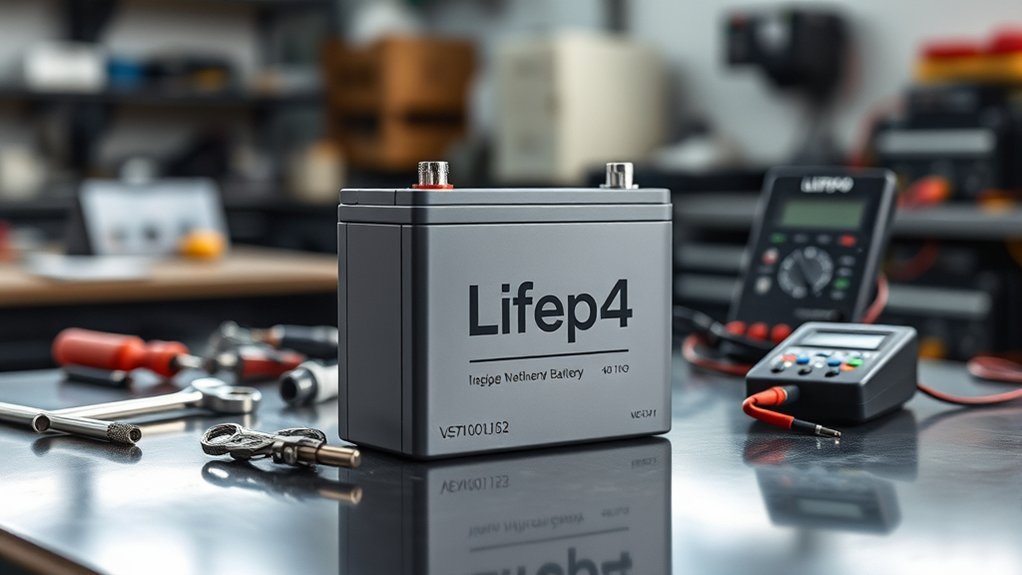
Despite their numerous advantages, LiFePO4 batteries do have limitations that warrant consideration. One key concern is their environmental impact, particularly at the end of life, when recycling processes are still developing, potentially leading to environmental contamination if not managed properly. Additionally, manufacturing challenges pose significant hurdles; producing high-quality LiFePO4 cells requires precise control over materials and complex synthesis processes, which can increase costs and energy consumption. These challenges may limit widespread adoption, especially in regions lacking advanced recycling infrastructure or manufacturing capabilities. While the safety and longevity of LiFePO4 are notable, understanding these environmental and manufacturing limitations is essential for evaluating their overall sustainability and viability as a long-term energy storage solution.
How Do LiFePO4 Batteries Compare to Traditional Lithium-Ion Batteries?
When comparing lithium iron phosphate (LiFePO4) batteries to traditional lithium-ion (Li-ion) batteries, significant differences emerge regarding safety, lifespan, and performance attributes. The core distinction lies in their battery chemistry; LiFePO4 cells offer enhanced thermal stability, reducing risks of thermal runaway and making them safer for various applications. They also provide a particularly longer cycle life—often exceeding 2,000 charge cycles—resulting in lower replacement costs over time. In contrast, Li-ion batteries tend to have higher energy densities but degrade faster. Regarding cost comparison, LiFePO4 batteries are initially more expensive but prove more economical long-term due to their durability and safety features. Overall, the choice hinges on balancing upfront investment with long-term reliability and safety.
Is Investing in a LiFePO4 Battery Worth It for Your Needs?
Investing in a LiFePO4 battery can be highly advantageous if your priorities include safety, longevity, and cost-effectiveness over time. The initial cost may be higher, but a thorough cost analysis reveals lower total ownership expenses due to longer cycle life and reduced maintenance. Additionally, LiFePO4 batteries are more environmentally friendly, with better prospects for battery recycling, minimizing ecological impact. The table below highlights key factors influencing value:
| Factor | Description | Impact on Investment |
|---|---|---|
| Cycle Life | 2000+ cycles vs. traditional lithium-ion | Cost savings over time |
| Safety | Less thermal runaway risk | Reduced safety costs |
| Recycling | Environmentally sustainable disposal | Long-term ecological benefit |
| Initial Cost | Higher purchase price | Short-term expense |
| Maintenance | Minimal maintenance required | Lower ongoing costs |
Frequently Asked Questions
How Long Do Lifepo4 Batteries Typically Last in Real-World Use?
Lifepo4 batteries typically last 8-10 years or 2,000-3,000 cycles, depending on battery capacity and storage precautions. Proper maintenance and avoiding extreme temperatures can substantially extend their lifespan in real-world applications.
Are Lifepo4 Batteries Environmentally Friendly and Recyclable?
We find LiFePO4 batteries environmentally friendly and recyclable due to their stable chemical composition and manufacturing process, which minimizes hazardous waste. Their longevity and recyclability make them a sustainable choice for eco-conscious applications.
What Safety Features Do Lifepo4 Batteries Include?
Like a fortress guarding its treasure, Lifepo4 batteries incorporate safety features such as thermal management, overcharge protection, and cell balancing. Their stable battery chemistry guarantees safe operation and broad charging compatibility, making them a reliable energy source.
Can Lifepo4 Batteries Handle Rapid Charging Cycles?
Lifepo4 batteries handle fast charging well, but frequent rapid charging can accelerate battery degradation. We recommend balancing fast charging with proper usage to optimize lifespan, ensuring safety and performance are maintained during high-cycle operations.
Are There Specific Maintenance Requirements for Lifepo4 Batteries?
We guarantee proper battery installation, avoiding over-discharge, and maintain ideal storage conditions by keeping Lifepo4 batteries in a cool, dry place, regularly monitoring voltage levels, and following manufacturer guidelines to prolong lifespan and ensure safety.
Conclusion
Ultimately, choosing LiFePO4 batteries is like planting a sturdy oak—initially costly but offering decades of resilient growth, safety, and sustainability. Their longevity and stability serve as a solid foundation, reducing replacement cycles and safety concerns. While less compact than traditional options, their durability and lower maintenance costs make them a wise investment. For those prioritizing reliability and environmental responsibility, LiFePO4 batteries represent a dependable, long-term solution—an enduring pillar in energy storage.