Studies show that improper charging can reduce a lithium-ion battery’s lifespan by up to 50%, highlighting the critical importance of correct procedures. As we compare LiFePO4 and lithium-ion batteries, understanding their distinct voltage and current requirements becomes essential for safety and durability. These differences influence not only how we select chargers but also how we implement charging protocols—an area where small variations can have significant long-term impacts. Let’s explore the key distinctions that inform best practices for each technology.
Key Takeaways
- LiFePO4 batteries typically require lower voltage (around 3.65V per cell) and charge at 0.5C to 1C, promoting longevity.
- Lithium-ion batteries charge up to 4.2V per cell and can handle faster charging, but degrade quicker with higher rates.
- Proper chargers with voltage/current regulation are essential for both chemistries to prevent overcharging and ensure safety.
- Overcharging LiFePO4 can cause thermal runaway, while lithium-ion overcharging risks capacity loss and potential fires.
- Maintaining optimal temperature and avoiding deep discharges are crucial practices for both battery types’ safe charging.
How Do LiFePO4 and Lithium-Ion Batteries Differ in Charging Requirements?
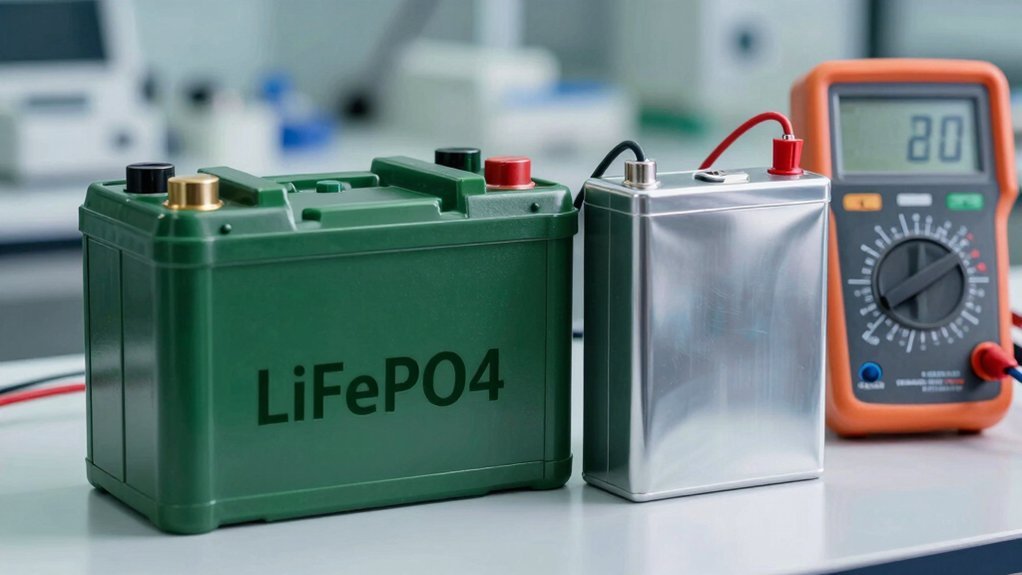
While LiFePO4 and traditional lithium-ion batteries share similarities, their charging requirements differ markedly due to their chemical and structural properties. LiFePO4 batteries exhibit a more stable chemistry, allowing for higher number of charging cycles without significant capacity loss, which directly impacts their long-term battery capacity. They typically demand a lower charge rate to prevent overcharging, hence extending overall lifespan. Conversely, lithium-ion batteries often tolerate faster charging but experience quicker capacity degradation over cycles. The battery capacity retention over repeated charges varies, with LiFePO4 maintaining capacity longer, making it suitable for applications demanding durability. Understanding these distinctions is essential for optimizing charging protocols that maximize both battery capacity and cycle life for each chemistry type.
What Voltage and Current Limits Should You Follow for Each Battery Type?
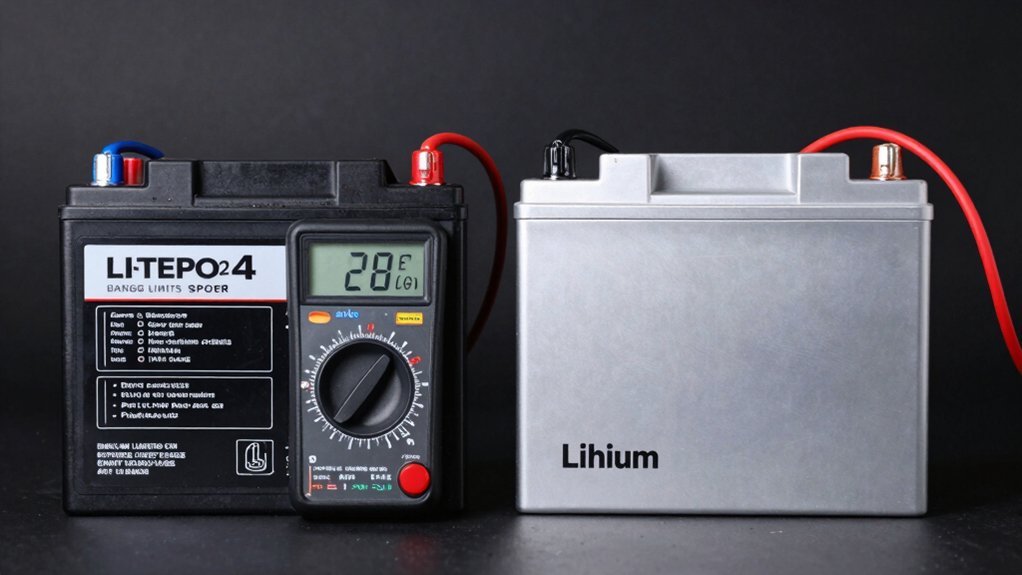
Understanding the voltage and current limits for each battery type is essential to guarantee safe and ideal operation. Battery chemistry dictates these limits, influencing both longevity and charging efficiency. For lithium iron phosphate (LiFePO4) batteries, a typical voltage limit is around 3.65V per cell, with a maximum charge current usually set at 0.5C to 1C, ensuring minimal stress and maximizing lifespan. Lithium-ion batteries generally operate at a higher voltage, around 4.2V per cell, with charging currents often between 0.5C and 1C for efficiency and safety. Adhering to these specified voltage and current limits prevents overcharging, reduces thermal risks, and crucial charging efficiency. Correctly following these parameters based on battery chemistry is crucial for maintaining performance and safety.
Why Is Proper Charging Important for Lithium Iron Phosphate Batteries?
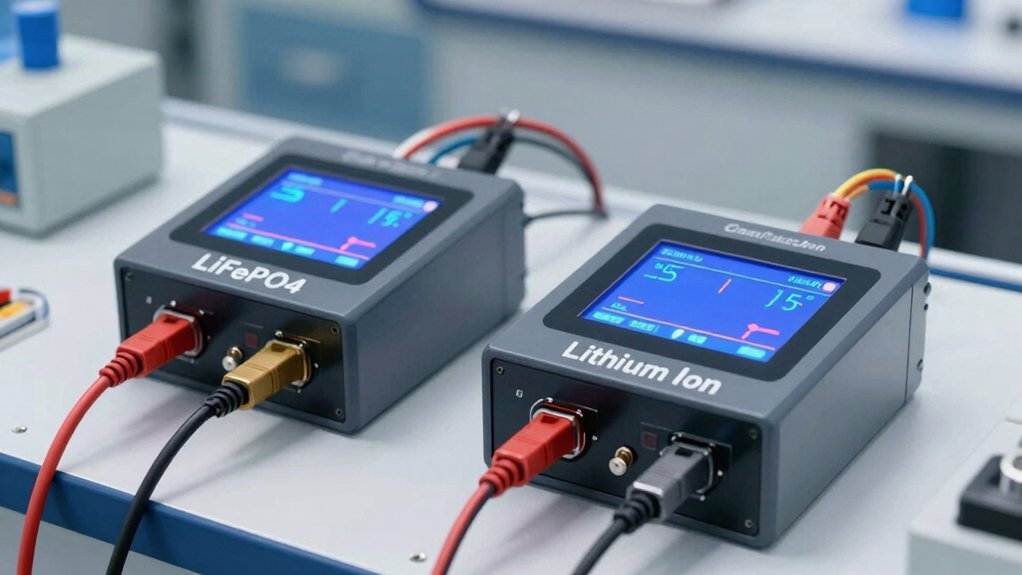
Proper charging is critical for Lithium Iron Phosphate batteries because it directly impacts their longevity and safety. Incorrect charging can lead to irreversible damage, reducing overall battery lifespan, or even cause safety hazards. Consequently, adhering to correct voltage and current limits guarantees ideal performance and reliable operation.
Prevents Battery Damage
Proper charging is essential to prevent damage to Lithium Iron Phosphate (LiFePO4) batteries because improper techniques can lead to reduced lifespan, capacity loss, and safety hazards. Maintaining ideal battery temperature during charging is critical; excessive heat accelerates degradation and risks thermal runaway, while low temperatures hinder chemical reactions, impairing performance. Controlling charging speed is equally important—fast charging can generate excessive heat and strain the battery’s internal structure, increasing the likelihood of damage. Conversely, slow, controlled charging minimizes stress on the electrodes and maintains thermal stability. Adhering to manufacturer-recommended charging protocols ensures these parameters stay within safe limits, protecting the battery’s integrity and safety. Inadequate regulation of temperature and speed directly correlates with premature failure and compromised battery performance.
Extends Battery Life
To maximize the lifespan of Lithium Iron Phosphate (LiFePO4) batteries, maintaining correct charging practices is essential. Proper charging minimizes stress caused by high battery temperature, which accelerates capacity loss over time. Ensuring charger compatibility is equally critical; using chargers designed specifically for LiFePO4 chemistry prevents improper voltage and current levels that could degrade the battery prematurely. Consistent, balanced charging helps maintain ideal internal chemistry, reducing the risk of capacity fade. Additionally, avoiding overcharging and managing temperature fluctuations during the charging cycle helps preserve cell integrity. By paying close attention to battery temperature and selecting compatible chargers, we can considerably extend the overall service life of LiFePO4 batteries, ensuring reliable performance and maximizing investment longevity.
Ensures Safe Operation
Ensuring safe operation of Lithium Iron Phosphate (LiFePO4) batteries hinges on correct charging practices that prevent hazardous conditions and preserve structural integrity. Proper charging minimizes risks such as thermal runaway, which can lead to fires or battery failure. Using certified charging stations guarantees consistent voltage and current regulation, reducing the chance of overcharging or deep discharging. Safe charging protocols also support effective battery recycling by maintaining battery health, making recycling processes more efficient and environmentally friendly. Additionally, adherence to proper charging standards extends battery lifespan, preventing premature degradation. Implementing rigorous safety measures at charging stations is essential for preventing accidents and safeguarding users. Ultimately, responsible charging practices are vital for operational safety, environmental sustainability, and maintaining the integrity of Lithium Iron Phosphate batteries over their lifecycle.
How Do Charging Algorithms and Protocols Vary Between LiFePO4 and Lithium-Ion?
While lithium iron phosphate (LiFePO4) and lithium-ion (Li-ion) batteries share similarities as rechargeable energy sources, their charging algorithms and protocols diverge considerably due to differences in chemistry and voltage characteristics. LiFePO4 batteries typically employ a CC-CV (constant current-constant voltage) charging profile with a lower voltage cutoff, emphasizing thermal management to prevent overheating. Conversely, Li-ion batteries often use more complex multi-stage charging algorithms optimized for charging cycle efficiency, including pre-conditioning and tapering phases. These variations influence battery thermal management strategies, where LiFePO4’s stable chemistry reduces thermal risks, allowing for faster charging under controlled conditions. Overall, tailored charging protocols ensure maximum performance, longevity, and safety specific to each chemistry’s electrical and thermal characteristics.
What Are the Risks of Overcharging or Undercharging These Batteries?
Overcharging or undercharging LiFePO4 and lithium-ion batteries can cause irreversible damage, reducing their overall lifespan and capacity. These charging errors also pose safety risks, including thermal runaway and potential hazards. Understanding these risks is essential to optimize battery longevity and guarantee safe operation.
Battery Damage Risks
What are the potential consequences of improperly charging lithium-based batteries like Lifepo4 and lithium-ion? Overcharging can lead to thermal runaway, swelling, and internal damage, risking fire hazards and irreversible capacity loss. Undercharging causes incomplete chemical reactions, reducing overall efficiency and risking cell imbalance. These damages not only impair battery performance but also complicate battery recycling processes, increasing environmental impact due to premature disposal. Proper charging safeguards are essential to prevent these risks.
| Charging Issue | Consequence | Impact on Recycling/Environment |
|---|---|---|
| Overcharging | Thermal runaway, fire risk, capacity fade | Increased waste, environmental harm |
| Undercharging | Capacity reduction, imbalance | Higher disposal frequency, pollution |
| Both | Damage, safety hazards | Elevated environmental footprint |
Reduced Battery Lifespan
Improper charging practices considerably shorten the lifespan of Lifepo4 and lithium-ion batteries by inducing irreversible chemical and physical changes. Overcharging leads to excessive heat, causing electrode degradation and electrolyte breakdown, while undercharging results in incomplete chemical reactions, reducing capacity over time. These issues accelerate capacity fade and diminish overall battery efficiency. Visualize the damage as:
- Cracked separators impairing ion flow
- Electrode material delamination
- Formation of solid electrolyte interphase (SEI) layers
- Increased internal resistance
- Accelerated capacity loss
Such deterioration impacts not only usage but also complicates battery recycling and manufacturing processes. Early degradation increases waste, challenging sustainability efforts, and raises costs for recycling facilities. Proper charge management is vital for extending battery lifespan and maintaining environmental and economic efficiency.
Safety Concerns and Hazards
Exceeding or falling short of ideal charging parameters introduces significant safety risks for Lifepo4 and lithium-ion batteries. Overcharging can lead to thermal runaway, swelling, or even fires, while undercharging causes voltage imbalance and capacity loss. These hazards not only compromise safety but also impact the batteries’ environmental footprint, as damaged cells are harder to recycle and may release toxic materials. Proper charging protocols are essential to minimize risks and guarantee safe battery recycling, reducing environmental impact. Incorrect charging practices accelerate degradation, increasing waste and the need for disposal. Consequently, precise management of charging cycles is critical for maintaining safety, prolonging lifespan, and supporting responsible recycling efforts that mitigate ecological harm.
How Can You Optimize Charging for Longevity and Safety?
To maximize both longevity and safety when charging Lifepo4 and lithium-ion batteries, it’s essential to follow precise charging protocols that prevent overvoltage, undervoltage, and excessive current. Proper management reduces degradation, extending cycle life, and minimizes safety risks. Additionally, careful charging practices support sustainable practices like battery recycling, which mitigates environmental impact.
Following correct charging protocols extends battery life, ensures safety, and supports sustainable recycling practices.
Consider these key strategies:
- Use chargers with accurate voltage and current regulation
- Avoid deep discharges and overcharging
- Maintain ideal temperature during charging
- Implement regular monitoring and balancing
- Follow manufacturer guidelines strictly
What Tools and Chargers Are Best Suited for Each Battery Technology?
Selecting the appropriate tools and chargers for Lifepo4 and lithium-ion batteries is essential for guaranteeing safety, efficiency, and longevity. For Lifepo4 batteries, specialized charging adapters with precise voltage and current regulation are critical, as they prevent overcharging and thermal risks. These batteries benefit from advanced battery monitoring systems that track state of charge and temperature, enhancing performance and lifespan. Conversely, lithium-ion batteries require chargers with built-in battery management systems (BMS) that monitor individual cell voltages and balance cells during charging. Compatibility is indispensable; using chargers designed specifically for each technology minimizes risks of damage and degradation. In both cases, reliable, high-quality tools with accurate battery monitoring capabilities ensure safe, efficient charging cycles, ultimately extending battery life and maintaining peak performance.
Frequently Asked Questions
Can Lifepo4 Batteries Be Charged With Standard Lithium-Ion Chargers?
We advise against using standard lithium-ion chargers for Lifepo4 batteries, as improper charging can compromise battery lifespan and safety. Using chargers designed specifically for Lifepo4 guarantees ideal charging safety and preserves battery longevity.
How Does Temperature Affect Charging Efficiency for Each Battery Type?
Temperature impacts charging efficiency differently; Lifepo4 batteries exhibit superior thermal stability, enabling better charge refinement at higher temperatures. In contrast, lithium-ion batteries require controlled temperatures for peak performance, as extreme heat or cold hampers efficiency and safety.
Are There Specific Maintenance Routines for Charging Lifepo4 Versus Lithium-Ion?
We monitor charging routines to optimize battery lifespan and guarantee charging safety; Lifepo4 batteries typically require balanced charging and temperature checks, while lithium-ion batteries benefit from avoiding overcharge and maintaining proper storage conditions for longevity.
What Are the Environmental Impacts of Charging Each Battery Type?
We see that charging Lifepo4 batteries produces less toxic waste and facilitates easier battery recycling, reducing environmental impact, whereas lithium-ion batteries involve more toxic waste during disposal. Both require responsible handling to minimize ecological harm.
How Do Charging Times Compare Between Lifepo4 and Lithium-Ion Batteries?
Charging times for Lifepo4 are considerably shorter, almost instant, enhancing battery longevity and charging safety. Lithium-ion batteries take longer, risking overheating, but their longer charge cycles mean they’re more efficient overall.
Conclusion
In essence, understanding the distinct charging needs of LiFePO4 and lithium-ion batteries is like steering through a delicate dance—each step must be precise to avoid missteps that could lead to damage or safety hazards. Proper voltage, current regulation, and tailored protocols are our guiding lights, ensuring these energy sources perform at their best. By respecting their unique characteristics, we safeguard their longevity, turning each charge into a strategic move rather than a reckless gamble.