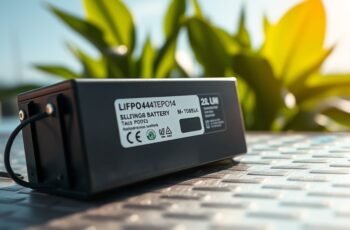
When evaluating whether to purchase a LiFePO4 battery, we consider its long-term reliability, safety features, and environmental impact. While it offers advantages over traditional lead-acid options, such as lifespan and thermal stability, understanding the cost implications and suitable applications is essential. We invite you to examine these factors critically, as making an informed choice depends on aligning the technology’s benefits with your specific energy needs and investment expectations.
Key Takeaways
- LiFePO4 batteries have a long lifespan (over 10,000 cycles), reducing replacement costs.
- They offer superior safety and stability, minimizing fire risks in various applications.
- Their environmental benefits include non-toxic materials and easier recycling.
- Higher initial costs are offset by durability, efficiency, and long-term savings.
- Suitable for renewable energy, EVs, marine, and backup power due to reliability and performance.
Is a LiFePO4 Battery Right for My Energy Needs?
When evaluating whether a LiFePO4 battery suits your energy needs, it’s essential to take into account its specific performance characteristics and how they align with your power requirements. Its notable battery lifespan, often exceeding 10,000 cycles, offers long-term reliability, reducing replacement costs and maintenance. Additionally, LiFePO4 batteries have a lower environmental impact compared to traditional options, as they contain fewer toxic materials and are more environmentally friendly to dispose of or recycle. This sustainability aspect makes them an appealing choice for eco-conscious applications. However, understanding if their high energy density, stable voltage, and safety profile meet your specific energy demands is vital. Analyzing these factors helps determine if a LiFePO4 battery aligns with your operational goals and sustainability values.
How Do LiFePO4 Batteries Compare to Traditional Lead-Acid Options?
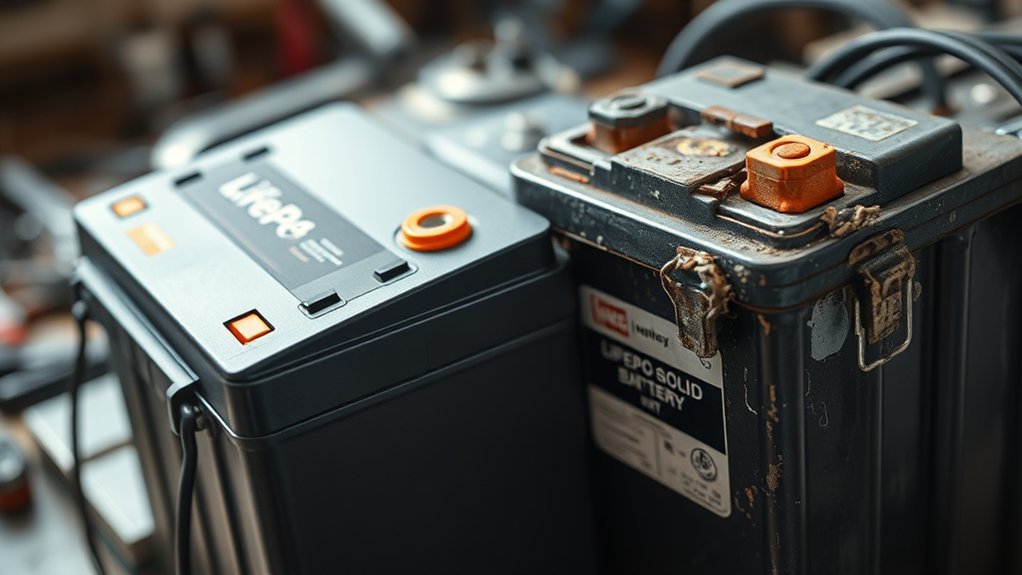
LiFePO4 batteries offer a compelling alternative to traditional lead-acid options, primarily through their superior lifespan, safety features, and efficiency. Their distinct battery chemistry results in a longer cycle life and faster charge times, reducing replacement frequency and operational costs. Compared to lead-acid, LiFePO4 cells are inherently safer, with stable thermal properties that minimize fire risks. Environmentally, LiFePO4 batteries have a lower environmental impact due to their extended durability and fewer toxic materials, making disposal easier and safer. Their ability to withstand deeper discharges without damage further enhances their efficiency. Overall, these factors highlight how LiFePO4 batteries provide a technically superior and more sustainable option, making them increasingly attractive for long-term energy storage solutions over traditional lead-acid alternatives.
What Are the Cost Considerations and Long-Term Savings?
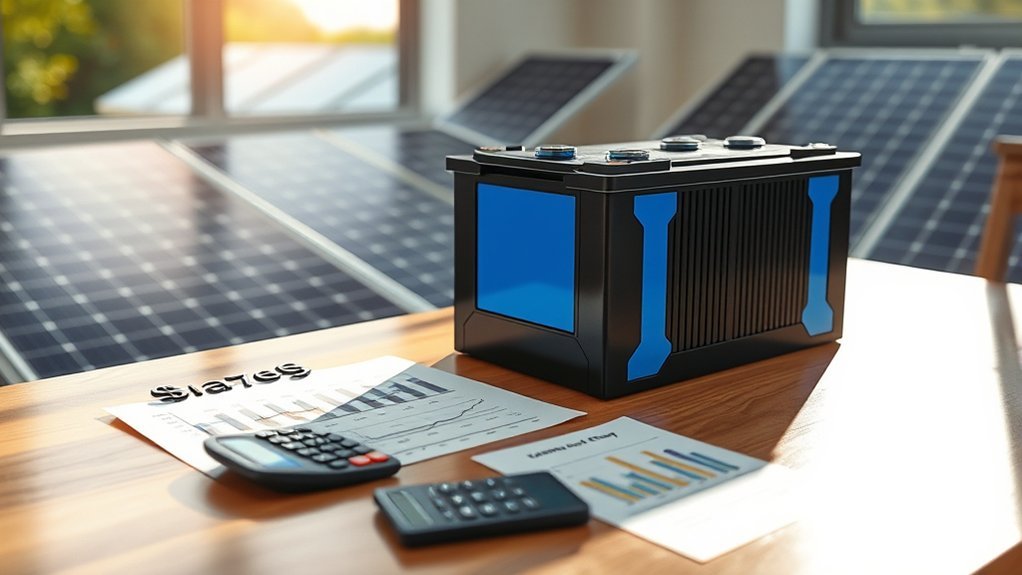
Although the initial purchase price of LiFePO4 batteries is higher than that of traditional lead-acid options, their long-term savings often justify the investment. These batteries offer a longer lifespan, reducing replacement frequency and associated costs over time. They also exhibit higher efficiency, minimizing energy losses and lowering operational expenses. From a sustainability perspective, LiFePO4 batteries have a reduced environmental impact due to safer chemistries and enhanced durability. Additionally, battery recycling initiatives are improving, ensuring that materials can be recovered and reused, further decreasing environmental footprint. While upfront costs are notable, the combined benefits of longevity, efficiency, and responsible disposal make LiFePO4 batteries a cost-effective choice in the long run, especially when considering the broader environmental and economic implications.
Which Applications Benefit Most From Lifepo4 Batteries?
Certain applications derive significant benefits from the unique characteristics of LiFePO4 batteries, particularly those requiring high cycle life, safety, and stable performance over time. These batteries excel in renewable energy storage, electric vehicles, marine, and backup power systems, where longevity and safety are critical. Their inherent thermal stability minimizes risks related to battery safety, while their environmental impact remains low due to non-toxic materials and recyclability.
| Application | Benefits | Key Considerations |
|---|---|---|
| Renewable Energy | Long cycle life, stable discharge, minimal maintenance | Environmental impact, safety standards |
| Electric Vehicles | High power density, safety, durability | Battery safety, lifecycle costs |
| Marine | Safety, reliability in harsh conditions | Resistance to environmental factors |
| Backup Power Systems | Stable, long-lasting performance | Environmental sustainability |
What Should I Know Before Purchasing a LiFePO4 Battery?
Before purchasing a LiFePO4 battery, it’s essential to thoroughly evaluate key technical specifications and compatibility factors to guarantee it meets your specific application needs. Battery safety is paramount; LiFePO4 chemistries are inherently more stable and less prone to thermal runaway than other lithium-ion types, but proper handling and protective circuitry remain critical. Additionally, consider the environmental impact—LiFePO4 batteries are more environmentally friendly due to their non-toxic materials and extended lifespan, reducing waste. Ensuring compatibility involves examining voltage, capacity, and cycle life to optimize performance. It’s also important to verify manufacturer safety standards and recycling options. By understanding these factors, you make an informed decision that balances safety, sustainability, and technical performance.
Frequently Asked Questions
How Long Do Lifepo4 Batteries Typically Last?
Lifepo4 batteries typically last 8-10 years with proper maintenance, thanks to stable battery chemistry. Following correct charging protocols, like avoiding overcharge and deep discharge, maximizes lifespan and guarantees reliable performance over their extensive cycle life.
Are Lifepo4 Batteries Environmentally Friendly?
Isn’t it reassuring to know that LiFePO4 battery chemistry utilizes eco-friendly materials, making these batteries a sustainable choice? Their environmentally friendly design reduces toxic waste, supporting cleaner energy solutions and promoting long-term ecological benefits for our planet.
Can Lifepo4 Batteries Be Recycled?
Yes, LiFePO4 batteries can be recycled through specialized battery recycling processes, reducing environmental impact. We analyze their chemical composition, enabling efficient recovery of materials, consequently supporting sustainable practices and minimizing ecological harm associated with battery disposal.
What Are the Safety Considerations for Lifepo4 Batteries?
We guarantee safety by adhering to strict battery manufacturing standards and proper charging protocols, preventing thermal runaway. Regular monitoring and using recommended chargers minimize risks, making LiFePO4 batteries reliable and safe when handled correctly and maintained properly.
How Do Temperature Extremes Affect Lifepo4 Performance?
Surprisingly, Lifepo4 batteries excel in temperature resilience, but extreme heat or cold still demands effective thermal management; neglecting this can impair performance and longevity, highlighting the importance of precise thermal controls in demanding environments.
Conclusion
In summary, choosing a LiFePO4 battery aligns with our focus on reliability, safety, and sustainability. With over 10,000 charge cycles, its lifespan markedly surpasses traditional options, providing substantial long-term savings despite higher initial costs. Notably, LiFePO4 batteries are also environmentally friendly, with recyclability rates approaching 100%. For high-demand applications like renewable energy storage and electric vehicles, their performance and durability make them a strategic investment that supports both operational efficiency and ecological responsibility.