When evaluating LiFePO4 batteries, it’s essential to understand both their technical strengths and limitations. While they offer notable safety and longevity benefits, certain drawbacks could influence their suitability for specific applications. We’ll explore these aspects in detail, providing an in-depth analysis of their advantages and challenges, so you can determine if they align with your energy storage or mobility needs. The decision hinges on considering these factors carefully as we examine their real-world performance.
Key Takeaways
- Lifepo4 batteries offer enhanced safety and thermal stability compared to traditional lithium-ion batteries.
- They have a longer cycle life, reducing replacement costs over time.
- While safer and more environmentally friendly, they have lower energy density, making them less suitable for space-constrained applications.
- Higher upfront costs can be a barrier despite lower maintenance and replacement expenses.
- Recycling is more straightforward due to less toxic materials, supporting sustainability efforts.
What Are Lifepo4 Batteries and How Do They Work?
Have you ever wondered what sets LiFePO4 batteries apart from other types? Their unique battery chemistry, based on lithium iron phosphate, provides distinct advantages. Unlike lithium-ion chemistries, LiFePO4 offers improved thermal stability and safety. While their energy density is generally lower than other lithium variants, they excel in longevity and consistent performance. The chemistry allows for stable cycling and high charge-discharge rates, making them ideal for applications requiring reliability over time. LiFePO4 batteries operate through lithium ions migrating between the cathode and anode during charge and discharge cycles, maintaining structural stability. This chemistry guarantees safety and durability, although it results in slightly lower energy density compared to other lithium-based options. Understanding these core features helps clarify their specialized role in energy storage solutions.
Advantages of Lifepo4 Batteries for Various Applications
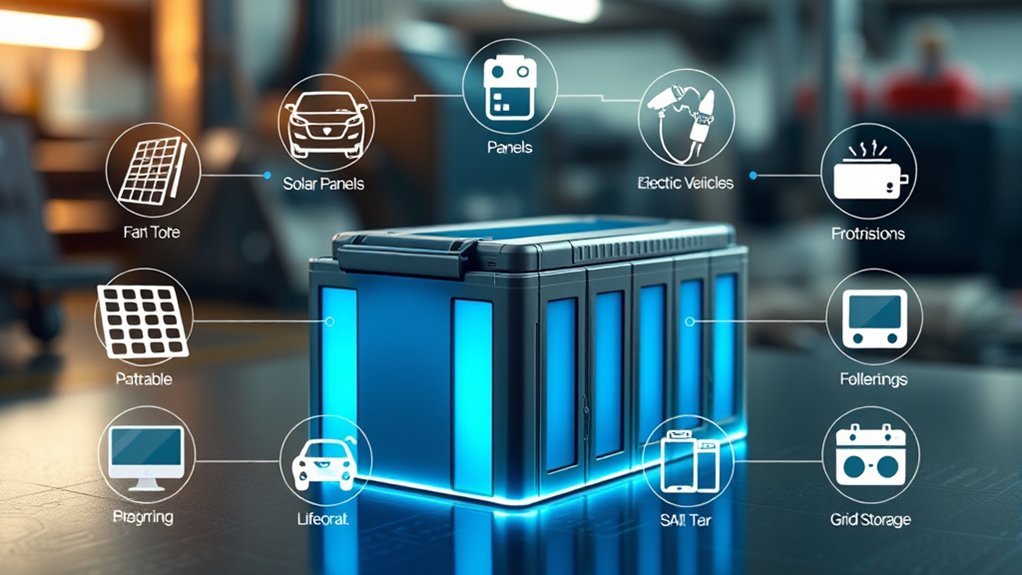
The unique chemistry of LiFePO4 batteries offers significant advantages across a range of applications, primarily due to their stability, safety, and long cycle life. Their inherent thermal stability minimizes risk of thermal runaway, making them suitable for demanding environments. Additionally, their extended cycle life reduces replacement frequency, lowering operational costs. From an environmental perspective, LiFePO4 batteries facilitate more sustainable battery recycling processes, as they contain less toxic materials than other chemistries. This contributes to a reduced environmental impact through easier disposal and material recovery. Their stable chemistry also guarantees consistent performance over time, making them ideal for renewable energy storage, electric vehicles, and portable electronics. Overall, these advantages support their growing adoption across diverse sectors, emphasizing their role in safer, more sustainable energy solutions.
Potential Drawbacks and Limitations of Lifepo4 Technology

Despite their many advantages, LiFePO4 batteries present specific limitations that can impact their suitability for certain applications. Cost limitations remain a concern, as LiFePO4 cells often have higher upfront costs compared to traditional lithium-ion batteries, affecting large-scale adoption. Additionally, recycling challenges pose environmental and economic obstacles, since the battery’s chemistry complicates disposal and reuse processes. These issues can hinder sustainability efforts and escalate long-term costs. Below is a comparison highlighting these limitations:
| Limitation | Impact | Example |
|---|---|---|
| Cost limitations | Higher initial investment | Large-scale energy storage projects |
| Recycling challenges | Difficult disposal and reuse | Environmental compliance hurdles |
| Energy density | Lower compared to other chemistries | Portable electronics |
| Temperature range | Reduced performance in extreme cold | Off-grid applications with harsh climates |
How Do Lifepo4 Batteries Compare to Traditional Lithium-Ion Cells?
While LiFePO4 batteries and conventional lithium-ion cells share core electrochemical principles, they differ markedly in key performance aspects. LiFePO4 batteries generally offer superior cost efficiency over their lifespan due to longer cycle life and lower maintenance needs. They tend to have a more stable chemistry, which reduces degradation and replacement costs. In terms of environmental impact, LiFePO4 batteries are more sustainable—they contain no cobalt or nickel, reducing ecological and ethical concerns associated with mining and disposal. Their safer chemistry also minimizes fire hazards, decreasing environmental risks from accidents. Conversely, traditional lithium-ion cells often have higher upfront costs and a larger ecological footprint due to their material composition. Overall, LiFePO4 batteries present a more eco-friendly and economically advantageous option for long-term applications.
What Are the Safety Features of Lifepo4 Batteries?
LiFePO4 batteries incorporate several robust safety features that make them a preferred choice for critical applications. Their inherent thermal management reduces the risk of overheating, preventing thermal runaway. Advanced battery monitoring systems continuously track voltage, current, and temperature, enabling early detection of anomalies. This proactive oversight ensures safe operation and prolongs lifespan. The table below illustrates key safety aspects:
| Safety Feature | Description |
|---|---|
| Thermal Management | Maintains ideal temperature, prevents overheating |
| Battery Monitoring | Provides real-time data for early fault detection |
| Structural Stability | Prevents internal short circuits and mechanical damage |
| Chemical Stability | Reduces risk of fire or explosion during misuse |
Together, these features demonstrate Lifepo4’s commitment to safety and reliability.
Factors to Consider When Choosing a Lifepo4 Battery System
When selecting a LiFePO4 battery system, it’s essential to evaluate several critical factors to guarantee peak performance and safety. Key considerations include upfront costs, long-term operational expenses, and environmental impact. Conducting a thorough cost analysis helps determine the most economical option over the battery’s lifespan, factoring in maintenance and replacement costs. Additionally, assessing environmental impact involves examining manufacturing processes, recyclability, and toxic waste generation. Other indispensable factors are battery capacity, cycle life, and compatibility with existing systems. Ensuring proper thermal management and safety features is also vital. By carefully analyzing these elements, we can optimize the system’s efficiency, sustainability, and economic viability, making informed decisions that balance technical performance with ecological responsibility.
- Cost analysis and total ownership expenses
- Environmental impact and recyclability
- Capacity, cycle life, and scalability
- Safety features and thermal management
Common Use Cases and Best Practices for Lifepo4 Batteries
Due to their high stability, long cycle life, and safety features, LiFePO4 batteries are increasingly favored across diverse applications. These batteries excel in renewable energy systems, electric vehicles, and backup power due to their reliable performance and reduced thermal risk. Best practices include regular battery maintenance to optimize lifespan and guarantee safety, such as monitoring voltage levels and avoiding over-discharge. Additionally, understanding their environmental impact is crucial; LiFePO4 batteries contain fewer toxic materials than other chemistries, making them more environmentally friendly. Proper disposal or recycling minimizes ecological effects. Overall, leveraging their advantages requires careful management and adherence to best practices, ensuring efficient operation while mitigating environmental concerns.
Is a Lifepo4 Battery Right for Your Energy Storage Needs?
Are LiFePO4 batteries the most suitable choice for your energy storage needs? Their advantages include high thermal stability and long cycle life, making them ideal for sustainable applications. However, assessing suitability involves considering factors like environmental impact and battery recycling. LiFePO4 batteries are more environmentally friendly than other lithium-ion chemistries, due to the absence of toxic cobalt and nickel. Their recyclability reduces waste and supports sustainable energy practices. Yet, their lower energy density might limit use in space-constrained projects.
Consider these points:
- Favorable environmental impact due to reduced toxic materials
- Easier, safer battery recycling process
- Long lifespan minimizes replacement frequency
- Suitability depends on energy density requirements
Ultimately, evaluating your specific needs helps determine if LiFePO4 is the optimal choice.
Frequently Asked Questions
How Long Do Lifepo4 Batteries Typically Last Under Normal Use?
Lifepo4 batteries typically last 2,000 to 5,000 usage cycles, translating to about 8-10 years under normal use. Their lifespan depends on factors like charge/discharge rates, temperature, and proper maintenance, ensuring reliable long-term performance.
Are Lifepo4 Batteries Environmentally Friendly and Recyclable?
We believe LiFePO4 batteries are environmentally friendly due to their use of eco-friendly materials and safer chemistry, which reduce hazardous waste. Recycling processes are efficient, allowing for effective recovery of materials, minimizing environmental impact and supporting sustainability initiatives.
Can Lifepo4 Batteries Be Used in Extreme Weather Conditions?
Yes, lifepo4 batteries excel in extreme weather, thanks to their temperature resilience and performance stability. Like a sturdy fortress, they maintain functionality under harsh conditions, making them reliable for diverse environments and critical applications.
What Is the Typical Charging Time for a Lifepo4 Battery?
We find that Lifepo4 batteries typically charge within 3 to 4 hours, offering efficient charging speed and high power efficiency. This rapid, reliable process minimizes downtime, making them ideal for demanding applications requiring quick turnaround and consistent performance.
Do Lifepo4 Batteries Require Special Maintenance or Storage?
Imagine a battery on vacation, sunbathing at 25°C—lifepo4 batteries prefer stable temperatures and need no special maintenance beyond proper storage. They’re recyclable, but ignore temperature sensitivity, and you’ll face shortened lifespan or safety risks.
Conclusion
Certainly! Here’s the modified text with alternative words replacing “in summary”:
—
To sum up, while Lifepo4 batteries present clear advantages like safety and longevity, they’re not without limitations—particularly in energy density and cold-weather performance. As we navigate this technological landscape, it’s akin to choosing a steamboat over a flying car: each has its time and place. Careful analysis of your specific energy needs and environmental conditions will help determine if Lifepo4 is the right fit, ensuring you make a well-informed, futuristic choice.