When designing a solar LiFePO4 system, accurately sizing the battery bank is critical to ensuring reliable performance and longevity. We need to carefully analyze energy consumption, load profiles, and environmental factors to determine the appropriate capacity. Proper sizing balances cost efficiency with system resilience, but missteps can lead to premature degradation or inadequate power. Understanding these complexities is essential to optimize your system’s design, which is why examining key principles can make a significant difference.
Key Takeaways
- Calculate daily energy consumption and peak loads to determine appropriate battery capacity.
- Maintain a conservative Depth of Discharge (~80%) to extend LiFePO4 battery lifespan.
- Ensure solar panel output matches the battery’s charging requirements for efficient energy replenishment.
- Avoid over-sizing to reduce costs and prevent unnecessary weight and capacity degradation.
- Consider environmental factors and future load increases when sizing batteries for long-term system performance.
How to Determine Your Solar Energy Needs for Battery Sizing

To accurately size a LiFePO4 battery for your solar system, we first need to precisely determine your overall energy consumption. Understanding the battery chemistry is essential, as LiFePO4 batteries offer high stability and long lifespan, impacting your system’s design. When evaluating your needs, consider your daily energy use and the number of charging cycles your battery will endure over its lifetime. LiFePO4’s ability to sustain numerous charging cycles—often over 2,000—means you can rely on consistent performance with proper sizing. Accurate consumption data ensures the battery can handle your load without frequent deep discharges, which could shorten its lifespan. This analysis forms the foundation for selecting a battery that balances capacity, longevity, and system efficiency.
Calculating Capacity: How Much Battery Storage Do You Require?
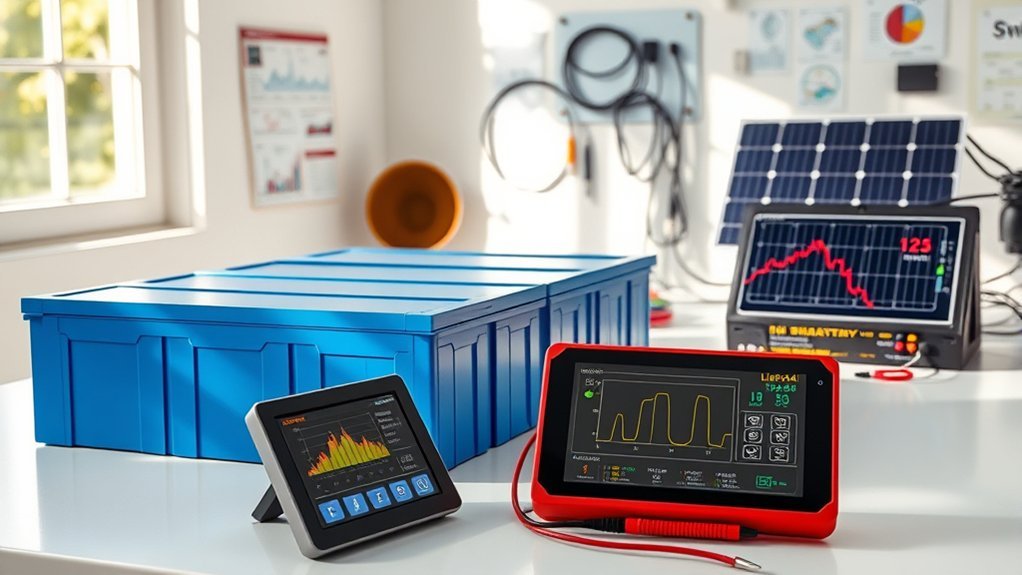
Determining the appropriate battery capacity requires a precise assessment of your daily energy consumption and desired autonomy. To do this effectively, we analyze your load profile and estimate total energy needs. Battery chemistry influences capacity calculations, as Lifepo4 batteries offer high efficiency and longevity, enabling deeper discharge cycles without compromising lifespan. When considering solar panel compatibility, we ensure the array’s output aligns with the battery’s charging capacity, preventing over- or under-sizing. Accurate capacity calculation involves factoring in system inefficiencies and potential future load increases. By integrating these elements, we establish a reliable storage size that maximizes system performance while avoiding excess capacity that leads to unnecessary costs. This analytical approach ensures your battery system is optimized for both energy needs and system compatibility.
Understanding Depth of Discharge and Its Impact on LifePO4 Batteries

Understanding depth of discharge (DoD) is essential when working with LifePO4 batteries because it directly influences their lifespan and overall system reliability. Depth Discharge refers to the percentage of the battery’s capacity used during discharge cycles. A higher DoD accelerates capacity fade, reducing Battery Lifespan over time. For ideal longevity, we recommend maintaining a conservative DoD—typically around 80%—to minimize stress on the cells. This approach ensures consistent performance and prolongs the usable life of the battery bank. Precise management of DoD allows us to balance energy needs with durability, avoiding premature degradation. By controlling Depth Discharge levels, we can maximize system efficiency and extend the operational life of LifePO4 batteries, ultimately delivering more reliable and cost-effective solar energy storage.
Choosing the Right Battery Size Based on Your Usage Patterns
Selecting the appropriate battery size requires analyzing your energy consumption patterns in detail. To optimize battery lifespan and maximize charging cycles, you must match capacity to your typical load profile, avoiding over- or under-sizing. Proper sizing guarantees efficient energy storage, reduces depth of discharge, and prolongs battery life. Consider the following:
- Average daily energy consumption
- Peak load demands
- Expected autonomy during low sunlight
- Frequency of charging cycles
- Desired lifespan based on cycle count
Tips for Balancing Cost and Performance in Battery Sizing
Balancing cost and performance when sizing a Lifepo4 battery involves carefully evaluating trade-offs to maximize both budget and system longevity. Battery chemistry plays a key role, as Lifepo4 offers stable performance and longer cycle life at a moderate cost, making it attractive for cost-performance balance. Environmental factors, such as temperature fluctuations and humidity, influence battery efficiency and lifespan, requiring proper sizing to prevent premature degradation. Over-sizing increases initial costs without proportional gains, while under-sizing risks system reliability. A thorough analysis of usage patterns, load demands, and environmental conditions helps determine an ideal battery capacity that minimizes expenses while maintaining performance. This strategic approach ensures the system remains resilient, cost-effective, and aligned with operational requirements.
Common Mistakes to Avoid When Sizing Your Solar LifePO4 Battery Bank
One common mistake in sizing a solar LifePO4 battery bank is overestimating capacity, which leads to unnecessary upfront costs and increased system weight without proportional gains in performance. Oversized banks can reduce the number of charge cycles, negatively impacting battery lifespan over time. Proper sizing should balance capacity with expected load and charging efficiency. Misjudging these factors risks prematurely degrading the battery’s health and reducing its effective lifespan.
- Ignoring depth of discharge (DoD) limits
- Overestimating daily energy needs
- Neglecting charge cycle impacts on longevity
- Underestimating reserve capacity requirements
- Failing to consider temperature effects on performance
Frequently Asked Questions
How Does Temperature Affect Lifepo4 Battery Performance?
Temperature affects Lifepo4 battery performance considerably; thermal management guarantees ideal functioning, especially in extreme conditions. Their temperature resilience reduces capacity loss and degradation, making proper thermal control vital for maintaining efficiency and extending lifespan in various environmental settings.
What Are the Safety Considerations for Large Solar Batteries?
We prioritize battery fire safety and voltage regulation, knowing large solar batteries can store up to 100 kWh. Ensuring proper venting, thermal management, and protective circuitry minimizes risks and maintains system stability.
How Often Should I Maintain or Inspect My Battery Bank?
We recommend inspecting our battery bank monthly, following a regular maintenance schedule to guarantee the best battery lifespan. This proactive approach helps identify potential issues early, maintaining performance and extending the longevity of our Lithium Iron Phosphate (LiFePO4) batteries.
Can I Upgrade My Battery System Later if Needed?
Yes, you can upgrade later; it’s all about system scalability and increasing battery capacity when needed. Think of it as building a house—you add rooms over time without starting from scratch. Our design supports future expansion seamlessly.
What Are the Environmental Impacts of Disposing of Lithium Iron Phosphate Batteries?
Disposing of lithium iron phosphate batteries poses recycling challenges due to their complex chemical composition and potential toxic materials. Proper recycling mitigates environmental impacts, reduces toxic waste, and recovers valuable materials, emphasizing the importance of responsible disposal practices.
Conclusion
By carefully analyzing our energy needs and understanding battery parameters, we guarantee our system’s reliability and longevity. When we align our battery capacity with solar output and usage patterns, we not only optimize performance but also extend the lifespan of our LiFePO4 batteries. This meticulous approach creates a seamless synergy—turning our solar investment into a consistent, sustainable power source that supports our future endeavors and environmental commitments.